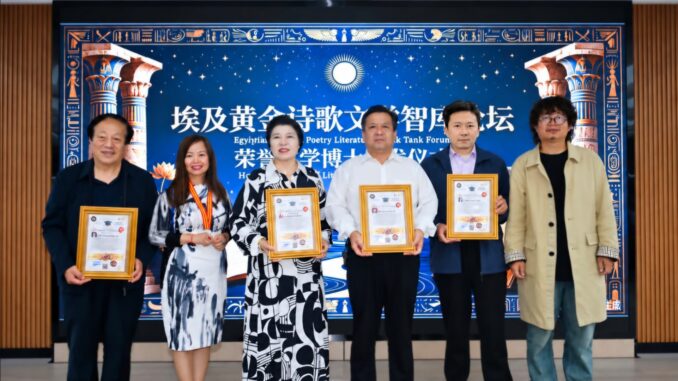
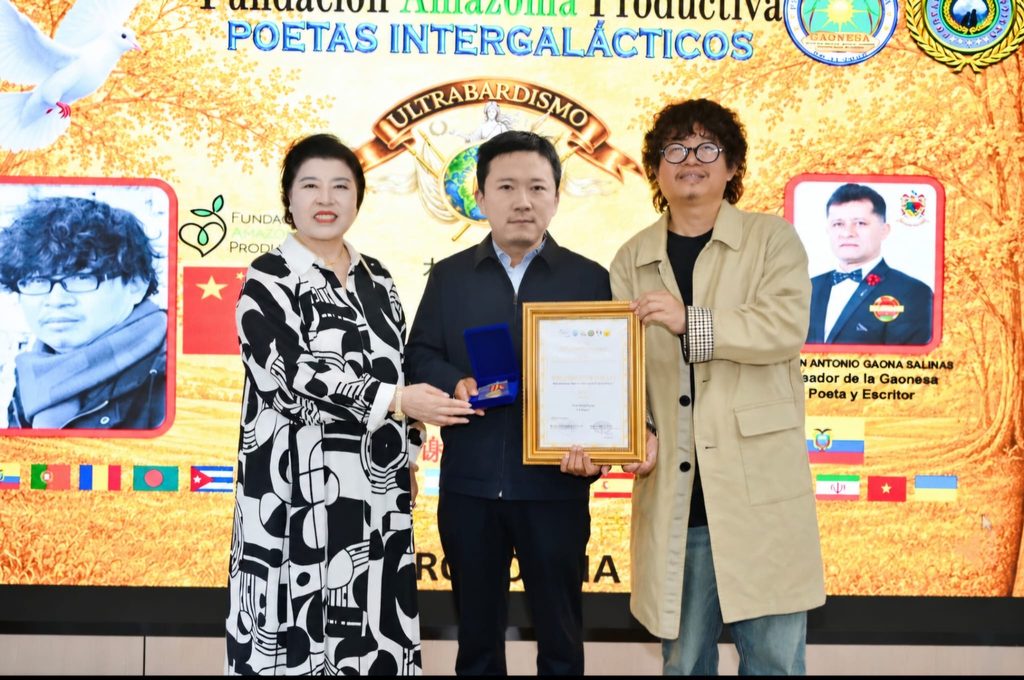
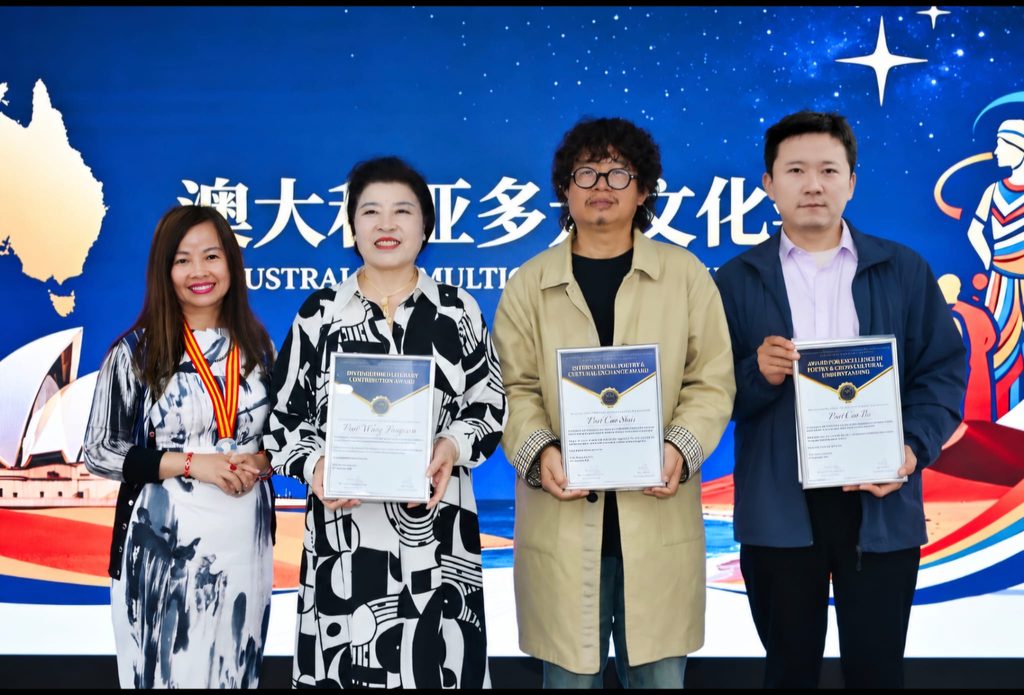
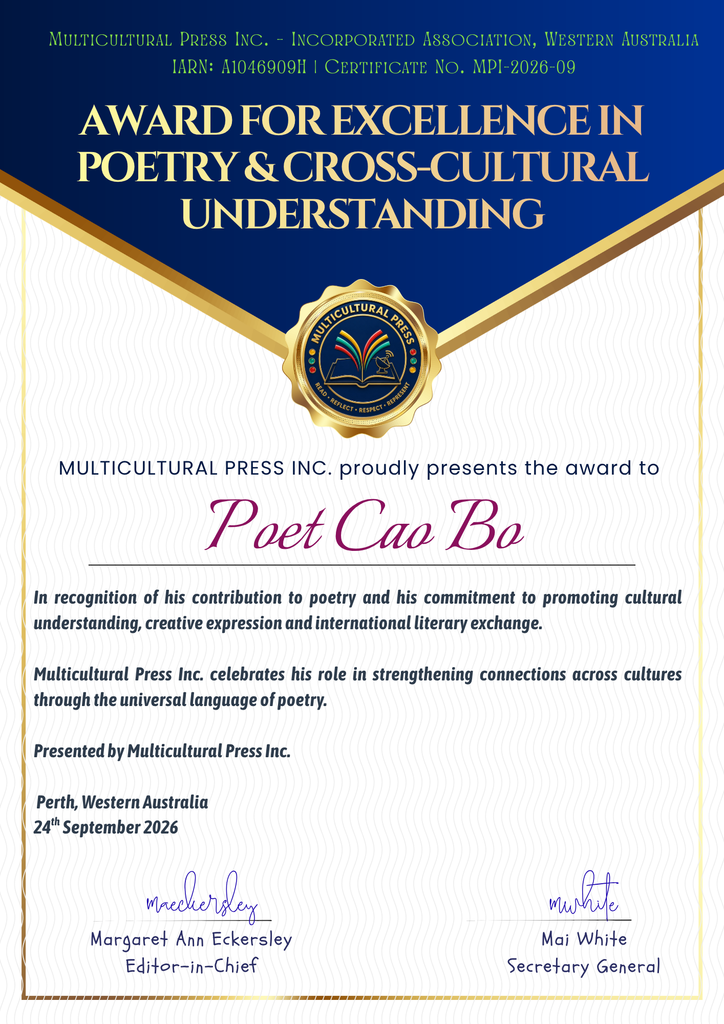
At the Xi’an: Capital of Tang Poetry — Silk Road Aesthetics Study Forum, poet Cao Bo is among the writers receiving international recognition, including the Australian Multicultural Literature Award, an Honorary Doctorate in Literature from the Egyptian Golden Thinkers Forum for Poetry & Literature, and the Premio Internazionale di Poesia “Meleto” Guido Gozzano from Italy. These honours form part of a programme that brings together poetry, scholarship, translation and cultural exchange across China and the wider world.
For Cao Bo, however, the Silk Road is closely connected with the city where he lives and writes. Born in 1979 and based in Xi’an, he began writing poetry at the age of twenty. His work has appeared in Chinese literary publications including Poetry Journal, Star, Writers’ Daily and Yanhe, and his poetry has been included in numerous anthologies.
His published poetry collections include Yesterday, published in 2017, You Are a Cat in 2019, The Man on the Sea in 2020, and Rosefinch in 2023. His writing is often associated with contemporary and postmodern poetic expression, combining everyday language with imaginative movement and a distinctive awareness of place, memory and the wider world.
Cao Bo’s connection with Silk Road poetry is particularly significant. In 2020, he received the Golden Camel Award of the Third Silk Road International Poetry Award in Xi’an. The award recognised poets whose writing and cultural activities contributed to poetry and exchange along the Silk Road. Cao Bo was one of six recipients alongside poets from Turkey, Croatia and China.
At that festival, Cao Bo described Xi’an as a city deeply connected with Tang poetry and the ancient Silk Road. He spoke of the importance of opening Chinese poetry to dialogue with poetry from around the world, learning from other traditions and allowing different poetic cultures to meet and develop together.
This spirit of exchange is also visible in his role with the Silk Road International Poetry Research Center at Northwest University. He has been identified as its deputy director and as a poet involved in the broader Silk Road literary network. His name also appears among the poets included in Distant Lands of the Silk Road, a collection bringing together contemporary poets whose work engages with the cultural geography and legacy of the Silk Road.
His poetry has also travelled beyond China. Cao Bo’s work has been published in international contexts, while his books and poems have continued to connect the local landscape of Xi’an with journeys across countries and cultures. One discussion of his collection Another Pair of Eyes describes his poetry as an attempt to look at the world and the inner life from a different perspective, moving from Chang’an towards places such as Istanbul and combining the real with the imaginative.
There is something fitting about Cao Bo being honoured in Xi’an at a forum devoted to Tang poetry and Silk Road aesthetics. His literary identity has developed in a city where layers of history remain visible in the contemporary landscape. Xi’an was once Chang’an, one of the great centres of Tang culture, and it stood at the eastern end of the ancient Silk Road. For a contemporary poet living and writing there, history is not merely something behind him. It becomes part of the landscape through which modern poetry continues to travel.
Cao Bo’s career also demonstrates how a poet can participate in a literary culture beyond the writing of individual poems. He has been involved in poetry organisations, literary research and international poetry activities, and his work has appeared alongside poets from different generations and countries. In this sense, his contribution belongs not only to the page but also to the continuing conversation around Silk Road literature.
His recognition at the Xi’an forum therefore carries a particular resonance. The awards place a local poet within an international cultural conversation, while the forum itself brings that conversation back to the city that has shaped much of his literary identity.
From Xi’an to Istanbul, from the ancient Silk Road to contemporary international poetry, Cao Bo’s work reflects a continuing movement between place and imagination. His poetry looks outward while remaining rooted in the cultural landscape of Xi’an. And perhaps that is one of the enduring possibilities of Silk Road poetry: to begin in one place, listen to another, and discover that the distance between them can become a source of connection.
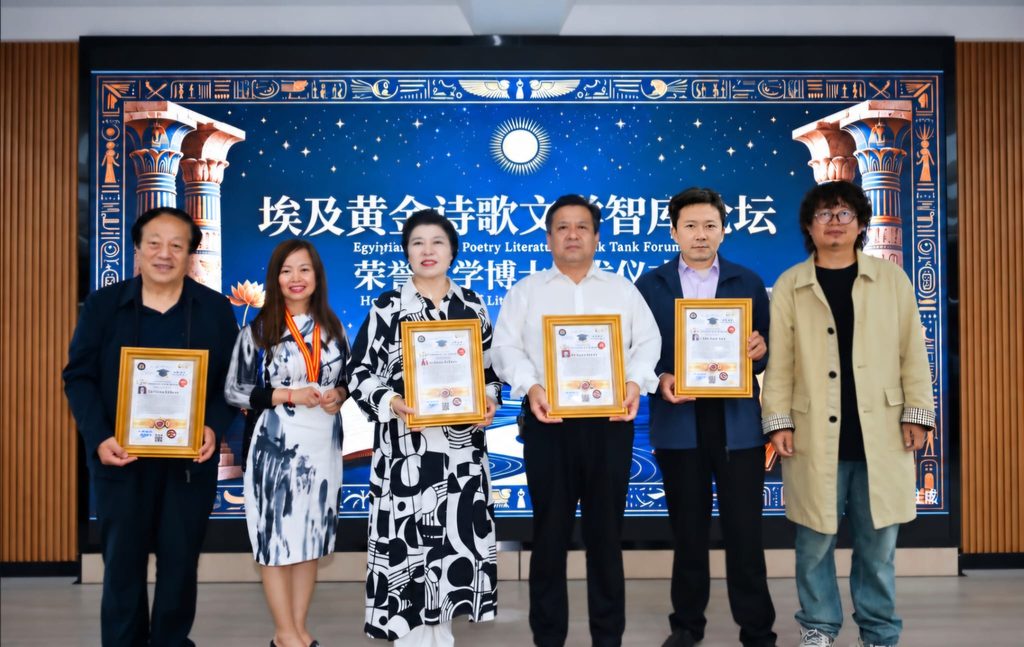
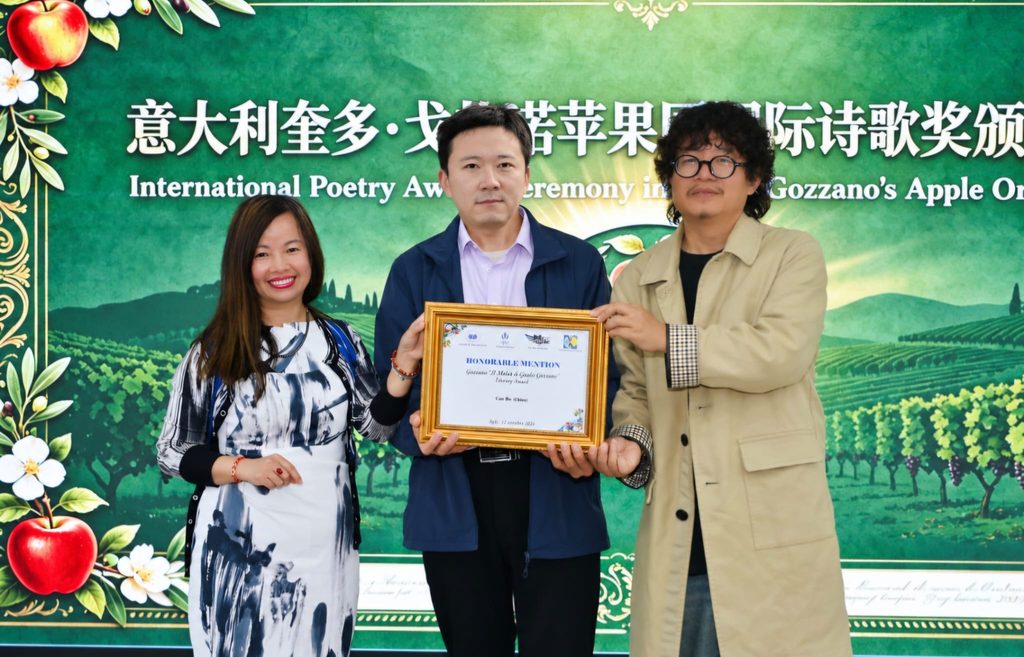
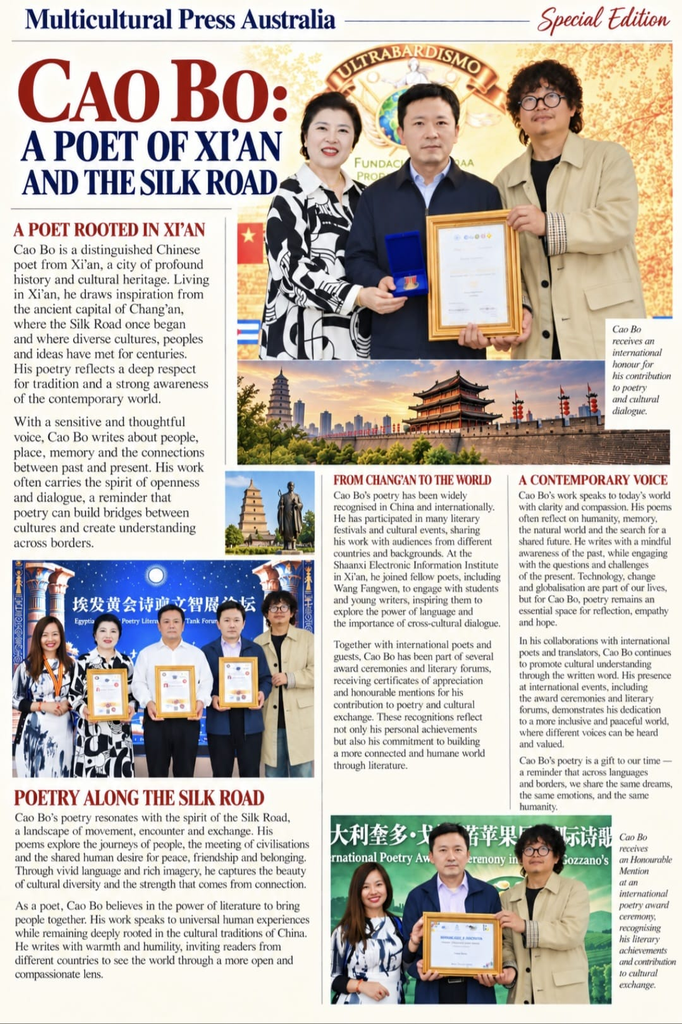
在以“西安:唐诗之都——丝路美学”为主题的研讨会上,诗人曹波是获得国际荣誉的作家之一。据论坛资料,这些荣誉包括 Australian Multicultural Literature Award(澳大利亚多元文化文学奖)、埃及 Golden Thinkers Forum for Poetry & Literature 授予的荣誉文学博士,以及意大利 Premio Internazionale di Poesia “Meleto” Guido Gozzano(“梅莱托”圭多·戈扎诺国际诗歌奖)。这些荣誉也是此次文化交流活动的一部分。活动以诗歌为纽带,将学术研究、翻译和文化交流结合起来,让来自中国与世界各地的文学声音在西安相遇。
然而,对曹波而言,丝绸之路并不仅仅意味着遥远的历史或跨越国界的文化交流,它与他生活和写作的城市有着更为直接的联系。曹波1979年出生,现居西安,20岁开始诗歌创作。他的作品先后发表于《诗刊》《星星》《作家报》《延河》等中国文学报刊,并被收入多种诗歌选本。
曹波已出版多部诗集,包括2017年的《昨日集》、2019年的《你是猫》、2020年的《海上斯人》,以及2023年的《朱雀》。他的诗歌具有鲜明的当代性,在日常语言与富于想象力的诗性空间之间不断转换。地点、记忆、现实经验以及对更广阔世界的感知,也构成了其写作中反复出现的重要元素。
曹波与丝路诗歌之间的联系尤为突出。2020年,他在西安获得第三届丝绸之路国际诗歌奖“金驼奖”。这一奖项旨在表彰在诗歌创作、翻译及丝绸之路国际诗歌文化交流方面作出实际贡献的中外诗人和文学工作者。当届共有六位诗人获得“金驼奖”,分别是土耳其诗人纽都然·杜门(Nurduran Duman)、克罗地亚诗人丁尼克·泰利肯(Dinko Telećan),以及中国诗人洪三泰、远村、曹谁和曹波。
在那届诗歌节上,曹波谈到了西安与唐诗、古丝绸之路之间深厚的文化联系。他说,自己生长在古城西安,这里是“唐诗的故乡”,也是古丝绸之路的起点,深厚的诗歌传统滋养着他的创作。在他看来,中国诗歌需要更加主动地与世界各地的诗歌展开交流,以开放的态度了解和学习不同的诗歌传统,让不同文化背景下的诗歌在交流与融合中共同发展。
这种交流精神也体现在曹波与西北大学丝绸之路国际诗歌研究中心的联系中。公开资料显示,他曾以该中心副主任、诗人的身份参与相关文学活动,也是更广泛的丝路诗歌交流网络中的一员。他的名字还出现在《丝路远方》相关诗歌出版项目中;其中诗集《另一双眼》以跨越地域与文化的视野,呈现当代诗歌与丝绸之路文化空间之间的联系。
曹波的诗歌也已经走出中国,进入更广阔的国际文学交流空间。他的作品在海外文学活动和国际诗歌交流中得到传播,而他的诗歌书写也不断将西安的地方经验与跨越国家和文化的旅行想象连接起来。有关诗集《另一双眼》的评论认为,曹波试图用“另一双眼”观察世界、审视内心,在现实与想象之间寻找新的观看方式。他的诗歌空间可以从长安延伸至伊斯坦布尔,使真实的地理经验与超现实的想象彼此交汇。
因此,曹波在西安一场以唐诗和丝路美学为主题的论坛上受到关注,有着格外契合的文化意味。他的文学身份形成于一座古老历史至今仍清晰存在于当代城市景观中的城市。今天的西安曾是长安,是唐代重要的政治、文化与文学中心,也是古代丝绸之路东方的重要起点之一。对于一位生活并写作于这座城市的当代诗人而言,历史并不仅仅存在于身后的过去,它也成为当下城市景观的一部分,并继续进入现代诗歌的想象与表达。
曹波的文学经历也展现了诗人如何超越单纯的个人创作,参与到更广泛的文学文化建设之中。他参与诗歌组织、文学研究以及国际诗歌交流活动,其作品也不断与不同国家、不同代际诗人的创作并置和对话。从这个意义上说,他对诗歌文化的参与不仅存在于一页页作品之中,也存在于围绕丝绸之路文学持续展开的研究、翻译、交流与国际对话之中。
因此,曹波此次在西安论坛上获得国际层面的认可,也具有特别的意味。这些来自不同国家和文化背景的荣誉,使一位长期生活在西安的诗人进入更广阔的国际文学对话;与此同时,论坛又把这种跨越国界的文学交流带回西安——这座深刻影响了他的生活经验与文学身份的城市。
从西安到伊斯坦布尔,从古老的丝绸之路到今天的国际诗歌交流现场,曹波的创作呈现出一种在地域与想象之间不断移动的轨迹。他的诗歌向外部世界敞开,同时又始终扎根于西安所代表的历史与文化空间。或许,这正是丝路诗歌至今仍具有生命力的一种可能:从一个地方出发,倾听另一个地方的声音,并最终发现,原本横亘其间的距离,也可以成为彼此连接的开始。
Leave a Reply