
(copyright by Multicultural Press Australia, please quote source if repost)
World Thinkers’ and Writers’ Peace Meet & International Book Festival 2026
The World Thinkers’ and Writers’ Peace Meet & International Book Festival, organized by International Society for Intercultural Studies and Research, is presenting from 1–3 March 2026 at Rotary Sadan in Kolkata under the central theme Literature for Resilience, Hope and Social Harmony. With seminars, multilingual poets’ meets, book releases, panel discussions, cultural programmes, and a major book exhibition, the gathering stands as a profound affirmation that literature remains one of humanity’s most enduring bridges across cultures, histories, and identities.
Convened by Sutanuka Ghosh Roy, Nandita Samanta, Somdutta Chattopadhyay, and Sudipto Chatterjee plus the whole team, the festival reflects years of dedication to intercultural dialogue. Their vision has shaped a programme that is both intellectually rigorous and emotionally resonant, bringing together writers, translators, scholars, publishers, and cultural activists from India and across the world.
From the inaugural session at 11 AM on 1 March, the atmosphere held a sense of solemn celebration. In his opening address, Dr. Sudipto Chatterjee spoke with historical depth and personal devotion, tracing the organisation’s journey through generations of his family and highlighting a lineage of humanist commitment that continues to guide ISISAR’s intercultural peace initiatives. With genuine warmth, he introduced each honoured guest from India and abroad, acknowledging their literary contributions and roles as cultural ambassadors. This gesture established an atmosphere of dignity, belonging, and mutual respect that resonated throughout the halls.
The opening day’s programme happened across multiple halls simultaneously, transforming Rotary Sadan into a living constellation of literary activity. Hall-1 hosted the ISISAR–PENPRINTS literary sessions coordinated by Sreetanwi Chakraborty alongside the conveners, featuring discussions such as Rhythm & Reason, Fiction in Fragments, and Tales for Tiny Hearts, interwoven with poetry readings and book discussions that continued into the evening. The sessions welcomed scholars including Zinia Mitra, Sebanti Ghosh, and Latika Joshi, whose insights framed literature as both an ethical compass and a social force.
Parallel sessions in Hall-2 and Hall-3 deepened the intellectual scope of the festival. Paper discussions coordinated by Rituparna Khan examined literature’s role in shaping social imagination, while ISISAR Sahitya Ekhon and Bhasha Samsad sessions brought together poets and critics from diverse linguistic traditions. Voices from Vietnam, Egypt, Bangladesh, Kurdistan, Switzerland, Spain, New Zealand, and Denmark joined Indian writers in a shared poetic dialogue that transcended geography.
Among the most memorable moments of the opening day was the launch of the Vietnam–Indian anthology Psalms of Shadow and Silence. Guest-edited by Vietnamese poet Võ Thị Như Mai and edited by Nandita Samanta and Sreetanwi Chakraborty, the volume was received with extraordinary enthusiasm. Readers filled the hall to witness a book that embodies a literary bridge between two ancient cultures shaped by river civilizations, resilience, and lyrical traditions. The anthology quickly emerged as one of the defining successes of the first day, affirming the hunger for cross-cultural collaboration and the enduring power of poetry to transcend borders. The anthology Neon Prayers of Hope, featuring 44 international poets and guest-edited by Christine Chen, is being launched too and Mai feels truly honoured to be among the featured voices.
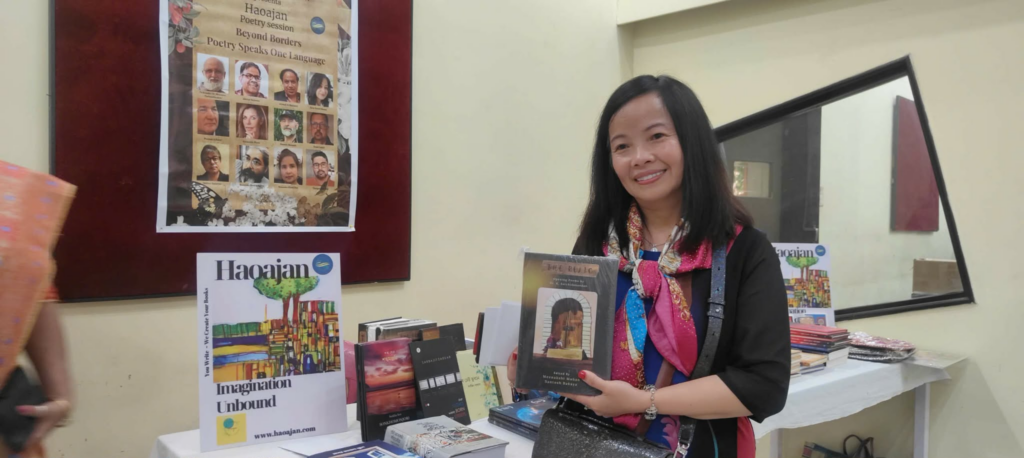
The book exhibition itself became a vibrant marketplace of ideas. Publishers and literary platforms including PENPRINTS, Virasat, Pragya Publication, Bhasha Samsad, Anusha Publication, Sabdaharin, Haonjan Publication, Art Publication, and the Kolkata Translators Forum presented an impressive array of titles, poetry collections, translations, bilingual editions, children’s literature, and critical works. Readers engaged directly with authors and editors, turning the exhibition space into a dynamic site of conversation and discovery.
The next two days of the festival are densely packed with literary engagement. On 2 March, the ISISAR–Sabdaharin Literary Session will bring together Vietnamese poets including Võ Thị Như Mai, Duy Pham, and Hồng Hạnh alongside Christine Chen, while the ISISAR–Virasat session will host international voices such as Sara Hamid Hawas, Ahmad Al Shahawy, Aminur Rahman, and Alexandra Nicod. The Kolkata Translators Forum session will feature distinguished literary figures including Sitanshu Yashaschandra and Kamal Vora, both Sahitya Akademi Award recipients, underscoring the essential role of translation in sustaining global literary dialogue. The evening will culminate in an award ceremony and cultural programme celebrating literary excellence and intercultural collaboration.
On 3 March, the festival continues with a Holi cultural programme, book discussions, and poetry readings featuring leading Indian and international writers, followed by the Gahan literary session bringing together all guests in a collective closing dialogue. Sessions on Assamese literature coordinated by Gitanjali Himanka and the Na Hanyanate literary session coordinated by Mahua Das further highlight India’s extraordinary linguistic diversity and regional literary traditions.
Anticipation is also growing for the launch of The Shape of Return by Võ Thị Như Mai, translated by Somdutta Chattopadhyay and Sudipto Chattopadhyay and published by Education Centre. The collection explores memory, migration, and spiritual homecoming, and its launch is expected to deepen literary ties between Vietnam and India while drawing strong interest from readers and scholars alike.
A remarkable feature of the festival is the presence of a collective of poets who gather monthly to celebrate the many languages of India. Their special reading during the event, moving fluidly between Bengali, Hindi, Urdu, Tamil, Assamese, and other languages, demonstrated how poetry thrives through communal listening and shared performance. Alongside them, numerous recitation groups, translators’ forums, and cultural ensembles have created a dynamic, immersive environment where literature is spoken, sung, debated, and lived.
International guests include Vo Thi Nhu Mai (Australia), Hong Hanh and Duy Pham (Vietnam), Ahmad Al Shahawy (Egypt), Julio Pavanetti (Spain), Annabel Vollar (Spain), Christine Chen (New Zealand), Aminur Rahman (Bangladesh), Alexandra Nicod (Switzerland), and Muniam Alfaker (Denmark), whose participation underscores a global commitment to literary peacebuilding.
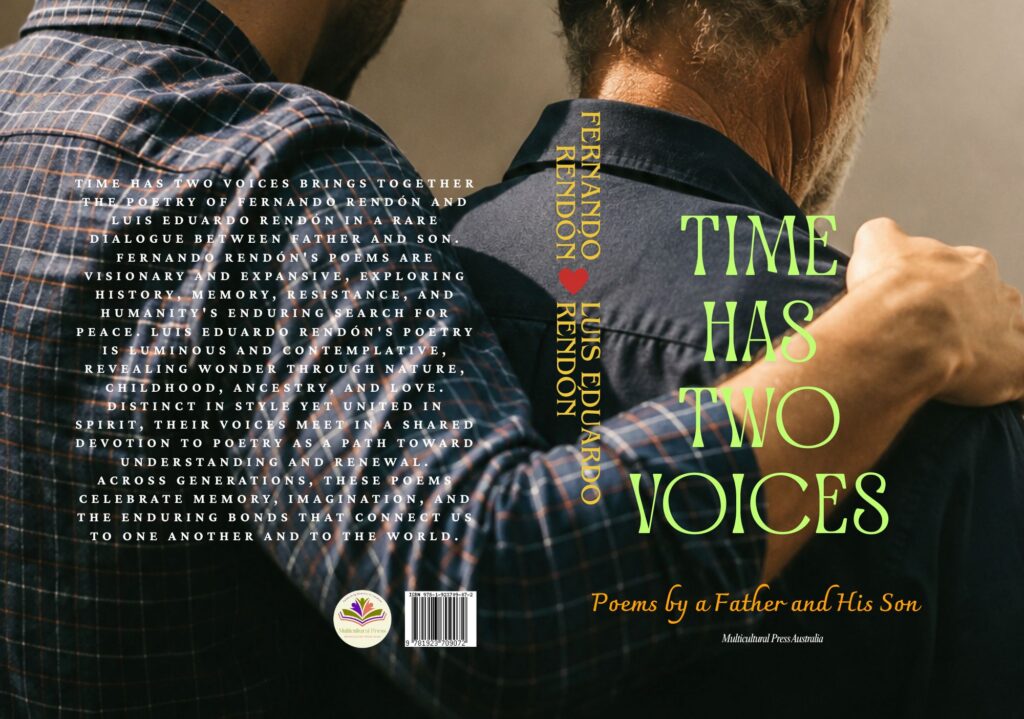
In addition to her own featured appearances, Võ Thị Như Mai also brought to the World Thinkers’ and Writers’ Peace Meet & International Book Festival two remarkable titles published by Multicultural Press, further enriching the festival’s spirit of global literary exchange. One of these is The Faraway Orchard Lands by Da Ngan, a novel that unfolds with lyrical tenderness and emotional depth, tracing the fragile threads of memory, displacement, and longing that bind individuals to landscapes both real and remembered. Through its evocative storytelling, the book invites readers into a world where orchards become symbols of inheritance, loss, and renewal, reflecting the quiet resilience of those who carry their homelands within them. Alongside it, Mai introduced Drops of Water and Tears by Irma Kurti coordinated editorially, and guided through production, offering English-language readers intimate access to Kurti’s luminous reflections on love, exile, motherhood, and spiritual endurance. The poems move like small vessels of feeling, each one holding a distilled moment of human vulnerability and strength, reminding us that tears and water alike sustain life, cleanse memory, and connect us across borders. Together, these two books exemplify Mai’s unwavering commitment to transnational literary dialogue: one a Vietnamese novel rooted in cultural memory, the other an Albanian poetic voice carried across languages through her careful translation. Presented in Kolkata’s richly multilingual environment, they stand not merely as publications but as living bridges—linking Southeast Asia and the Balkans, personal histories and shared human emotions, and reaffirming the festival’s central vision that literature, when carried with care across languages, becomes a home where the world can meet.
Distinguished Indian guests and contributors include Sitanshu Yashaschandra, Kamal Vora, Joba Murmu, Garry James, Srinivasa Rao Sambangi, Padmaja Iyengar, and Trishna Basak, among many others whose work reflects the diversity and vitality of contemporary Indian literature.
As the festival progresses through its remaining days, the halls of Rotary Sadan continue to echo with multilingual poetry, thoughtful debate, music, and spontaneous conversations that blur the boundary between audience and performer. Kolkata once again reveals itself as a crossroads of ideas and artistic exchange, where literature becomes a shared home and language a bridge between worlds. In this gathering of voices, cultures, and books, the World Thinkers’ and Writers’ Peace Meet & International Book Festival stands as a living testament to humanity’s capacity for dialogue, empathy, and hope.
As the final sessions keep on and the corridors of Rotary Sadan continue to hum with overlapping languages, shared laughter, and the rustle of freshly signed books, the World Thinkers’ and Writers’ Peace Meet & International Book Festival leaves behind a living memory. In Kolkata, a city long synonymous with intellectual ferment and artistic courage, this gathering has rekindled the belief that literature is not a quiet art confined to pages but a vibrant civic force capable of healing fractures, nurturing empathy, and imagining fairer futures. The resounding success of cross-cultural publications, the packed halls for multilingual readings, the embrace between emerging and established voices, and the anticipation surrounding forthcoming launches such as The Shape of Return all signal a renewed global appetite for dialogue rooted in dignity and mutual care. As delegates prepare to depart after three day program, they will carry books, friendships, translation plans, and invitations across oceans, the festival’s true achievement becomes clear: it has transformed strangers into collaborators, languages into bridges, and shared stories into a collective promise that hope, when spoken in many tongues, grows stronger.