Vo Thi Nhu Mai is an experienced educator, literary reporter, and international poetry advocate who has dedicated more than two decades to teaching and educational leadership across Vietnam and Australia. She began her career as a high school English teacher in Vietnam and later served as Head of the English Department in a large secondary school, leading curriculum development and mentoring colleagues while supporting students from diverse backgrounds.
Moving to Australia, Mai completed a Graduate Diploma of Teaching and a Master of Education in Literature, strengthening her expertise in literacy, pedagogy, and inclusive education. Over the years, she has developed extensive experience in primary education, behaviour management, differentiated instruction, and evidence-based literacy teaching, with particular strengths in phonics, reading comprehension, and writing development.
Beyond the classroom, Mai is actively engaged in the global literary community as a reporter, Committee Member of WA Poets, and Continental Coordinator of Oceania for the World Poetry Movement. A long-serving NAPLAN marker and mentor to fellow educators, she remains committed to fostering educational excellence, cultural dialogue, and the transformative power of literature and poetry across communities worldwide.
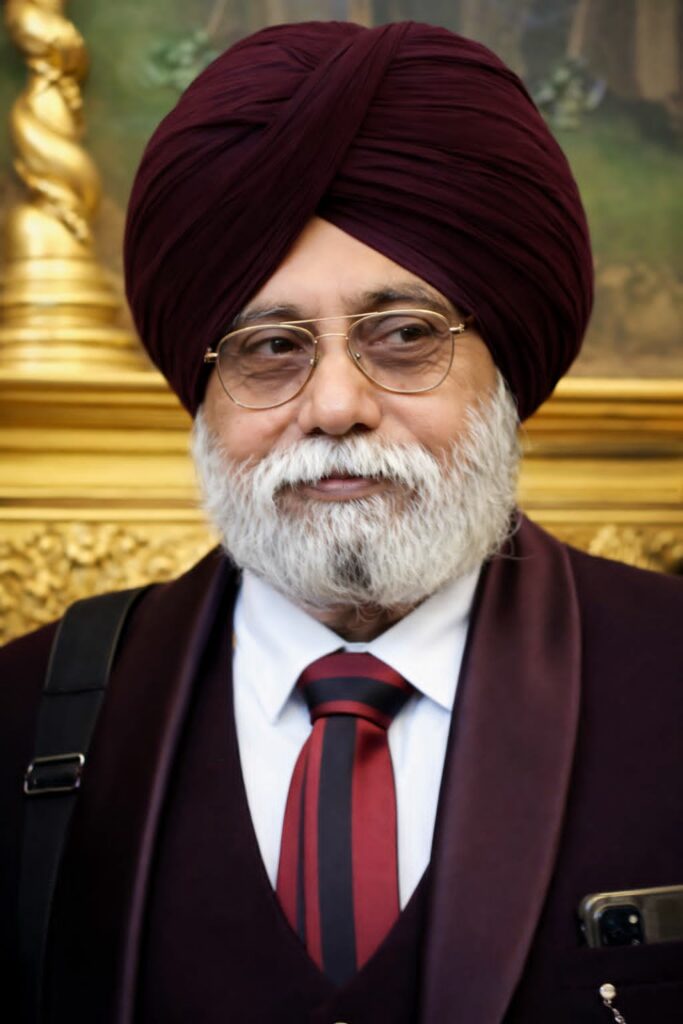
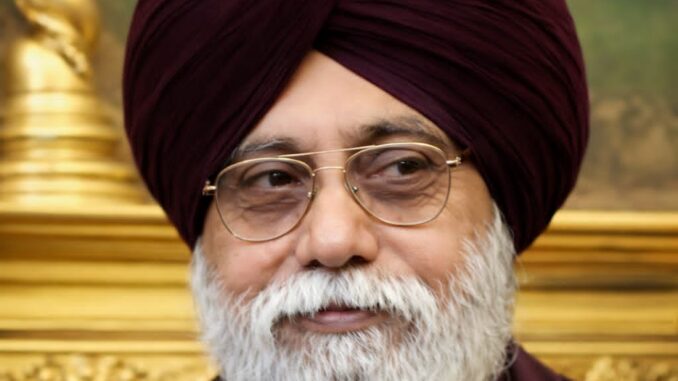
Dr. Jernail Singh Anand is an internationally acclaimed Indian poet, philosopher, literary theorist, educator, columnist, and environmental activist. Recognized as a significant contemporary voice in English literature, he has authored more than 200 books covering poetry, fiction, spirituality, literary criticism, and non-fiction. His work explores mysticism, human consciousness, peace, and social responsibility. Laureate of Charter of Morava [Serbia], Seneca [Italy] Franz Kafka [Germany, Ukraine and Czech Rep], Maxim Gorky [Russia] awards, his name is inscribed on the Poets’ Rock in Serbia. He is also an Honorary Member of the Serbian Writers Association, Belgrade, and a Honorary Senator with the International Academy of Rome.
Born in 1955 in Ludhiana, Punjab, and raised in Longowal village, Dr. Anand studied at Government College, Ludhiana, earned a Master’s degree in English Literature from Punjabi University, Patiala, and later completed a PhD at Panjab University, Chandigarh, focusing on mysticism in the poetry of Walt Whitman and Puran Singh. He began his academic career as a lecturer in English and later served for ten years as Principal of DAV College, Bathinda. Dr. Anand is also known for co-developing the literary theory of “Bio-Text” with Iranian scholar Dr. Roghayeh Farsi. An advocate for peace and environmental sustainability, he has represented India at international peace forums and led tree-planting campaigns across Punjab, contributing to the planting of nearly 20,000 saplings.
OPENING
1.You have written more than 200 books across poetry, spirituality, criticism, and philosophy. At this stage of your life, do you still write to discover something or to preserve something from disappearing?
Anand:
Life is a journey, and a journey is a quest. For me, this quest has been into the heart of the mystery called existence. Nobody wants misery, nor anybody gets training in it, yet there is only misery and unhappiness in the world. Why men, in spite of their education, and intellectual assets, fail to create a world which is free from mental and moral confusions? Why are we not at peace? This is the million-dollar question, for which I keep exploring. So for as the second part of your question is concerned, we are constantly replacing our innocence with knowledge. Innocence is that area of perception where we do not know what is happening, why it is happening, and who is behind it. We simply accept. This is the area of divinity which we ascribe to gods. What we know is human, and what we do not know, divine. I always wish to preserve this innocence of man from erosion by knowledge. Knowing everything is also self-defeating, because it offers no solace. Rather, the more we know, the greater is our dissatisfaction with our existence. Certainly, God is a superior agency, and He never wanted us to eat the fruit of knowledge and lose our state of innocence and bliss.
2.Your work moves between mysticism, literary theory, environmental activism, and global peace discourse. Do you see these as separate commitments or expressions of one underlying philosophy?
Anand
While making a journey, we carry all the things we like or require. Mysticism is the way I look at existence. Literary theory is the way I express myself. Environmental activism underlines my commitment with life on the earth. And my passion for world peace is how I look at the empirical world as one unit. They all define me, and my existence. Gods have given us so many assets, with which we are expected to serve mother earth, as well as our brethren. We are citizens of a multi-verse, and we must know that we belong to the divine family. Life is a movement forward, like a river, which takes in its strides everything and keeps moving.
3.Many writers create literature. Few attempt to create frameworks of thought, as you did with Bio-Text theory. What was missing in existing literary theory that compelled you to invent a new language for interpretation?
Anand
In a text, it is the individual who is in converse with the cosmos, and at the same time, the cosmos is also in converse with him. It is a conduit through which the message divine passes, from one person to the other, and from the earth to the sky. Poetry is a divine text, and like divinity itself, it too partakes of the greater mystery. Bio-text deals with poetic creation and re-creation. Text is created in the heat of a poetic moment, a time in which the poet’s state of mind is a decisive factor. In the next five minutes, the state changes, and the poem, produced five minutes later, will be entirely different. I apply this theory of virtuality to the reader’s re-creation of the text also. It all depends on the mental state of the reader when he approaches the poem. Five minutes later, things can be entirely different. As such, the text that is written is also a version, while the re-creation of the text, is also a version, conditioned by the mental state of the poet and the reader. There is no finality in its meaning. It keeps evolving as new people connect with the text.
B/ ABOUT BIO-TEXT
4.Bio-Text suggests literature is not merely constructed language but living consciousness interacting with reality. Does that mean a text evolves morally depending on the reader who encounters it?
Anand
Literature is a moral construct which houses the ethos of a society. A literary creation is meant to give us joy and it must also instruct. Those who write, and those who re-create, i.e. the poet and the reader/critic, applies to the created work, not only his intelligence and ingenuity, but what is his mental state at that moment, also affects how he behaves with the text. Literature has an inbuilt sense of morality as its objective is ethical and emotional elevation of mankind. Literature helps in preserving the sanity of a society, which is often under threat by human rashness and artificial wisdom, born of fast living and passion for instant success.
5.If language itself is alive, as Bio-Text seems to imply, do writers control meaning or merely release it into an ecosystem of consciousness?
Anand
Writers use words very carefully to express what they feel, because, only then, the meaning can flow to the readers. But in between, this exercise is open to several uncertainties. Creating a text is like bearing a child. How much control a man has over his kids, who are growing and evolving? And we shoot them like arrows into an ecosystem of consciousness. With no finality. No certainty. No exactitude. No precision. That is life. It cannot be reduced to formulae. Language is created by men, and therefore, it can be trapped in pre set patterns. Not literature, which describes the emotional life of the people. The same word, which can be linguistically correct, may carry different meanings for people of different backgrounds. Here, a writer has no control over his own meaning. Moreover, a text is not written for the author alone. It will gain its meaning only when it interacts with its readers. I am reminded of the ‘Karma’ theory. Text is like an action on whose fall out, you have no control.
6.Today AI can imitate poetic structure remarkably well. In your view, can machine-generated poetry ever possess “bio” the living essence behind literature?
Anand:
AI can enhance our capabilities, and perform things with miraculous speed. But even magic has its limitations. AI is mechanical ‘magic’, and it depends on the will and power of the magician. Science and Technology have made our lives comfortable. But if we extend this comfort beyond a certain limit, it will prove counter-productive. Knowledge has no soul, it is a dry ensemble of facts and figures. Wisdom has a soul. AI is dry knowledge, which is neutral, has no moral commitment. Look at a pistol. The man who carries the pistol, can be killed by a bullet from the same pistol, if it goes into the hands of an enemy. The pistol has no consciousness. In the same way, electronic knowledge AI is also ethically neutral. But, if it starts creating men and women who have no ethical sense, that would be dangerous for humanity. It is not possible to impart wisdom to machines. Just as nature is the first empire, human civilization is the second empire, and machines are the third empire, with almost no divinity in them. They are inert so far as ethics and imagination is concerned. We human beings must ask ourselves: Is it safe to drive a car which has no brakes?
C/ ABOUT POETRY AND MYSTICISM
7.Your doctoral work explored mysticism in Walt Whitman and Puran Singh. What spiritual hunger do you think modern poetry is failing to address today?
Anand
It is important at the outset to settle the question: Why we write poetry. Obviously, it is for self-expression, which gives joy to the poet who shares his feelings with his readers. But things do not end here. It is only one side of the creative experience. At the other end is the reader, for whom the poetry has been written. Somewhere in between the two extremes falls another dimension of writing. It is the idea of selling your poetry. And these days, writers are very ‘sensitive’ about their work being sold like ‘best sellers’. And for this, a lot of input is made through agents and digital media. Here, we need to ask a question: Does the poet want to line his poetry with mass appeal? Does he want instant success? For making money, he has to make his work saucy and add to it elements which people like, so that they run for it. This is one part of the story. The other is when you have no such passion, to sell and become a best-selling poet. When your connection is with the Muse and you write, not to win awards, but to satisfy your craving for writing, and to please the gods. Such writing is missing from the competition charts. And such people are very few. What you are looking for, ‘the spiritual hunger’, has become a casualty in this dollar driven, competition ridden world.
8.Mystics often seek quietness, while poets seek expression. How have you reconciled those opposite impulses within yourself?
Anand
Mystics talk through their silences, and poets need words to express complex states of mind. Mysticism is a phenomenon which is directed towards the inside of man, and poet, at first moves into the depths of human existence, and then, returns to the surface, loaded with insight to share with the masses. Mystics also have written poetry, but it is draped in metaphors. However, mystics too want to share their feelings for which they need poetry. While ordinary experience can be shared by means of fiction and non-fiction, mystics resort to poetry only, which answers their abstract experiences. In this way, poetry and mysticism intersect each other. We need to remember that all the scriptures which talk of complex spiritual states are in poetry, and this poetry too is in the language of the people, easy to understand, and it is poetry which can be put to music.
9.Is poetry ultimately an artistic act for you or a spiritual discipline?
For me, poetry is an artistic act as well as a spiritual discipline. As a spiritualist myself, I look upon every artistic act as satisfying the eternal passion. As an art form, poetry brings to us the latent beauty and exalted feelings which are hidden even in ordinary events. And, as man is a part of the cosmic phenomenon, all his actions have a dual perspective. It is art which connects the mortal and the immortal. The artist transcends the empirical and the immediate, and imparts to ordinary happenings the aura of immortality.
D/ ABOUT POWER, CIVILIZATION, AND HUMANITY
10.You’ve worked in peace forums and international literary institutions. After decades observing humanity, are you fundamentally optimistic about civilization or merely hopeful despite the evidence?
Anand:
I have won Cross of Peace as Secretary General of the World Union of Poets, Italy, and in addition to it, several awards from International organizations working for Peace. I was a founding member of the World Institute of Peace, Nigeria. There is a huge body of people, poets, and social activists, who are working for Peace. And the overall impact of these peace fora is that there have been no third world war. After 1945, the world is aware of the dangers of fascist passions. Democracy is the ruling governance model and, by and large, people have lived by the ideals of a civilized society, which gives respect to individual voices in self-governance. We cannot just ignore what has happened in Iran and what is going on in Ukraine. The world, though it believes in peace, has failed to bring peace to these regions. I believe that we need to propagate the ideas of ethics, morality, peace, goodness and co-existence, so that violence has no place in our way of living and thinking. Although I fear the man’s incapacity to understand the cosmic designs, yet, I am optimistic that finally, good will prevail.
11.We live in an age saturated with information but impoverished in wisdom. Has literature lost its moral authority in modern society?
I agree with you. Knowledge and information equip us for a better life, but lack of wisdom turns it into the game of snakes and ladders. All our progression is hollow and infernal if we lack wisdom, how to use our knowledge. There are four states so far as education is concerned. We start with information, which matures into knowledge. From knowledge, we should move to wisdom and from wisdom, to light. But, our journey stops at information or at the most knowledge. After which, young people get jobs and then, get lost. I agree with you that literature has lost its moral authority in the modern world, where information and knowledge are enough to run a household. We have left behind wisdom which connects the dots, and literature is the construct which imparts meaning to the spiritual yearnings of the civilization.
12.You have written extensively about humanity and consciousness. What, in your opinion, is the greatest danger facing mankind today: technology, ecological collapse, political extremism, or spiritual emptiness?
Anand
You have righty picked on the real issues which humanity encounters today. The bedrock of all issues is the lack of original intelligence. He has developed artificial intelligence and it is becoming a threat to his own existence. Because he does not understand the rhythm of planets, he is causing danger to the delicate balance of the environment. The lack of spiritualization of operations of mankind brings in moral exhaustion and spiritual barrenness. The extremism of modern times, in politics, which is rather a regressive game, poses its own dangers. Overall, humanity is under threat from man himself, from his foolish passions, and his lack of understanding of the philosophical processes which impart an exalted state to human life.
E/ ENVIRONMENTAL ACTIVISM
13.You planted nearly 20,000 saplings in Punjab. Do you think environmental activism without inner transformation is ultimately temporary?
Anand
It is a matter of realization, or transformation as you call. We connect with the universal creative spirit when we plant saplings. We are watering life, and strengthening the forces of nature. Certainly we need a transformation, or at least a moment of revelation in which man realizes his duties towards the Creation, as well as the Creator. It begins with persuasion, but some people soon realise the divinity of such actions, which promotes life processes. I came up with the slogan: Ik Rukh, Sau Sukh which means one tree and a hundred boons. I wrote extensively about the social, cultural, spiritual relevance of trees in man’s life. We started with a plan to plant one lakh saplings, but the ITBP commandant, who was working jointly with me, was transferred.
14.When a poet plants trees, is that still poetry?
Anand:
Trees are a symbol of life. In a poet, they inspire a thousand impulses. “Nature never did betray, the heart that loved her”, says William Wordsworth. Planting tress is a physical act which connects us with the soul of Creation. We are performing a celestial duty: to save life. This act can be equated to poetry if we look upon it as connecting with the cosmic forces. Poetry too is a cosmic voice. I always believe that nature is the first love of God, it is blessed with original intelligence. They know as much as is needed for them to survive. They do not need religious indoctrination to keep away from evil temptations like: Lust, Anger, Greed, Attachment and Pride. Men, who appear to be mentally retarded species, have to go to religious preachers, to learn this simple lesson, which is ingrained in nature. Vegetation, birds, animals, waters, winds, – it is Cosmic Poetry, and when we plant trees, we are only trans-versing our passion.
15.Governments speak about sustainability statistically. Poets speak about nature emotionally. Which language changes human behaviour more effectively?
Anand
The world administration is worried about the falling eco balance, and monumental efforts are going on to bring home the truth that trees need to be planted and protected. This they are doing with one hand, while with the other hand, they are cutting down trees in millions to lay six lane, eight lane roads. Civilization has always taken the toll of the nature’s wealth and moved ahead, never looking back. So, the governments’ data-driven sustainable programmes are photo frames which are fitted with fear-stickers. Millions of programmes are being done, across the nations, where experts are lecturing and para-experts are listening. Nobody is planting trees; they are only talking about planting trees. Tree plantation has been reduced to an academic exercise. A ritual, and rituals are not taken seriously, because things which become rituals, tend to turn formalistic. Without criticizing the efforts put in by the governments of various countries, I would like to say that Poets can click on the emotional chord, which removes the bureaucratic pressure, and inspires people towards an act of nobility.
F/ PERSONAL / PSYCHOLOGICAL
16.Was there a moment in your life when you seriously doubted literature itself?
Anand
Never. I have always looked upon literature as a virtual possibility how life could have been lived better. Literature provides a spiritual and emotional extension to history. Literature is a river of life carrying emotions, ethos, and culture, which runs parallel to human history. History is morally neutral, literature cannot claim this luxury. History presents life in its brutal details, without any reference to the possibilities of a better human behaviour. If we look at Mahabharata, the story is very powerful and full of moral guidance, but what finally impacts our minds is the Bhagwad Gita which is literature of the first order. The history belongs to the Pandvas and the Kaurvas, but the text comes to us from a great sage, Ved Vyasa. So, there is no question of doubting literature and its power to create a parallel life which is better than what history presents.
17.What idea did you once strongly believe as a young poet that you no longer believe now?
Anand:
As a young poet, I was obsessed with the idea of creating poetry. The passion lingers on even today. In my earlier days, I always thought of selling my books, and made conscious efforts also. During those days, 1980s, the electronic communication was not in vogue. So, the readership was quite limited. But, now, as soon as you post a poem on the fb, it goes to hundreds of readers who respond. The idea of sale has actually left me now. No doubt, there are poets who are writing poetry with mass appeal, and who make efforts to sell their books. But, I find that it is a multi-million business. I feel that my job is to write, as directed by the Muse. Not to run after its sales. That angels will take care of, who have given me the contract to write. I dedicate my books to the Muse. She will see who reads them.
18.Across your journey as teacher, principal, poet, theorist, and activist which identity has cost you the most personally?
Anand
I loved teaching, poetry, and theorising about poetry, and as an ethical activist, I enjoy my work. The only identity which was most exacting was Principalship. This is an administrative job, in which, goodness does not account for much. You need to be smart, calculating, decisive and ruthless too at times. I was none. So, I had a hard time dealing with people and I realise that it is good to be good, but it is bad if your goodness makes a victim of you. I loved peace, never wanted to do any harm to anybody. Being good in a place where this currency does not work, drains you and leaves you exhausted.
G/ CLOSING
19.If a young writer asked you how to become immortal through literature, what warning would you give before any advice?
Anand
Not to be tempted by instant success. By and by, he will identify where he is best, and pursue that genre. Best advice comes from your inside. Work for your perfection, without harming anybody by your words or actions. The final aim of your writing should be self-expression, which promotes cosmic wellbeing. Money, success, awards are good if they come by themselves. Running after them makes you successful, and sometimes proud too, but it is momentary. Real success of a poet, which lends his work immortality, is love for mankind which includes pointing out its fault lines as well, and loving truth, beauty, and promoting the idea of goodness.
20.When future generations read your work, what do you hope they misunderstand the least about you?
Anand
My work, though it is born out of the contemporary chaos, still looks forward to future, embedded as it is in my desire for man to fulfil his destiny and perform his duties for which he is here. So far as AI and technological developments are concerned, I believe that they are man’s creations, and will serve him so long as he controls them. Gods have given man a clear mandate to do what he likes, and they generally do not intervene. The theory of ‘Karma’ underlines that men have to face the fall out of their actions. I want human beings to be closer to nature, possess all the godly powers borne out of machines, but they should stay connected to each other as human beings, and to nature, and finally God. There should be no disconnection. My epic ‘Lustus: The Prince of Darkness’ criticizes the modern civilization, and wants good to be restored. A major point in the epic is: Good is of no use if it cannot fight the evil. So, I have formulated an activist creed, out of which is born the International Academy of Ethics. I wish that goodness does not go out of currency. People may not start believing that it is evil which finally wins. Evil has an instant tenure. Finally, it is good that stays in the world. My partiality for machines can be misunderstood. My preference for AI too can be misunderstood. I wish to make it clear. Machines pose no problem so that we hold our control upon them. So far as AI is concerned, it has revolutionized the way men think and act, it is a cat’s paw for man, he can do uncomfortable jobs with its help. But, there is something called restraint. We need to put a bridle on our passion for knowledge, which is satanic in its essence. What men need and what they lack is wisdom. AI can help man in his speed towards self-fulfilment. But when we go beyond this, it is greed. A sin. ‘Your sins will find you out’ says the Bible. Men should avoid pride, and inordinate ambition, and try to maintain harmony between God’s world, and the artificial world they have created.
Dr. Jernail S. Anand
Email: anandjs55@yahoo.com.
Mobile: 91-9876652401
Bibliography:
https://sites.google.com/view/bibliography-dr-jernal-singh/home
Grokipedia:
https://share.google/QtiWrcFr7Sca7v0qC