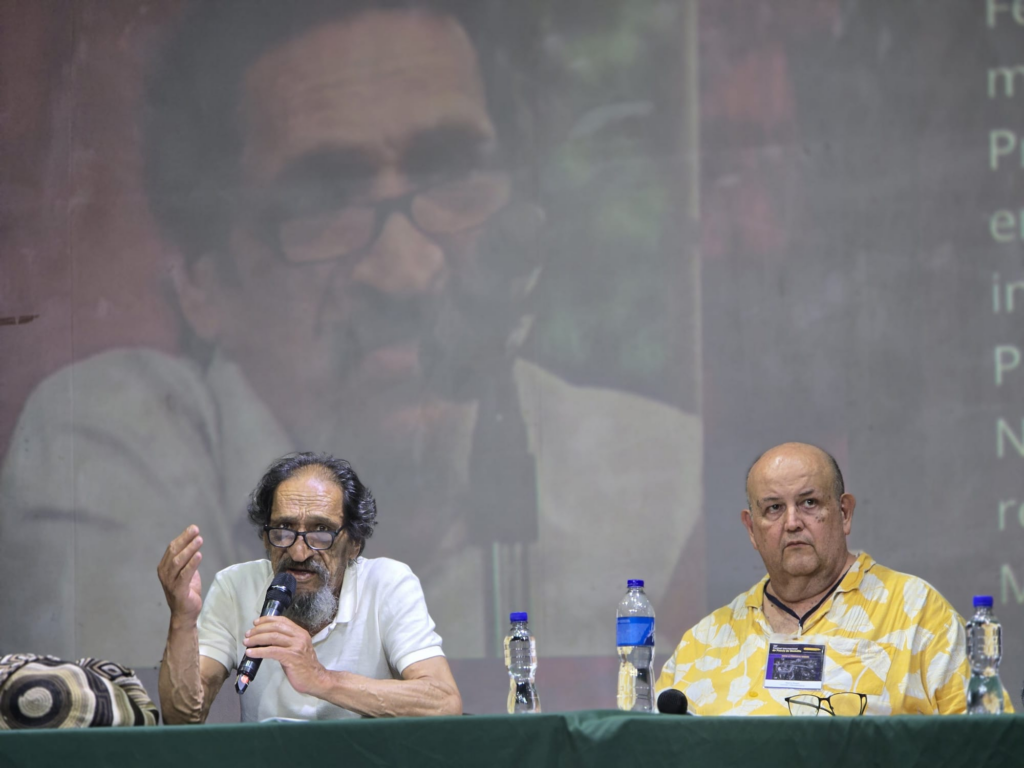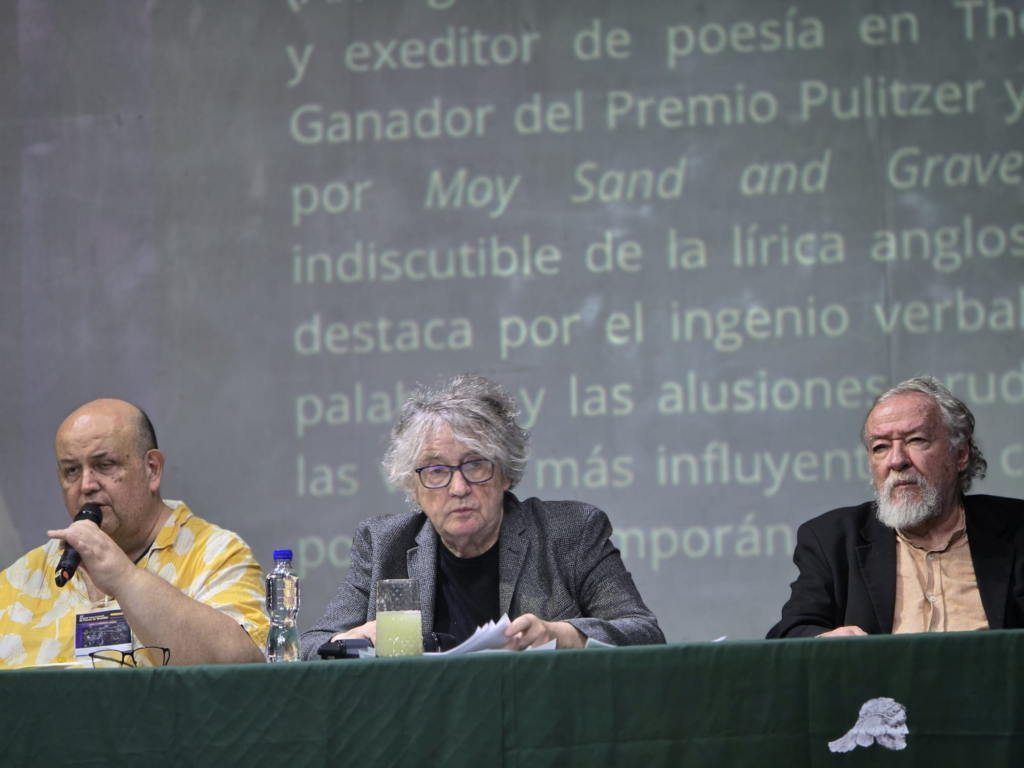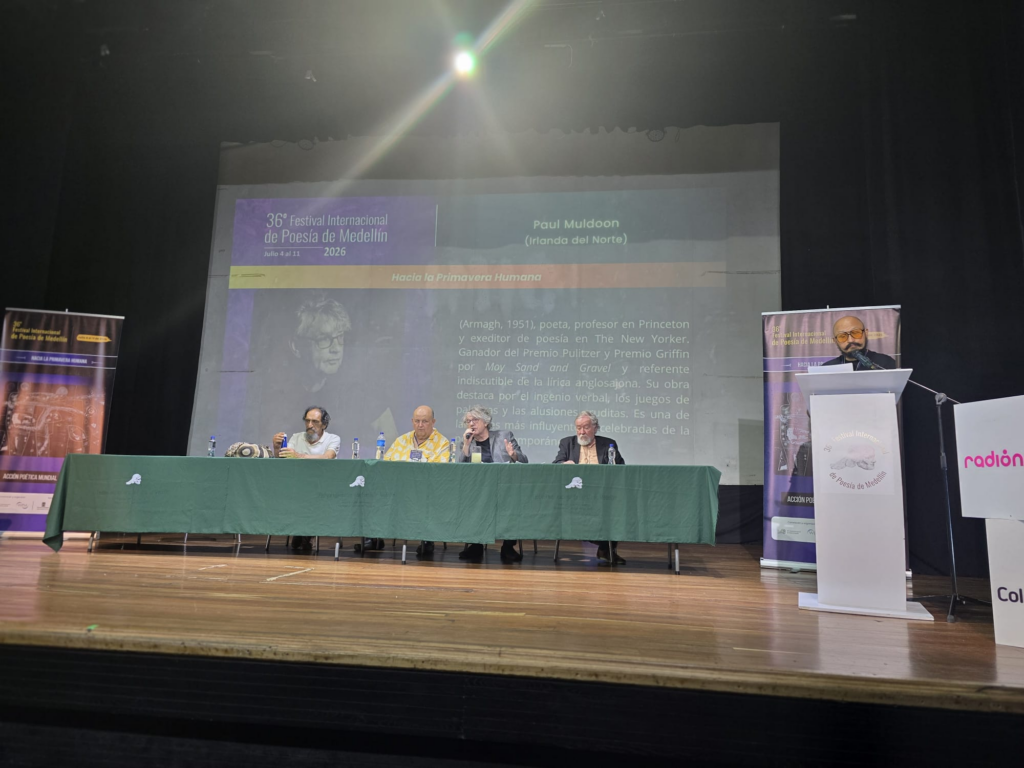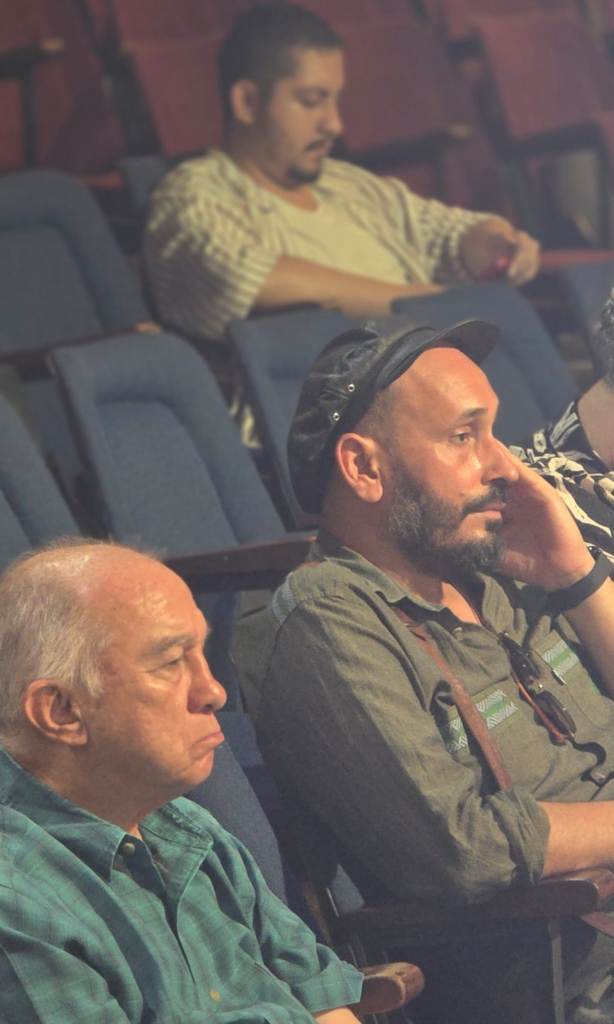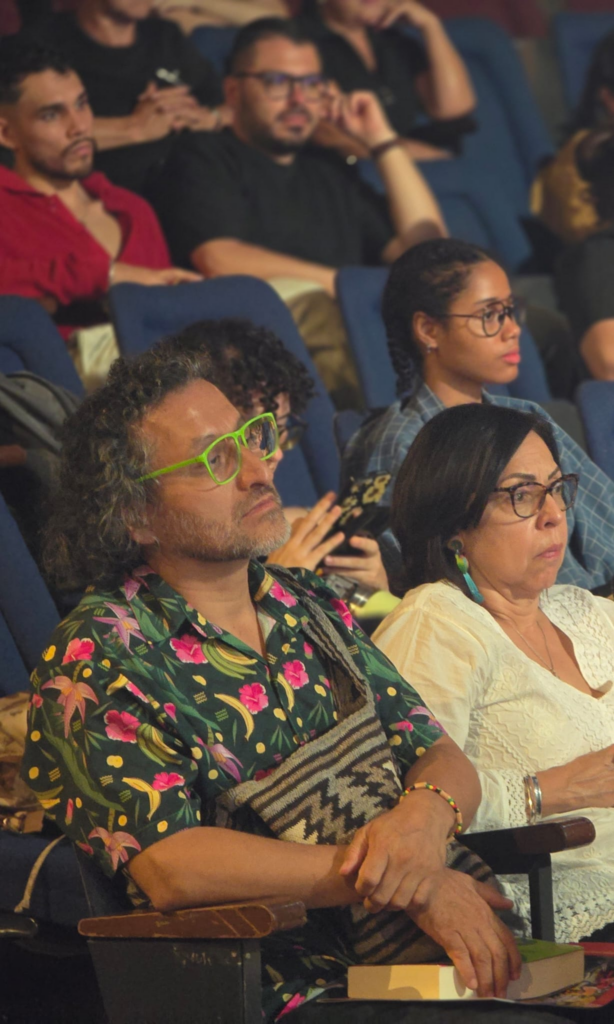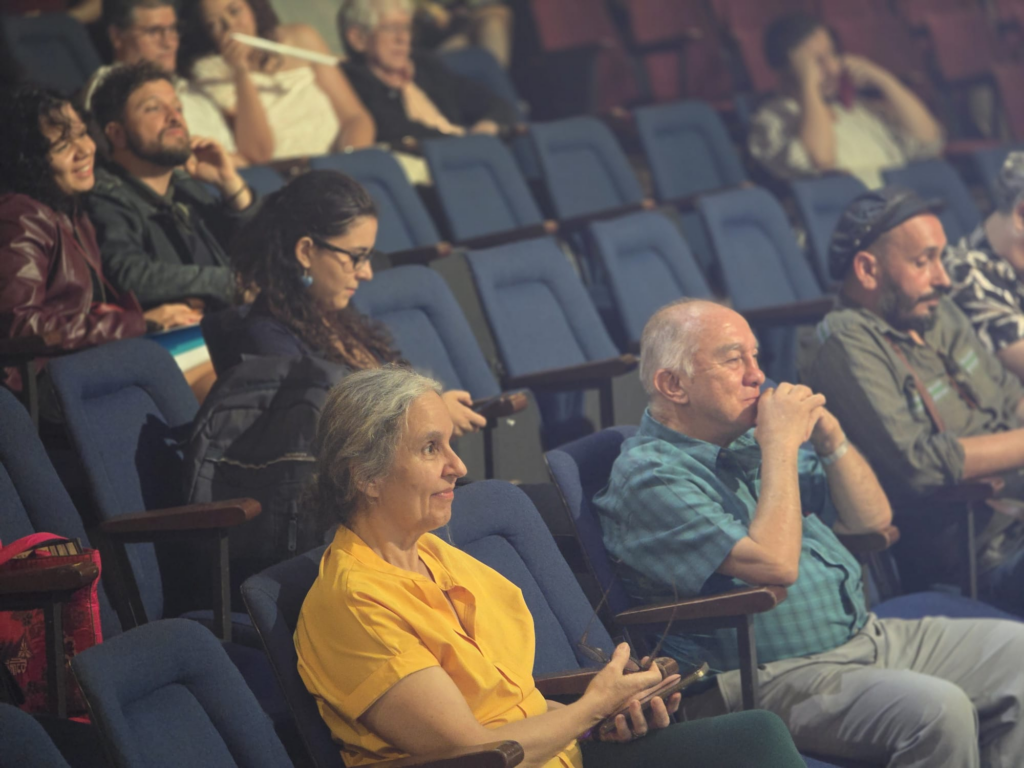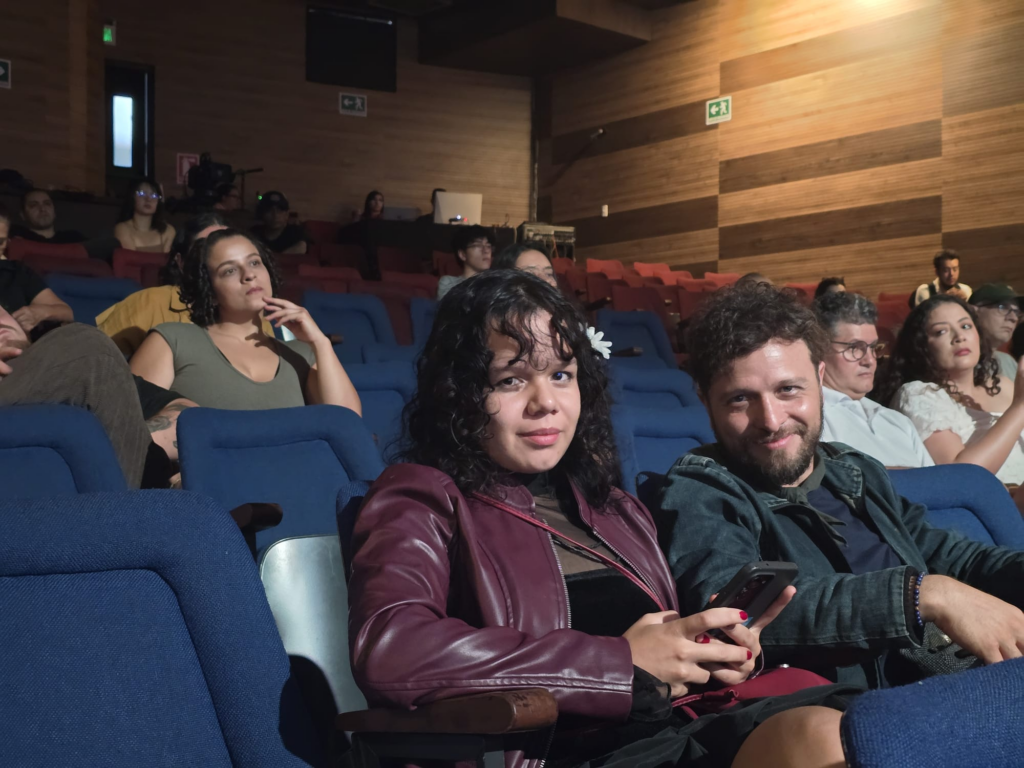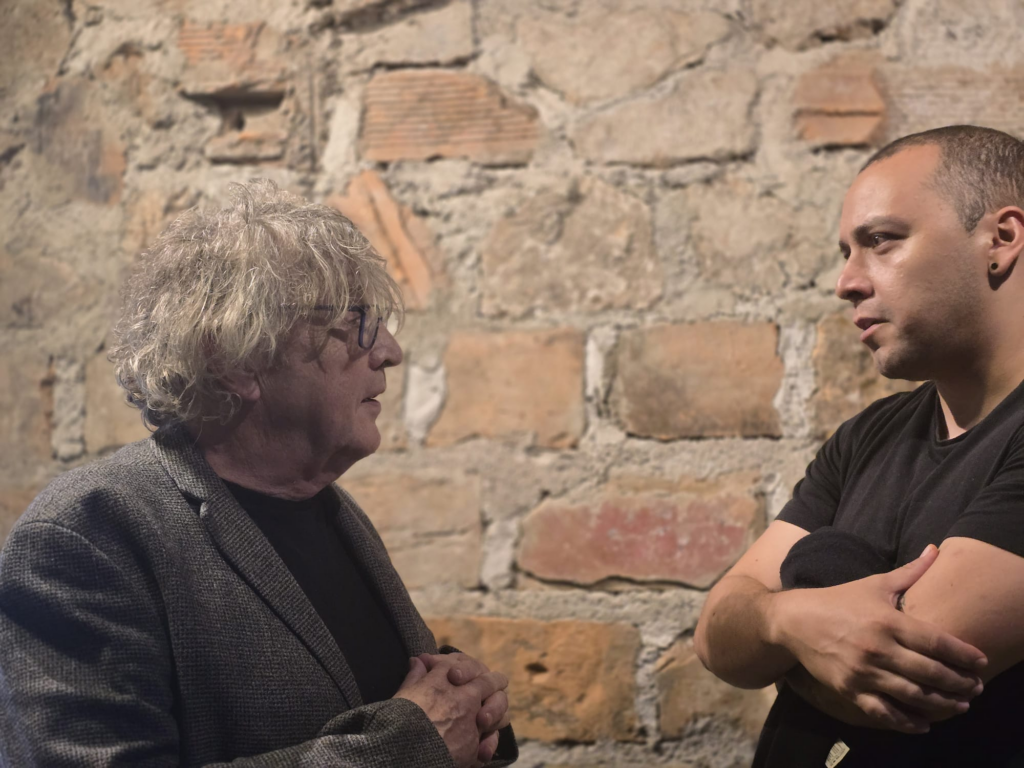
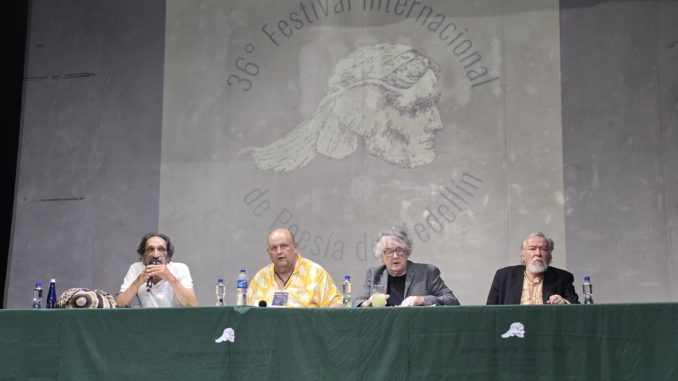
The third day of the 36th Medellín International Poetry Festival concluded with one of its most intellectually rewarding events: an evening of poetry reading and conversation with renowned Northern Irish poet Paul Muldoon. Held at the historic Teatro Ateneo Porfirio Barba Jacob in the heart of Medellín, the session brought together poets, readers and literature lovers for a thoughtful exploration of poetry, memory, identity and language.
The dialogue was led by Colombian poets Gabriel Jaime Franco and Fernando Rendón, founder and director of the Medellín International Poetry Festival. Rather than a formal interview, the evening unfolded as an open literary conversation, inviting both the speakers and the audience to reflect on the deeper purpose of poetry in today’s world.
Paul Muldoon, born in Portadown, Northern Ireland, in 1951, is regarded as one of the most influential English-language poets of our time. The author of more than thirty collections of poetry, he has received many of the world’s highest literary honours, including the Pulitzer Prize for Poetry and the T. S. Eliot Prize. His work extends beyond poetry into translation, songwriting, literary criticism and teaching. For many years he served as Professor of the Humanities and Founding Chair of the Lewis Center for the Arts at Princeton University, helping shape a new generation of writers while continuing to produce an extraordinary body of creative work.
Fernando Rendón opened the evening by placing Muldoon’s poetry within the long and rich tradition of Irish literature. His introduction became a fascinating journey through Ireland’s cultural memory.
He spoke about the ancient Gaelic tradition, the medieval poets, Celtic mythology and the enduring power of oral storytelling. These traditions, he explained, continue to shape modern Irish poetry, not as relics of the past but as living voices that help people understand who they are and where they come from.
One of the most memorable ideas of the evening came when Fernando reflected on humanity’s need to return to its origins. Nature, landscapes and ancient stories, he suggested, preserve a wisdom that modern society often forgets. He drew a beautiful connection between Irish mythology and the oral traditions of Indigenous peoples in Colombia and throughout the Americas, reminding the audience that every culture carries its own sacred stories and that poetry remains one of the most powerful ways of preserving them.
This thoughtful introduction created the perfect atmosphere for the conversation that followed.
Gabriel Jaime Franco guided the dialogue with questions that moved beyond literary technique. Instead of asking only about books and awards, he invited Muldoon to reflect on his personal relationship with poetry. How does poetry accompany everyday life? Does writing emerge from discipline or inspiration? How does a private memory become a poem capable of speaking to thousands of readers across cultures?
These questions revealed the true spirit of the festival: poetry is not simply something to be admired from a distance but a living practice that grows out of daily experience, curiosity and careful attention to the world.
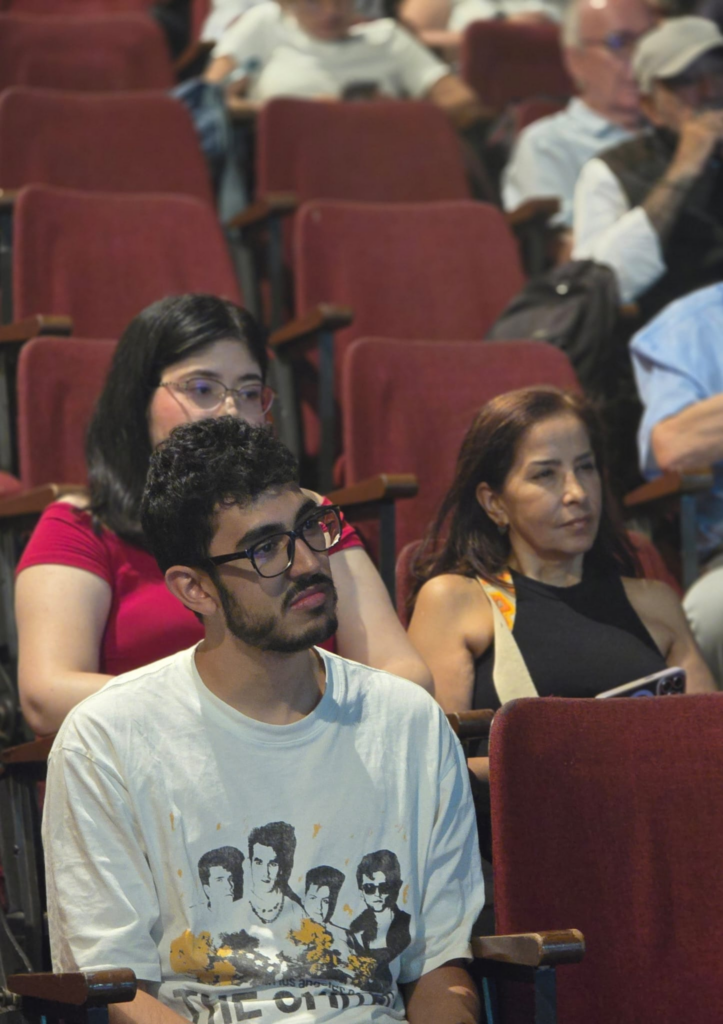
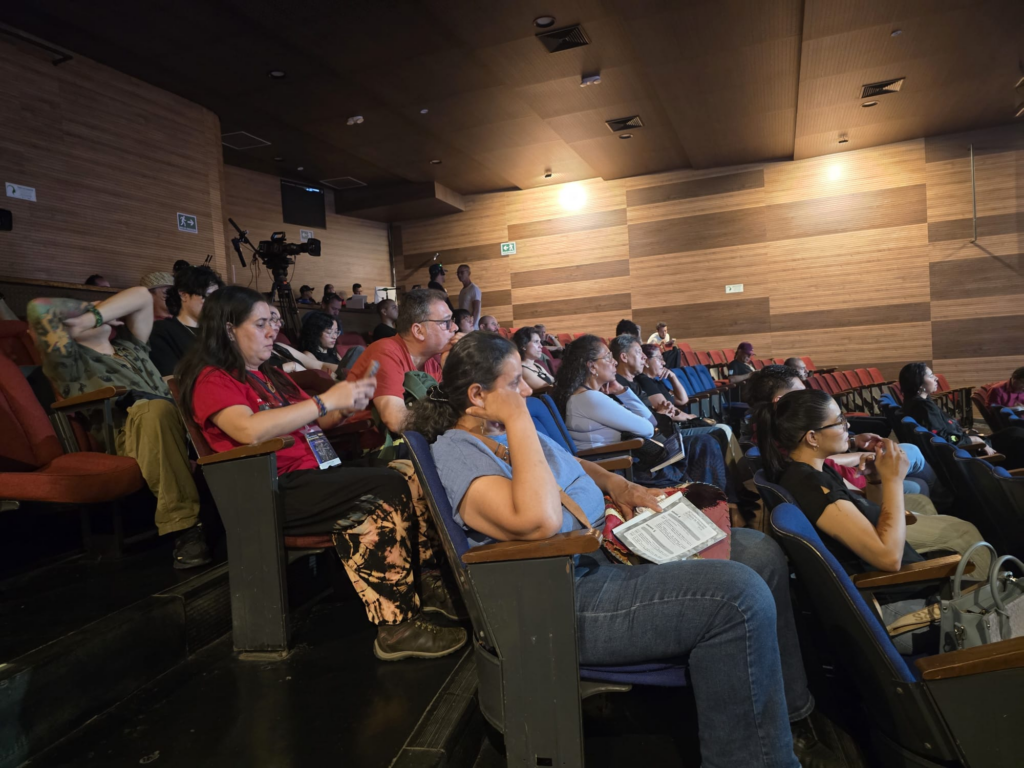
Members of the audience then joined the conversation with thoughtful questions of their own. Several were interested in the relationship between personal history and collective memory in Muldoon’s work. Others asked about his creative process and the influences that shaped his poetic voice. The discussion reflected the remarkable diversity of the audience, bringing together people from different countries who shared the same desire to understand poetry more deeply.
An essential part of the evening’s success was the outstanding work of interpreter George Angel. Moving effortlessly between English and Spanish, he ensured that every poem, question and response remained clear, accurate and engaging for the audience. Literary conversations are among the most challenging events to interpret, requiring not only linguistic precision but also sensitivity to tone, rhythm and cultural nuance. George handled each transition with remarkable professionalism, allowing the dialogue to flow naturally without interrupting its pace or intimacy. His calm presence and exceptional skill made it possible for everyone, regardless of language, to fully participate in the conversation and appreciate the richness of the exchange.
Another memorable element of the evening was the Spanish reading of Paul Muldoon’s poems by Colombian poet John Viana. His expressive and carefully measured delivery allowed the audience to experience the poems in a new way, preserving both their emotional depth and lyrical beauty. Reading poetry in translation is never simply about changing one language into another; it is about carrying across rhythm, imagery and feeling. John Viana accomplished this with remarkable sensitivity, helping Spanish-speaking listeners connect deeply with Muldoon’s work and reinforcing the festival’s commitment to building bridges between languages and cultures through poetry.
Listening to the conversation, it became clear why Paul Muldoon occupies such an important place in contemporary literature. His poetry combines extraordinary technical skill with intellectual playfulness. His poems are rich with unexpected images, historical references, humour and intricate wordplay, yet beneath this complexity lie universal concerns: family, memory, identity, conflict, love and the fragile relationship between language and truth.
For readers unfamiliar with Irish history, the discussion also offered valuable insight into Northern Ireland’s cultural landscape. Muldoon’s work recount historical events and transforms history into imaginative language, inviting readers to discover new meanings rather than offering straightforward answers.
One of the greatest strengths of the evening was its atmosphere of genuine dialogue. Although Paul Muldoon is an internationally celebrated poet, the conversation remained warm, generous and accessible. There was no distance between the stage and the audience. Questions were welcomed with sincerity, and the discussion became a shared exploration of literature rather than a formal academic lecture.
The poetry reading itself reminded everyone that poems are meant not only to be read but also to be heard. As Muldoon read his work aloud, the rhythm, musicality and subtle humour of his language came alive in ways that cannot always be experienced on the printed page. His voice carried both precision and warmth, inviting listeners to slow down and savour every line.
As the evening drew to a close, Fernando Rendón thanked both the guest poet and the audience for participating in what he described as one of the festival’s most intimate literary encounters. His closing remarks captured the essence of the Medellín International Poetry Festival: poetry is not merely an artistic expression but a meeting place where cultures listen to one another, histories are shared and new friendships begin.
Leaving Teatro Ateneo Porfirio Barba Jacob, I found myself reflecting not only on Paul Muldoon’s remarkable career but also on the extraordinary generosity of the festival itself. In Medellín, poetry does not belong exclusively to poets. It belongs to everyone willing to listen, to ask questions and to enter into conversation.
This evening demonstrated that poetry remains one of humanity’s most powerful bridges. Across languages, continents and histories, it continues to remind us that although our stories begin in different places, they often lead us to the same search—for memory, for meaning and for our shared human voice.
By Võ Thị Như Mai (Vietnam – Australia)
+++
(Translated into Spanish by poet Juan Garrido Salgado – Australia)
Tercer día del 36.º Festival Internacional de Poesía de Medellín: una ENCUENTRO con Paul Muldoon, donde la poesía se convirtió en un diálogo entre culturas
El tercer día del 36.º Festival Internacional de Poesía de Medellín concluyó con uno de los encuentros más enriquecedores desde el punto de vista intelectual: una jornada de lectura poética y conversación con el reconocido poeta nor- irlandés Paul Muldoon. Celebrada en el histórico Teatro Ateneo Porfirio Barba Jacob, en el corazón de Medellín, la sesión reunió a poetas, lectores y amantes de la literatura para explorar, desde la reflexión, temas como la poesía, la memoria, la identidad y el lenguaje.
El diálogo fue conducido por los poetas colombianos Gabriel Jaime Franco y Fernando Rendón, fundador y director del Festival Internacional de Poesía de Medellín. Más que una entrevista formal, el evento se desarrolló como una conversación literaria abierta, invitando a los participantes y al público a reflexionar sobre el alcance profundo de la poesía en el mundo actual.
Paul Muldoon, nacido en Portadown, Irlanda del Norte, en 1951, es considerado uno de los poetas más influyentes de nuestro tiempo de la lengua inglesa. Autor de más de treinta libros de poesía, ha recibido algunos de los más prestigiosos reconocimientos literarios del mundo, entre ellos el Premio Pulitzer de Poesía y el Premio T. S. Eliot. Su trayectoria trasciende la creación poética e incluye en la traducción literaria, composición musical, la crítica literaria y la docencia.
Durante muchos años fue profesor de Humanidades y titular de la cátedra fundadora del Lewis Center for the Arts de la Universidad de Princeton, donde contribuyó a formar una nueva generación de escritores, sin dejar de crear una obra extraordinaria.
Fernando Rendón abrió la velada situando la poesía de Muldoon dentro de la larga y rica tradición literaria Irlandesa. Su introducción se convirtió en un fascinante recorrido por la memoria cultural irlandesa.
Habló de la antigua tradición gaélica, de los poetas medievales, de la mitología celta y del poder perdurable de la narración oral. Explicó que estas tradiciones siguen dando forma a la poesía irlandesa contemporánea, no como vestigios del pasado, sino como voces vivas que ayudan a las personas a comprender quiénes son y de dónde vienen.
Una de las reflexiones más memorables de la noche surgió cuando Fernando habló sobre la necesidad humana de volver a sus orígenes. Sugirió que la naturaleza, los paisajes y los relatos ancestrales conservan una sabiduría que la sociedad moderna con frecuencia olvida. Estableció un hermoso vínculo entre la mitología irlandesa y las tradiciones orales de los pueblos indígenas de Colombia y de toda Latinoamérica, recordando al público que cada cultura posee sus propias historias sagradas donde la poesía sigue siendo una de las formas más poderosas de preservarlas.
Esta cuidada introducción creó el ambiente perfecto para la conversación el ambiente perfecto para lo que tuvo lugar a continuación.
Gabriel Jaime Franco condujo el diálogo con preguntas que fueron más allá de la técnica literaria. En lugar de centrarse únicamente en los libros y los premios, invitó a Muldoon a reflexionar sobre su relación personal con la poesía. ¿Cómo acompaña la poesía la vida cotidiana? ¿La escritura nace de la disciplina o de la inspiración? ¿Cómo puede un recuerdo íntimo transformarse en un poema capaz de hablarles a miles de lectores de distintas culturas?
Estas preguntas revelaron el verdadero espíritu del festival: la poesía no es simplemente algo que se contempla desde la distancia, sino una práctica viva que nace de la experiencia cotidiana, de la curiosidad y de una atención cuidadosa al mundo.
Posteriormente, el público se sumó a la conversación con preguntas igualmente profundas. Varios de los asistentes se interesaron por la relación entre la historia personal y la memoria colectiva en la obra de Muldoon. Otros preguntaron sobre su proceso creativo y las influencias que han dado forma a su voz poética. El intercambio reflejó la notable diversidad de los asistentes, reuniendo a personas de distintos países, unidas por un mismo deseo de comprender la poesía con mayor profundidad.
Una parte esencial del éxito de la velada fue el sobresaliente trabajo del intérprete George Ángel. Con gran naturalidad entre el inglés y el español, logró que cada poema, cada pregunta y cada respuesta llegaran al público con claridad, precisión y cercanía. Las conversaciones literarias figuran entre los eventos más complejos de interpretar, pues exigen no solo un dominio impecable de ambos idiomas, sino también una gran sensibilidad para transmitir el tono, el ritmo y los matices culturales. George resolvió cada transición con un profesionalismo admirable, permitiendo que el diálogo fluyera de manera natural sin perder su ritmo, ni su intimidad. Su serenidad y su extraordinaria capacidad hicieron posible que todos los asistentes, independientemente de su idioma, participaran plenamente en la conversación y apreciaran la riqueza del intercambio.
Otro de los momentos memorables de la noche fue la lectura en español de los poemas de Paul Muldoon a cargo del poeta colombiano John Viana. Su interpretación, expresiva y cuidadosamente modulada, permitió al público descubrir los poemas desde una nueva perspectiva, conservando tanto su profundidad emocional como su belleza lírica. Leer poesía traducida nunca consiste únicamente en trasladar palabras de un idioma a otro; implica transmitir el ritmo, las imágenes y la emoción que habitan en el texto. John Viana lo consiguió con una sensibilidad extraordinaria, acercando la obra de Muldoon a los lectores hispanohablantes y reafirmando el compromiso del festival de tender puentes entre lenguas y culturas a través de la poesía.
Al escuchar la conversación, resultó evidente ya que Paul Muldoon ocupa un lugar tan destacado en la literatura contemporánea. Su poesía combina una extraordinaria destreza técnica con una notable libertad intelectual. Sus poemas están habitadas de imágenes inesperadas, referencias históricas, humor y un elaborado juego con el lenguaje; sin embargo, bajo esa complejidad laten preocupaciones profundamente universales: la familia, la memoria, la identidad, el conflicto, el amor y la frágil relación entre el lenguaje y la verdad.
Para quienes no están familiarizados con la historia de Irlanda, el diálogo también ofreció una valiosa aproximación al panorama cultural de Irlanda del Norte. La obra de Muldoon no se limita a narrar hechos históricos; transforma la historia en un lenguaje de imaginación poética, invitando a los lectores a descubrir nuevos significados en lugar de ofrecer respuestas simples o definitivas.
Uno de los mayores aciertos de la velada fue el ambiente de un diálogo genuino que se creó. Aunque Paul Muldoon es un poeta de reconocimiento internacional, la conversación mantuvo siempre un tono cercano, generoso y accesible. No existía distancia entre el escenario y el público. Las preguntas fueron recibidas con sinceridad, y así el encuentro se convirtió en una exploración compartida de la literatura más que en una conferencia académica.
La lectura de poemas recordó a todos los presentes que la poesía no solo está hecha para leerse, sino también para escucharse. Al leer sus propios textos en voz alta, Muldoon permitió que el ritmo, la musicalidad y el sutil humor de su lenguaje cobraran vida de una forma que difícilmente puede apreciarse por completo en la página impresa. Su voz transmitía al mismo tiempo precisión y calidez, invitando a los oyentes a detenerse y disfrutar cada verso.
Al finalizar la velada, Fernando Rendón agradeció tanto al poeta invitado como al público por haber participado en lo que describió como uno de los encuentros literarios más íntimos del festival. Sus palabras finales resumieron la esencia del Festival Internacional de Poesía de Medellín: la poesía no es únicamente una forma de expresión artística, sino un espacio de encuentro donde las culturas se escuchan mutuamente, las historias se comparten y nacen nuevas amistades.
Al salir del Teatro Ateneo Porfirio Barba Jacob, me sorprendí a mí misma reflexionando no solo sobre la extraordinaria carrera de Paul Muldoon, sino también sobre la inmensa generosidad del propio festival de Medellín. La poesía no pertenece exclusivamente a los poetas, sino a todas las personas dispuestas a escuchar, a hacer preguntas y a participar en la conversación literaria.
La velada demostró, una vez más, que la poesía sigue siendo uno de los puentes más poderosos de la humanidad. A través de idiomas, continentes e historias, continúa recordándonos que, aunque nuestros relatos comiencen en lugares distintos, con frecuencia nos conducen a la misma búsqueda: por la memoria, por el sentido y por nuestra voz humana común.
Por Võ Thị Như Mai (Vietnam – Australia)
Corresponsal especial de Multicultural Press
Traducción al español: poeta y traductor Juan Garrido Salgado (Chile- Australia).