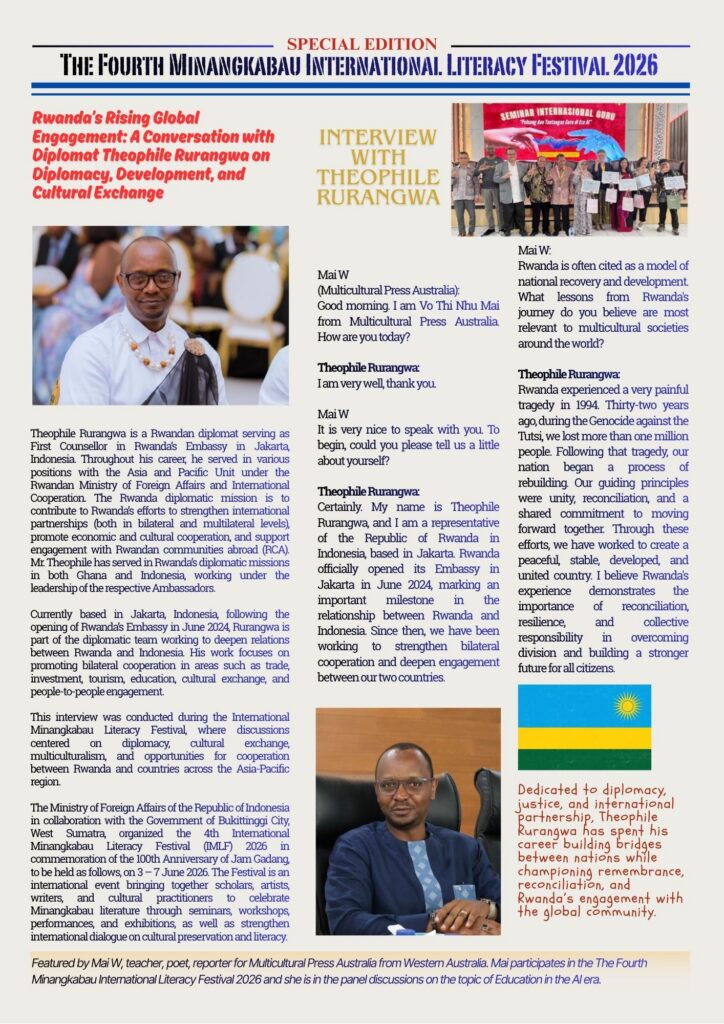
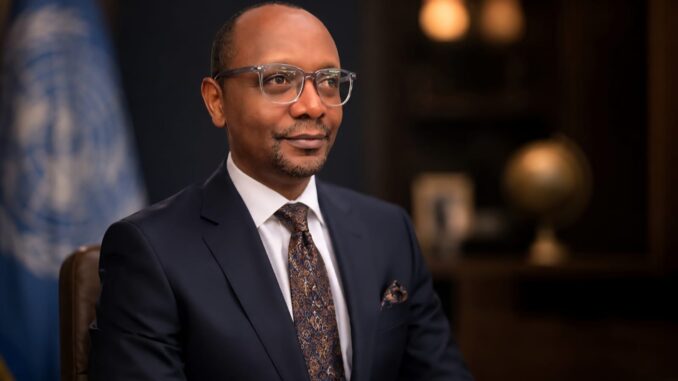
Theophile Rurangwa is a Rwandan diplomat serving as First Counsellor in Rwanda’s Embassy in Jakarta, Indonesia. Throughout his career, he served in various positions with the Asia and Pacific Unit under the Rwandan Ministry of Foreign Affairs and International Cooperation. The Rwanda diplomatic mission is to contribute to Rwanda’s efforts to strengthen international partnerships (both in bilateral and multilateral levels), promote economic and cultural cooperation, and support engagement with Rwandan communities abroad (RCA). Mr. Theophile has served in Rwanda’s diplomatic missions in both Ghana and Indonesia, working under the leadership of the respective Ambassadors.
Currently based in Jakarta, Indonesia, following the opening of Rwanda’s Embassy in June 2024, Rurangwa is part of the diplomatic team working to deepen relations between Rwanda and Indonesia. His work focuses on promoting bilateral cooperation in areas such as trade, investment, tourism, education, cultural exchange, and people-to-people engagement.
This interview was conducted during the International Minangkabau Literacy Festival, where discussions centered on diplomacy, cultural exchange, multiculturalism, and opportunities for cooperation between Rwanda and countries across the Asia-Pacific region.
The Ministry of Foreign Affairs of the Republic of Indonesia in collaboration with the Government of Bukittinggi City, West Sumatra, organized the 4th International Minangkabau Literacy Festival (IMLF) 2026 in commemoration of the 100th Anniversary of Jam Gadang, to be held as follows, on 3 – 7 June 2026. The Festival is an international event bringing together scholars, artists, writers, and cultural practitioners to celebrate Minangkabau literature through seminars, workshops, performances, and exhibitions, as well as strengthen international dialogue on cultural preservation and literacy.
Done by Mai White
Journalist at Multicultural Press, based in Australia
++++
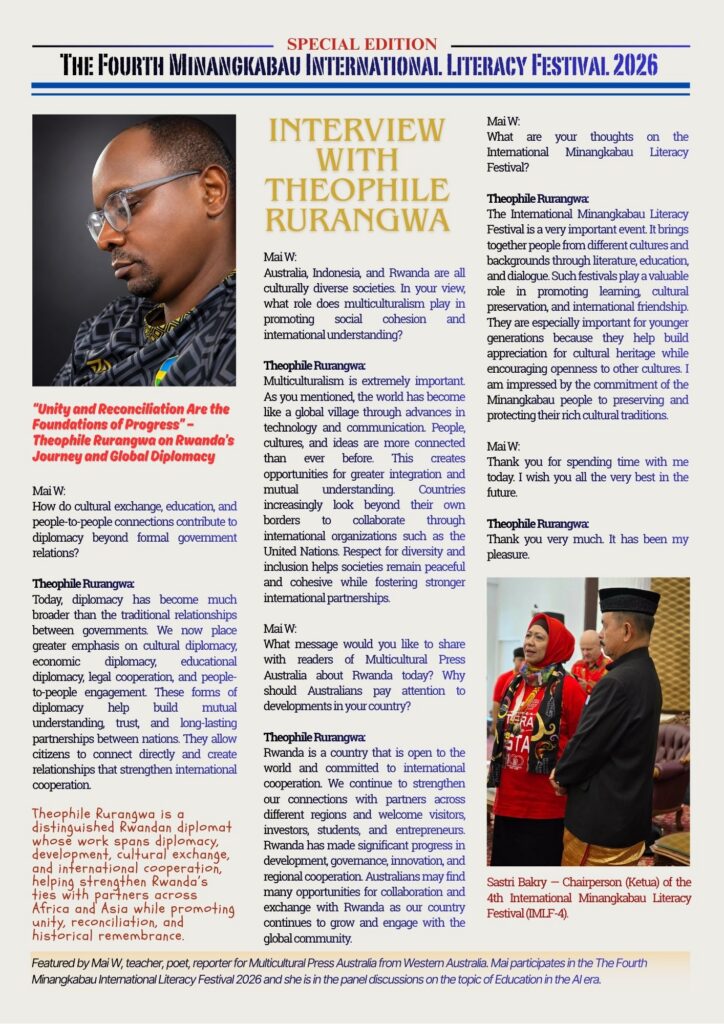
INTERVIEW WITH THEOPHILE RURANGWA
Conducted by Mai, Multicultural Press Australia
Mai (Multicultural Press Australia): Good morning. I am Vo Thi Nhu Mai from Multicultural Press Australia. How are you today?
Theophile Rurangwa: I am very well, thank you.
Vo Thi Nhu Mai: It is very nice to speak with you today. To begin, could you please tell us a little about yourself?
Theophile Rurangwa: Certainly. My name is Theophile Rurangwa, and I am a representative of the Republic of Rwanda in Indonesia, based in Jakarta. Rwanda officially opened its Embassy in Jakarta in June 2024, marking an important milestone in the relationship between Rwanda and Indonesia. Since then, we have been working to strengthen bilateral cooperation and deepen engagement between our two countries.
Vo Thi Nhu Mai: As Rwanda’s representative in Indonesia, what do you see as the most significant opportunities for strengthening cooperation between Rwanda and Indonesia in the coming years?
Theophile Rurangwa: Since our embassy was established only recently, we are focused on expanding cooperation in several key areas. These include trade, investment, tourism, education, and economic partnerships. Most importantly, however, we are working to strengthen people-to-people relations, which form the foundation of long-term friendship and cooperation between our two countries.
Vo Thi Nhu Mai: Rwanda is often cited as a model of national recovery and development. What lessons from Rwanda’s journey do you believe are most relevant to multicultural societies around the world?
Theophile Rurangwa: Rwanda experienced a very painful tragedy in 1994. Thirty-two years ago, during the Genocide against the Tutsi, we lost more than one million people. Following that tragedy, our nation began a process of rebuilding. Our guiding principles were unity, reconciliation, and a shared commitment to moving forward together. Through these efforts, we have worked to create a peaceful, stable, developed, and united country. I believe Rwanda’s experience demonstrates the importance of reconciliation, resilience, and collective responsibility in overcoming division and building a stronger future for all citizens.
Vo Thi Nhu Mai: How do cultural exchange, education, and people-to-people connections contribute to diplomacy beyond formal government relations?
Theophile Rurangwa: Today, diplomacy has become much broader than the traditional relationships between governments. We now place greater emphasis on cultural diplomacy, economic diplomacy, educational diplomacy, legal cooperation, and people-to-people engagement. These forms of diplomacy help build mutual understanding, trust, and long-lasting partnerships between nations. They allow citizens to connect directly and create relationships that strengthen international cooperation.
Vo Thi Nhu Mai: Australia, Indonesia, and Rwanda are all culturally diverse societies. In your view, what role does multiculturalism play in promoting social cohesion and international understanding?
Theophile Rurangwa: Multiculturalism is extremely important. As you mentioned, the world has become like a global village through advances in technology and communication. People, cultures, and ideas are more connected than ever before. This creates opportunities for greater integration and mutual understanding. Countries increasingly look beyond their own borders to collaborate through international organizations such as the United Nations. Respect for diversity and inclusion helps societies remain peaceful and cohesive while fostering stronger international partnerships.
Vo Thi Nhu Mai: What message would you like to share with readers of Multicultural Press Australia about Rwanda today? Why should Australians pay attention to developments in your country?
Theophile Rurangwa: Rwanda is a country that is open to the world and committed to international cooperation. We continue to strengthen our connections with partners across different regions and welcome visitors, investors, students, and entrepreneurs. Rwanda has made significant progress in development, governance, innovation, and regional cooperation. Australians may find many opportunities for collaboration and exchange with Rwanda as our country continues to grow and engage with the global community.
Vo Thi Nhu Mai: What are your thoughts on the International Minangkabau Literacy Festival?
Theophile Rurangwa: The International Minangkabau Literacy Festival is a very important event. It brings together people from different cultures and backgrounds through literature, education, and dialogue. Such festivals play a valuable role in promoting learning, cultural preservation, and international friendship. They are especially important for younger generations because they help build appreciation for cultural heritage while encouraging openness to other cultures. I am impressed by the commitment of the Minangkabau people to preserving and protecting their rich cultural traditions.
Vo Thi Nhu Mai: Thank you for spending time with me today. I wish you all the very best in the future.
Theophile Rurangwa: Thank you very much. It has been my pleasure.