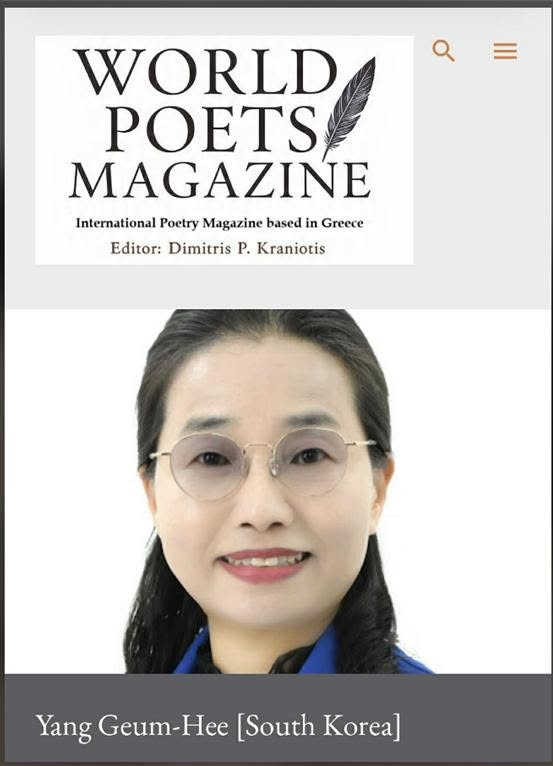

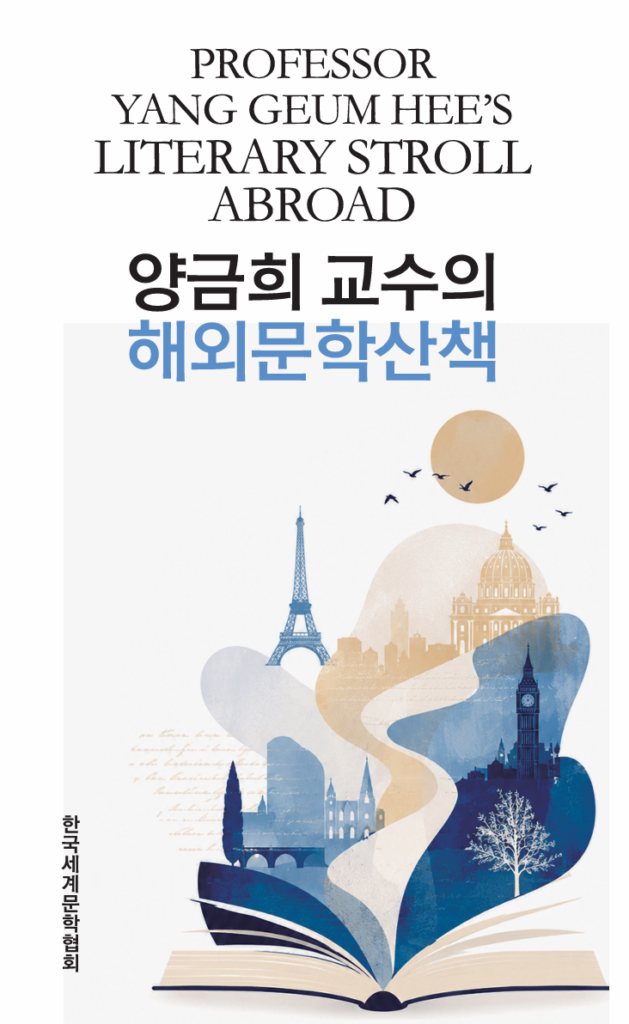
Professor Yang Geum Hee’s Literary Stroll Abroad offers readers something increasingly rare in contemporary literature, a poetic space where cultural differences become opportunities for dialogue rather than division. More than an anthology, it is a philosophical statement about the role of literature in human civilization. Through poetry gathered from distinguished international voices and framed by Yang’s vision of literary exchange, the collection proposes that literature is simultaneously a spiritual act, an ethical responsibility, and a social practice. The anthology invites readers to contemplate humanity itself through diverse poetic experiences while affirming that compassion remains our most universal language.
At the center of the anthology lies a profound concern for humanity. Peace, coexistence, memory, identity, and ethical living emerge repeatedly throughout the collection. Yang Geum Hee does not present humanity as an isolated individual experience but as an interconnected relationship between self and world. Literature becomes a bridge that connects wounded histories with future possibilities, transforming poetry into an instrument of understanding and healing.
This philosophical vision is clearly articulated in Yang’s preface, A Whisper Heard from the Sanctuary of the Soul: Poetry, where she describes literature as transcending linguistic and cultural boundaries through empathy. Poetry is presented not as aesthetic ornamentation but as a means of confronting painful truths while simultaneously offering consolation. Such a perspective elevates poetry beyond artistic expression and positions it as a moral and spiritual undertaking. For Yang, literature preserves human dignity precisely because it teaches readers to recognize themselves within others.
The title Literary Stroll Abroad beautifully symbolizes this vision. A literary stroll suggests movement without conquest, a journey undertaken with curiosity and humility. Readers become travellers moving through landscapes of memory, sorrow, hope, and cultural encounter. The anthology itself mirrors such a journey. It moves naturally between poems of war and peace, love and loneliness, nature and civilization, exile and belonging. Rather than imposing a singular worldview, Yang creates a literary garden where multiple voices coexist harmoniously.
The anthology’s poetic landscape is remarkable for its diversity of imagery and symbolism. Natural elements, the sea, islands, birds, flowers, rain, mountains, moonlight, and seasons, recur throughout the collection, functioning as universal symbols that transcend cultural boundaries. These images resonate strongly with Yang Geum Hee’s own literary sensibility as a poet from Jeju Island, whose previous works, including Nests of Birds and Ieodo: The Island of Legend and Existence, reveal her enduring engagement with nature as both metaphor and philosophical space.
The symbolism of islands is particularly significant. Islands simultaneously suggest separation and connection; they are geographically distinct yet inseparable from surrounding waters. Likewise, Yang’s anthology functions as an island of literary gathering where diverse cultures maintain their identities while participating in meaningful dialogue. Birds become symbols of migration and freedom, seas represent both distance and communion, while changing seasons remind readers of life’s impermanence and continual renewal.
Several poems exemplify these themes with extraordinary power. Li Kuei-shien’s “Monologue by Lighthouse” transforms the lighthouse into a symbol of companionship, guidance, and spiritual illumination. The lighthouse becomes literature itself, a steady presence accompanying travellers through uncertain waters. Similarly, “Taiwan Island” presents homeland not merely as geography but as emotional memory, revealing how local experiences may acquire universal resonance.
Tank Günersel’s “Flood 2.0” confronts readers with humanity’s moral failures through its portrayal of war, displacement, and devastation. The poem’s apocalyptic imagery simultaneously functions as social criticism and ethical warning. By placing such poems alongside contemplative works celebrating beauty and hope, the anthology achieves a meaningful balance between despair and renewal. Literature becomes both witness and healer.
George Wallace’s “All the Elements” offers another philosophical dimension by presenting earth, water, wind, and fire as enduring presences that ultimately receive humanity itself. The poem gently critiques human destructiveness while affirming our inseparable relationship with nature. Such ecological consciousness appears throughout the anthology, reminding readers that coexistence extends beyond human communities to encompass the natural world.
The poetic voices gathered within the collection display remarkable stylistic diversity while remaining united by their shared concern for human values. Some poems are contemplative and philosophical; others are lyrical celebrations of beauty or activist responses to social injustice. Yet beneath their stylistic differences lies a common ethical impulse, the desire to understand human experience more deeply.
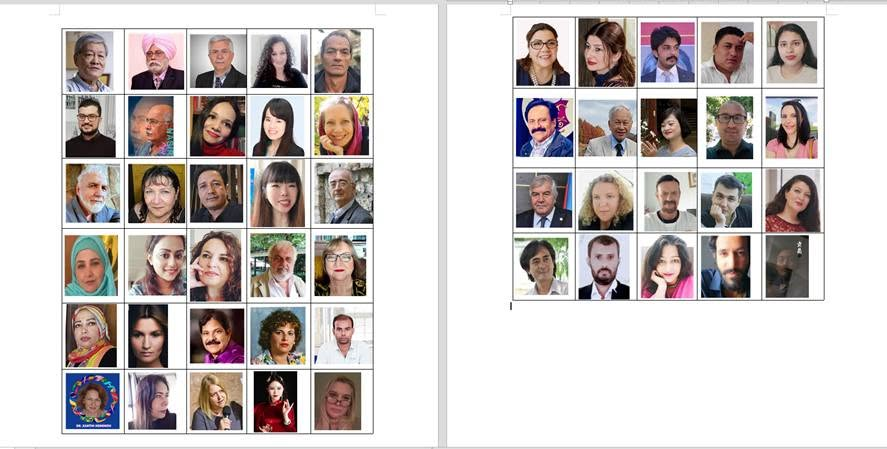
Yang Geum Hee’s editorial vision deserves particular recognition here. Rather than privileging national literary traditions, she creates meaningful conversations among them. Poetry becomes multilingual without losing its emotional immediacy. Readers encounter Greek reflections upon memory, Turkish meditations on exile, Taiwanese celebrations of homeland, and poems responding to contemporary global crises. Such diversity transforms the anthology into an intellectual forum where literature transcends geographical limitations.
Its cross-cultural significance cannot be overstated. In an era often characterized by political polarization and cultural fragmentation, Literary Stroll Abroad demonstrates how translation and literary exchange may function as acts of ethical listening. Yang understands that translation is not merely linguistic conversion but cultural hospitality. Through bilingual and multicultural literary spaces, poetry becomes accessible to readers who might otherwise remain separated by language and geography.
Importantly, the anthology does not abandon Korean cultural values in pursuit of universalism. Instead, it demonstrates how authentic cultural particularity enriches universal human experience. Korean literary sensibilities, particularly the emphasis upon harmony, compassion, and reflective engagement with nature, quietly inform Yang’s editorial philosophy throughout the collection. Universal themes emerge precisely because individual cultural voices are permitted to remain distinct.
Literature here functions simultaneously as social commentary and moral reflection. Poems addressing war, displacement, environmental destruction, and loneliness challenge readers to confront contemporary realities honestly. Others celebrate resilience, memory, and love as enduring human possibilities. Together they affirm Yang Geum Hee’s conviction that literature possesses transformative social value. Poetry becomes an invitation to ethical living, a reminder that peace begins with empathy and cultural understanding begins with attentive listening.
The anthology’s organization further reinforces its philosophical coherence. Readers progress intellectually and emotionally through diverse poetic territories without experiencing fragmentation. The movement from contemplative reflections upon humanity to poems of resistance, remembrance, and hope creates an organic progression resembling the literary stroll suggested by the title itself. The collection neither begins nor concludes with certainty but instead encourages continual reflection.
What image of humanity ultimately emerges from Literary Stroll Abroad? Humanity appears simultaneously fragile and resilient, capable of violence yet equally capable of compassion. The anthology refuses simplistic optimism while maintaining unwavering faith in literature’s ability to nurture understanding. Human beings are presented not as isolated individuals but as participants within larger networks of memory, culture, history, and shared responsibility.
Perhaps the anthology’s greatest achievement lies in its transformation of local experiences into universal meanings. A lighthouse becomes companionship. An island becomes homeland. Rain becomes remembrance. Silence becomes ethical reflection. Through poetry’s imaginative power, individual experiences transcend their origins without sacrificing their cultural authenticity.
After completing Literary Stroll Abroad, readers carry with them not merely beautiful lines or memorable images but a renewed awareness of literature’s human purpose. Yang Geum Hee reminds us that poetry matters because humanity matters. Literature becomes a sanctuary where cultures meet without fear, where differences become conversations, and where peace begins quietly through empathy.
The lasting contribution of this anthology therefore extends beyond contemporary Korean literature into the broader landscape of world literature. It offers a compelling model for multicultural literary engagement grounded not in cultural homogenization but in mutual respect and ethical dialogue. Professor Yang Geum Hee’s literary stroll ultimately becomes our own—a journey toward greater compassion, deeper understanding, and a more generous conception of what it means to share both literature and humanity.
Literary Stroll Abroad remains memorable for its emotional depth, philosophical insight, artistic beauty, and cultural significance. Most importantly, it reminds readers that literature continues to perform one of humanity’s oldest and noblest tasks: building bridges where borders once stood.