Like in a Fairy Tale
Interview with the Uzbek writer Sherzod Artikov
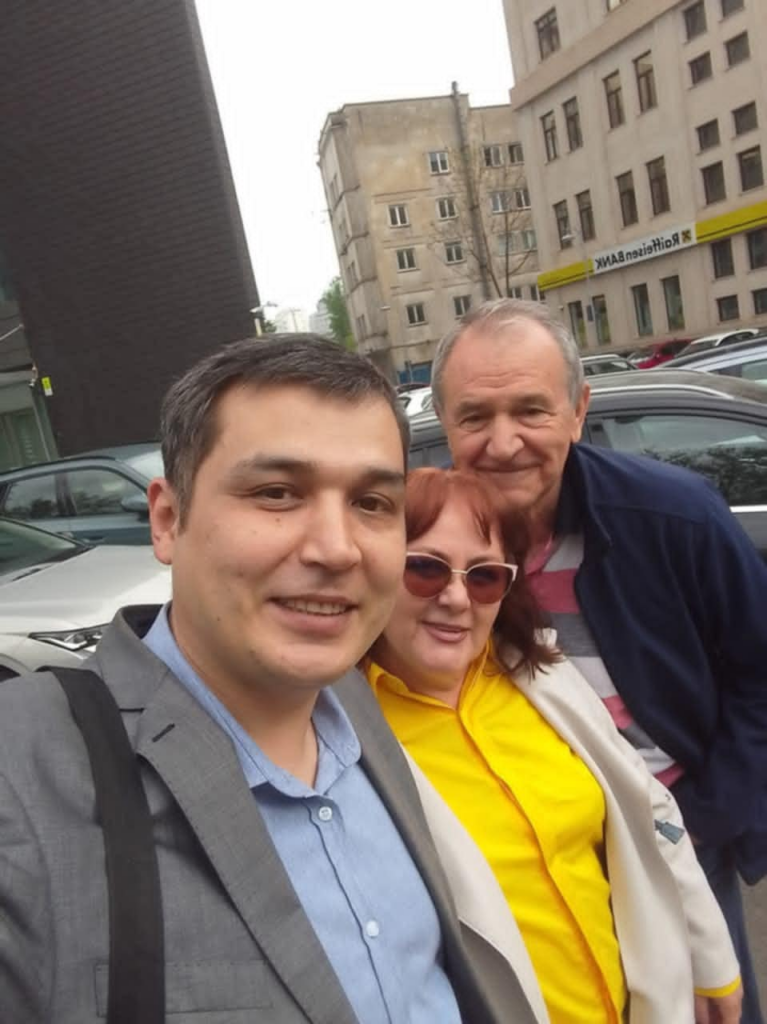
Florentina Loredana DALIAN: Sherzod Artikov, we are two writers from different countries, with different languages and cultures. We came together through literature, thanks to the Internet and social networks. Later, we had the chance to meet in person during your two visits to Romania (in September 2023 and April 2025), which I know brought you great joy. At our first meeting, I was pleasantly surprised to find that you knew a lot about my country, especially in the field of literature, but also about music and painting. How did you learn about Romania, Romanian writers, and where did you get your sources of information?
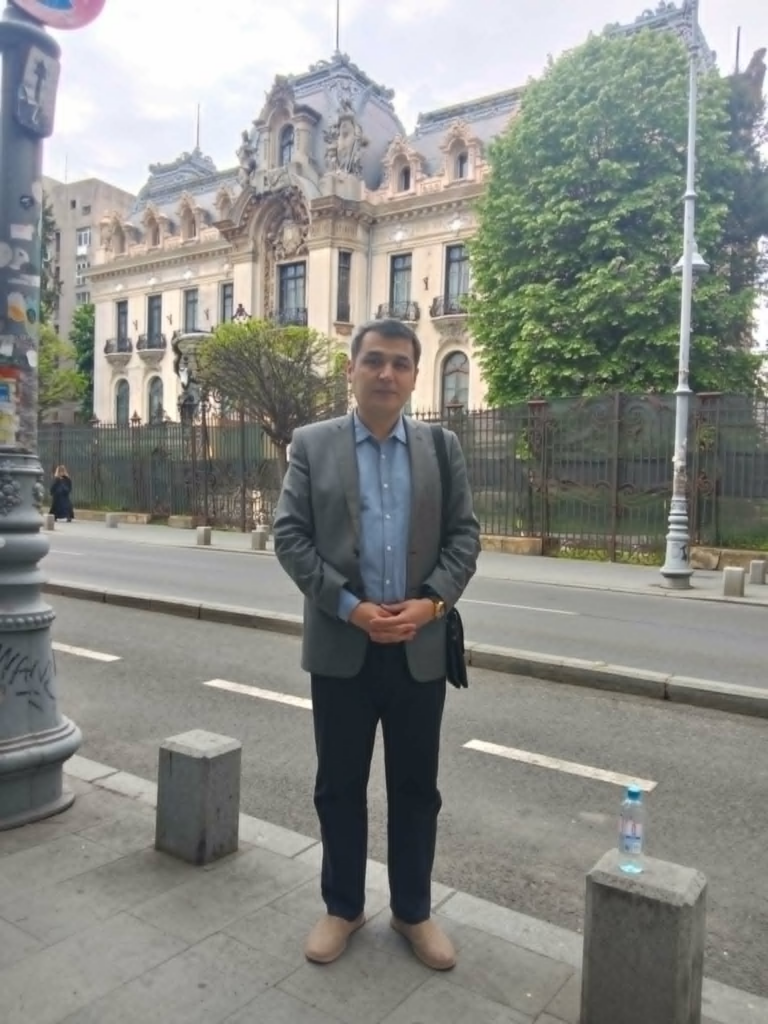
Sherzod Artikov: I have had a good knowledge of Romania since my childhood. I always mentioned it together with Austria, Hungary, and the Czech Republic and imagined it in my mind. There were pictures in our home showing the beautiful appearance of Bucharest, its notable places, and street views. Of course, those images belonged to Bucharest of the 1980s. Nevertheless, the spirit of the city embodied in them, the lifestyle and culture of Romanian people fascinated me deeply. This impression did not change even when I saw Bucharest with my own eyes for the first time. Its streets, people, and buildings felt as if they were already familiar to me.
As I grew older, my interest in Romanian literature and art increased. Before that, it is worth mentioning that I was also highly interested in Romanian football. At that time, I knew everything from the history of Romanian teams such as “Steaua” and “Dinamo” to footballers like Gheorghe Hagi and IlieDumitrescu, who left a mark on Romanian football. Later, a love for Romanian literature and art developed in my heart. As a result, I gradually read with all my heart and became familiar with the works of Romanian poets such as Mihai Eminescu, VasileAlecsandri, Tudor Arghezi, George Bacovia, Marin Sorescu, and Lucian Blaga. I was fascinated by Ion Luca Caragiale’s short humorous stories and realistic plays. I immersed myself in the paintings of Romanian artists such as Theodor Pallady, Theodor Aman, Nicolae Grigorescu, and Ștefan Luchian; I could even say I lived inside them. Tatiana Stepa’s folk-style songs touched every cell in my body. I fell in love with CiprianPorumbescu’s sad and emotional ballads, and they became the meaning of my life.
FLD: I was amazed to find out that the first place you wanted to go was the grave of the poet Mihai Eminescu. Why this preference and how did you feel visiting the Belu cemetery?
Sh A: I had known long before that the Bellu Cemetery in Bucharest is the resting place of Romanian statesmen, writers, and artists. During my first visit to Bucharest, I set a goal to visit it, because among those buried there were my beloved poet Mihai Eminescu and Ion Luca Caragiale, whose works I deeply respected. Standing near Eminescu’s grave, I strangely felt as if I had stepped back into the past. Outside Bellu it was the 21st century, but near Eminescu’s grave it felt like the 19th century was still alive. It seemed as if Mihai had just been buried and the soil had not yet cooled.
Near Caragiale’s grave, a thin, dark-haired but beautiful girl was crying. I somehow wanted to comfort her, but looking at Caragiale’s modest grave, I also felt like crying. After all, both he, Mihai, and Marin Preda lying further down were once alive, full of dreams and joy—just like me.
I also saw other famous graves in Bellu. Graves of poets like Alexandru Macedonski and Adrian Păunescu, composers whose names I no longer remember, as well as scientists, along with their monuments, amazed me. It felt less like a cemetery and more like an open-air museum.
FLD: You seemed in love with Bucharest. What did you like the most from what you managed to see, which are the most vivid memories you have left?
Sh A: . As I said above, my love for Bucharest began in childhood. Until 2023, I lived with the dream of seeing Bucharest at least once in my life, alongside cities like Paris, Rome, Madrid, Vienna, and Prague. Thank God, this dream came true not once but twice. In 2023 and 2025 I had the honor of visiting Bucharest twice. Once I saw Bucharest in autumn, and once in spring. Its autumn gives endless peace, while its spring brings energy and joy. I believe words are not enough to describe my love for Bucharest and the sweet memories it left in me
FLD: At the 2023 meeting, you participated, as a guest of honor, in the ARIS festival in Slănic / Aninoasa commune / Argeș County. How did you perceive your first encounter with the Romanian literary environment?
Sh A: Before participating in the Slănic Festival in Argeș, I already knew several modern Romanian poets and had become friends with some of them. During the festival I met new names, made friends, and exchanged experiences. The warm and sincere attitude of people like Gheorghe Păun (editor of “Urmuz” newspaper), festival organizer Firica Carp, and poets Emiliano Marcu, Dan Dragoi, Florian Ciocea, and Marin Monega created deep respect in my heart.
After the festival, we visited the Writers’ Residence, and the breathtaking nature of Transylvania with its greenery and silence refreshed my soul. Especially the mornings in Argeș were bright and pleasant. I walked around, breathed the fresh air, and spent time dreaming by a lively stream.
FLD: Afterwards, we visited together, helped by our friend Dan Blebea, several beautiful areas of the country. In Sibiu, while we were sitting at a terrace where a pianist was playing tender melodies, you confessed to me: ‘I feel like I’m in a fairy tale.’ What gave you that feeling, and where else have you felt like you were in a story?
Sh A: I had never heard of the city of Sibiu before. However, when I saw it for the first time, I felt as if I had entered a fairy tale. It was the second time I had such a feeling—the first time was in the ancient city of Bukhara in Uzbekistan. Sibiu was truly a fairy-tale city. Everything there looked magical: the city itself, its streets, buildings, cafés, restaurants, and museums.
While having a snack at the “Atrium” café, the piano music helped me understand even more how the city carries people into the past. Couples kissing near the bridge, German visitors in the café, the pianist who resembled a mysterious fairy-tale musician, the waitress with silver hair, the music from the piano, pizza in front of me, and apple juice—all created a magical atmosphere. I was not myself. Even though I did not drink wine, I felt spiritually intoxicated. I completely lost myself in the beauty of the city and felt disconnected from the 21st century, as if I had entered the world of the Brothers Grimm.
FLD: The Danube Delta, with the Letea Forest, and the Black Sea (seen from Eforie Sud) — what impression did they leave on you? And the city of Constanța?
Sh A:The Danube Delta amazed me with its flora and fauna, especially its diverse birds. But my impression of the Danube itself was even stronger. I felt the river more deeply there. Since school, I had known that the Danube supplies water to half of Europe and has witnessed many historical events. I had always loved it. Therefore, when I saw it at the port of Tulcea, I felt like a lover reunited with his beloved.
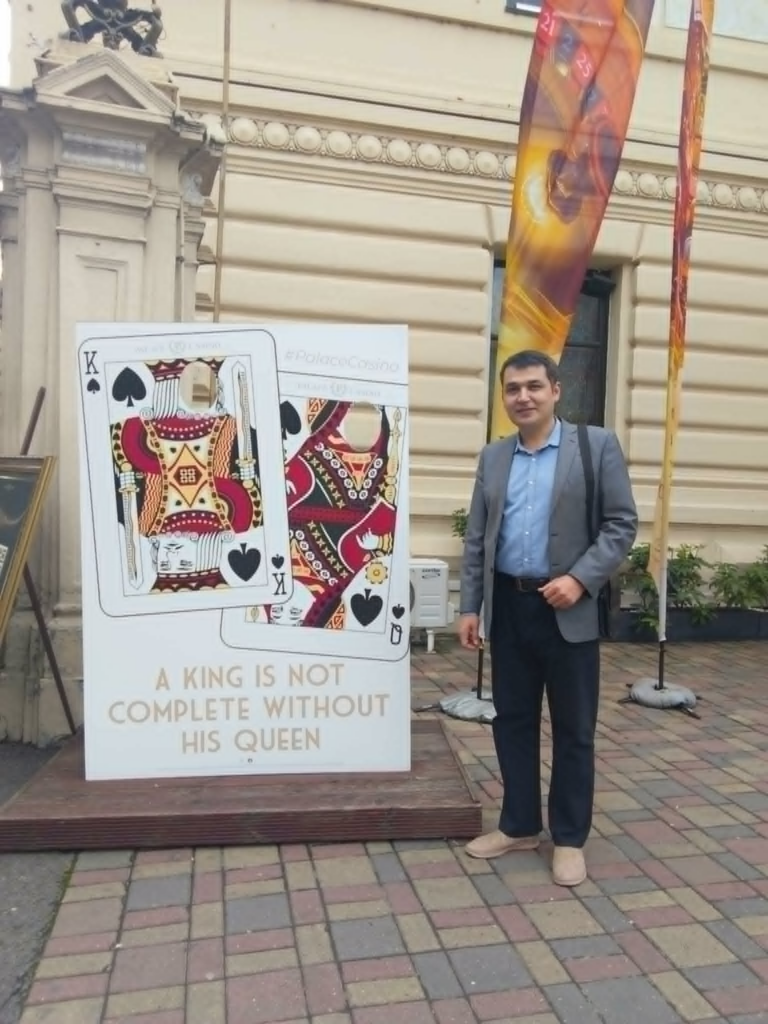
I would not be wrong to say that I would not trade that one day on the Danube for any other day of my life. The Black Sea is also another love of mine. Oh, Black Sea! There was almost no day in my childhood when I did not dream of it. Ancient, charming, and beautiful sea! When you took me to its shore, I felt like embracing you and thanking you deeply. But in front of the sea, I forgot everything for a moment—even you. It was a special feeling. I felt as if I had entered the sea itself. Its roaring waves and silver foam made me happy. Later, I also saw it from Constansa. The casino building, Eminescu’s statue, and the sea created a beautiful ensemble. In Constanța port, the Black Sea was calmer. The city itself, with its gypsies, tattoos, and Ottoman-era mosque standing next to a Catholic church, impressed me deeply. I believe this is a good sign, because people should be tolerant toward each other regardless of religion.
FLD: On the occasion of your first visit, while listening to a CD in the car, you discovered Tatiana Stepa’s music, which fascinated you. You asked me for information about her and searched for it yourself, and later you dedicated an impressive essay to her. I will never forget what you told me then, while listening to ‘Copaci fără pădure,’ even though you didn’t understand a single word: ‘When she sings, my soul cries.’ How do you think this miracle of music is possible, to convey emotions without words?
Sh A:When I first heard Tatiana Stepa’s song “Copaci fără pădure” in Dan Blebea’s car, I immediately felt a deep sadness and pain hidden within it. Later I asked you about the lyrics, and you translated them, telling me that the author was Adrian Păunescu. From that moment, Tatiana Stepa’s song took a permanent place in my heart. We listened to it repeatedly and sang together. Through this song I felt pity for trees without forests.
When you told me she had died of cancer many years ago, I became sad and felt something break inside me. After returning from Romania, I wrote an essay dedicated to her as a sign of gratitude.
FLD: Your visits to Romania have given you the opportunity to establish a beneficial connection with the Romanian Embassy in Tashkent, led by His Excellency Ambassador Daniel Ciobanu, assisted in his diplomatic work by Consul Luminița Ciobanu. I know that you have been invited several times on the occasion of honoring certain personalities or on Romania Day. Tell us about your relationship with the embassy!
Sh A: During my visa application process for Romania, I established friendly relations with the Romanian Embassy in Uzbekistan. I would especially like to thank Consul Luminița Ciobanu for her help. I also gifted a copy of my book “Sonata luiRahmaninov” (published in Romanian translation in 2022) to the embassy library. Later I was informed that both the consul and Ambassador Daniel Ciobanu liked the book, which made me extremely happy.
Thus, my friendly relations with the embassy strengthened. I participated in several cultural events, including memorial evenings dedicated to composer George Enescu and sculptor Constantin Brâncuși. I was also among the honored guests at the Romania Solidarity Day event held at the “Hyatt Regency” hotel in Tashkent.
FLD: On your second visit you came specifically to visit the “George Enescu” museum and the Tudor Arghezi Memorial House. Unfortunately, at “Mărțișor” (the poet’s former residence) we didn’t have time to get there, and the museum was closed (we consoled ourselves with the Enescu Memorial House in Sinaia). Where does your passion for Enescu and Arghezi come from? Have you discovered any other Romanian composers as well?
Sh A: During my second visit to Romania, I planned to visit the house-museums of composer George Enescu in Bucharest and poet Tudor Arghezi outside the city. Unfortunately, Enescu’s house-museum was under renovation (later I had the chance to see his museum in Sinaia), and we did not have time to visit Arghezi’s museum.
I had long known both creators. I knew about Enescu’s life in Paris, his closeness to the Romanian royal family, and his symphonies. I had listened to and analyzed his works on YouTube. My knowledge of Romanian composers was not limited to him—I was also interested in IonelPerlea and CiprianPorumbescu. Visiting Perlea’s house-museum and traveling through Bukovina, passing by Porumbescu’s village, and listening to his melancholic “Ballad” deeply affected me.
Before visiting Romania, I had read a Russian translation of Arghezi’s book. His religious-themed poems impressed me deeply, which is why I wanted to visit his house-museum.
FLD: Romanian painters are not unfamiliar to you either. At the National Museum of Art of Romania, I noticed that you knew about many of them; recently, you told me that you are reading Grigorescu’s biography, and one of your wishes, to visit the Theodor Pallady Museum, has been postponed for another time. Who are your favorites? What interesting things have you discovered in the biography of the painter Nicolae Grigorescu?
Sh A: . I will never forget the two hours I spent at the National Art Museum in Bucharest, where I had the opportunity to see original paintings by my favorite artists: Nicolae Grigorescu, Theodor Aman, Theodor Pallady, and ȘtefanLuchian. I have always been deeply interested in European painting, and this led me to Romanian visual art. I especially like Aman’s and Grigorescu’s worldview and style. Grigorescu’s works inspired by everyday life, especially “Two Peasants,” made me think deeply. Studying his biography helped me discover him even better.
FLD: How was your meeting with the students of the National College in Slobozia, and how interested did they seem in your work?
Sh A: During a creative meeting with students of the National College in Slobozia, I spoke about my book published in Romania, Romanian literature and art, and my impressions of Romania. I was very happy with the students’ interest, their reactions to my book, and their bold questions.
FLD: From Slobozia or Ograda, do you have any other memories?
Sh A:. I have many sweet memories connected with Slobozia. Especially unforgettable are our visits to the Agricultural Museum and the house-museum of composer IonelPerlea. At the Agricultural Museum, I gained a full understanding of the past lifestyle of the Romanian people. At Perlea’s house-museum, I discovered the composer for myself, as I previously did not know much about him.
FLD: You attended a humor festival for the first time in Brăila, which was also the main reason for your second visit. You impressed the comedians present with your involvement and sense of humor, despite language barriers. What impressions did you take away from the festival, and how much did you enjoy Brăila?
Sh A: .Brăila was a dream city for me. Before visiting it, I had read a novel by Bulgarian writer Ivan Vazov connected to the city, and my desire to see Brăila became a burning dream. After about four months, I saw it with my own eyes. It felt like fantasy.
My impressions of the International Humorous Stories Festival in Brăila were excellent. I participated as a guest and made many friends. I will never forget Mihai Frunză’s humorous personality, AlexandruHangan’s jokes, and my deep conversations with Ion Diviza, who speaks Russian well. Most importantly, I felt a friendly attitude from everyone, and I was very pleased with the warm atmosphere. Walking through Brăila, visiting PanaitIstrati’s house-museum, and spending time with you by the Danube gave me a deep sense of peace.
FLD: At the Farm in Maltezi, owned by our friend Florin Ciocea, you took part in a beautiful ‘madness’: you mowed the grass with a scythe (you could tell it was your first time meeting, but you managed), you sang with your voice and guitar (one that didn’t have all its strings), you recited in your language next to a fire we had put together. How does poetry feel in the countryside, in a village located next to a branch of the Danube?
Sh A: The time we spent at Florin Ciocea’s countryside house in Măltei gave me energy and strength. Cutting grass in the fresh air, singing with a guitar, sitting by the Danube, eating fish prepared by Florin, and playing with his dogs felt like paradise on earth—for me personally.
FLD: Iași, Sighișoara, Brașov, these landmarks of the second visit, how would you briefly describe them, in one word or a few words? And the boat trip from Orșova to the Danube’s Iron Gates?
Sh A: I would call Iași the “city of trams,” because I saw so many trams there. Among my memories of Iași, I would first mention the national park and the “Eminescu tree,” as well as the Palace of Culture. Seeing paintings by masters such as Rubens, Tintoretto, and Aivazovsky there was a priceless gift.
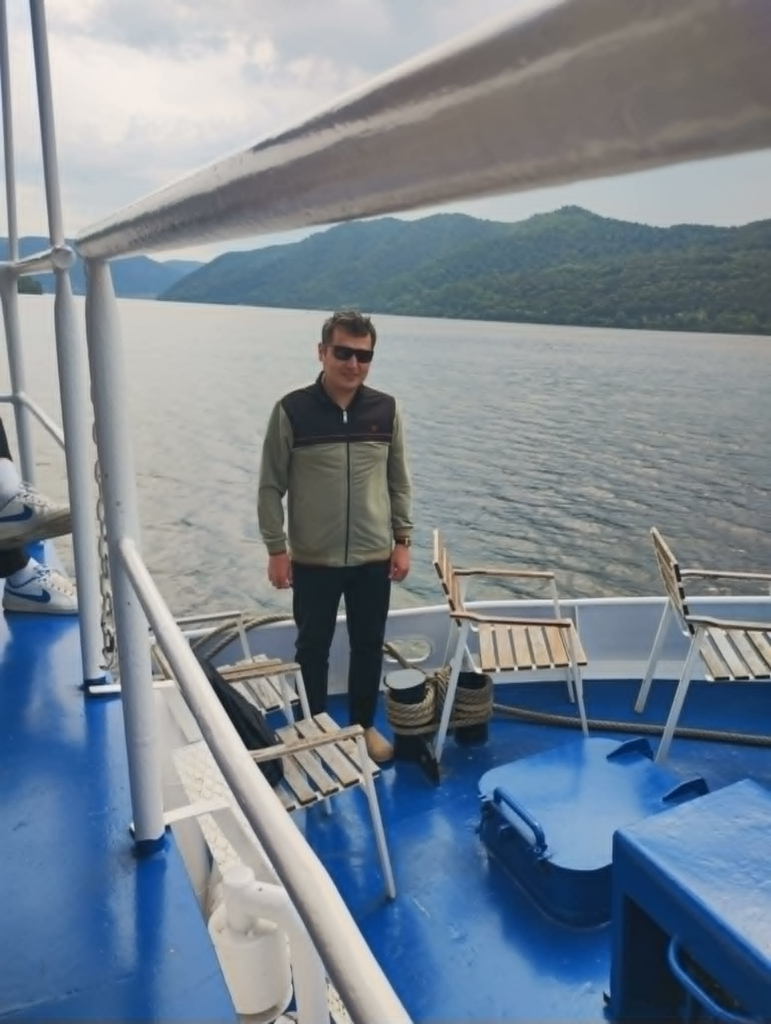
Sighișoara’s Citadel and the Black Church in Brașov also remain in my memories forever. Especially the Black Church—I completely lost myself inside it. I felt a strange fear, and the cold atmosphere made me shiver. Still, I fell in love with the history it carried. Orșova remains in my memory because of our boat trip on the Danube. It was pure pleasure. When we passed the route once taken by Roman Emperor Trajan, I felt like I was him.
FLD: Did your visit to Romania—the places, the people, the situations—inspire you in literature? Besides essays, have you also written prose or poetry inspired by this country?
Sh A: I have mostly written essays about Romania—about Tatiana Stepa, Mihai Eminescu, and other Romanian cultural figures. Recently, I started writing haikus based on my memories of Romania. In the future, I intend to write a large book about Romania.
FLD: What did you like most and least or not at all about the Romanian literary environment?
Sh A: I can only speak warmly about Romanian literature. I have translated many Romanian poets into Uzbek and can say that Romanian poets are not inferior to other European poets in talent and level. However, unlike others, Romanian writers have not been widely translated or promoted internationally. This may be one of the main shortcomings of Romanian literature.
FLD: What future projects do you have related to literature and Romania?
Sh A: In the future, I am planning to publish my book about Romania. It will include essays about Romanian literature and art figures such as Theodor Aman, Nicolae Grigorescu, CiprianPorumbescu, Ion Luca Caragiale, Marin Sorescu, and others. I hope to publish it with the support of the Romanian Embassy in Uzbekistan. This is currently one of my major projects.
FLD: What is it like to work with students? What professional satisfactions does your new role as press officer at the University of Ferghana bring you?
Sh A: At present, I have left my job at Fergana State Technical University. I worked well with students there, but due to circumstances, I had to stop working
FLD: Returning to Romania, during your stay here, did you feel like a stranger in a foreign country? When did you have such moments? Did you feel that language barriers and religious differences were an obstacle to communication?
Sh A: During my first visit to Romania, I felt like a foreigner, but during my second visit, that feeling disappeared, and I felt at home. Perhaps this was thanks to your and Dan’s care for me. I did not feel like a stranger among Romanian people or in that environment. Romania is my second homeland, and it will always remain so
FLD: Do you still miss Romania? When do you miss it the most? You told me, on the occasion of both visits, that you would never forget what you experienced here and that you would carry the memories with you for the rest of your life. Is that still true, or has it faded? Do you think we can remain faithful to memories for our whole life?
Sh A: I still miss Romania. When I browse social media, I often see videos of Bucharest and other Romanian cities. For example, the restored Casino building in Constanța reminded me of that city. When I see places like “Caru’ cu bere” or the Greek Church in Bucharest online, I immediately want to return to Romania.
Literature also makes me miss it. I recently bought a book of Grigorescu’s paintings, which immediately reminded me of Romania. I also read Caragiale’shumorous stories and plays, and while reading, I felt as if I were in Romania with his characters.
I believe that, like any person, my memories of Romania will never fade and will live as long as I live. Moreover, I plan to visit Romania again, because there is still much for us—me, you, and Dan—to do there. For example, we still need to visit the house-museums of Theodor Aman in Bucharest, Nicolae Grigorescu in Câmpina, and NichitaStănescu in Ploiești.
Началоформы
Конец формы
FLD: Thank you for your answers
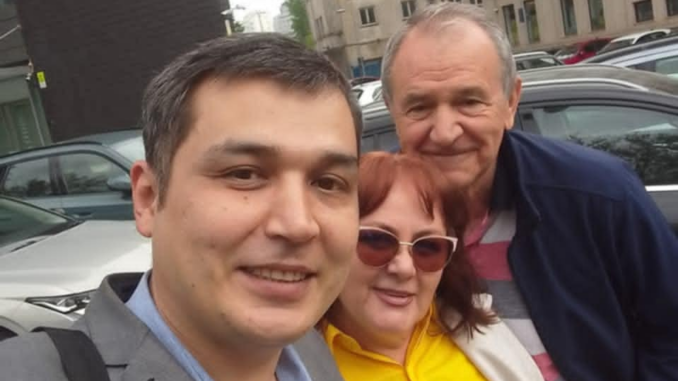
Florentina Loredana Dalian Sherzod Artikov
Slobozia, 29 decembrie 2025