
SSTUWA’s 2026 Women’s Conference calls for equality, solidarity and meaningful change
By Mai White | Multicultural Press Australia; PERTH, WESTERN AUSTRALIA — 20 October 2026
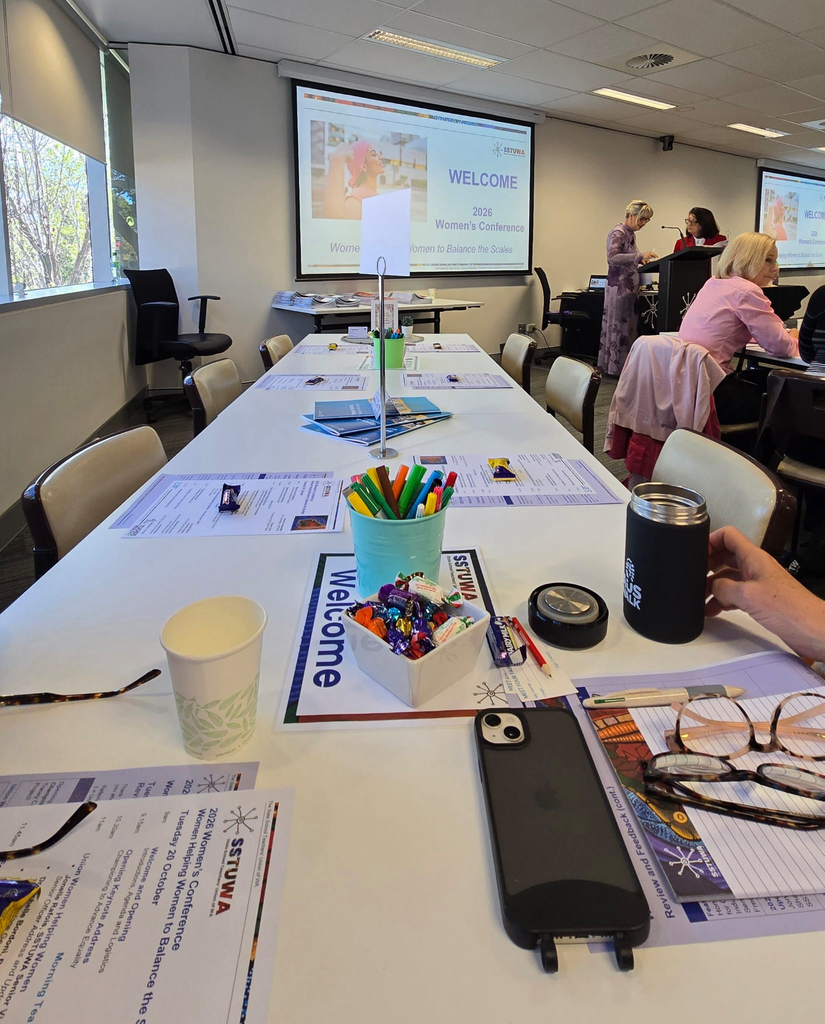
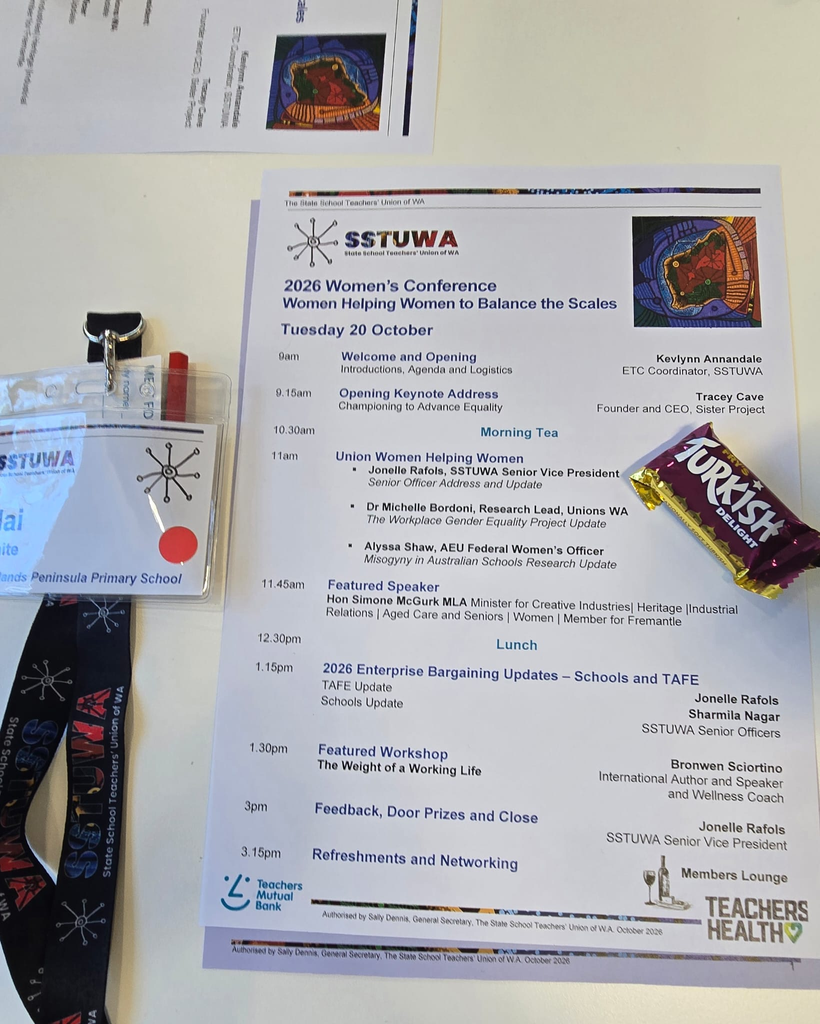
Women’s leadership, workplace equality, the challenges facing educators and the power of collective action were at the heart of the 2026 Women’s Conference organised by the State School Teachers’ Union of WA (SSTUWA) on Tuesday, 20 October. Held under the theme “Women Helping Women to Balance the Scales,” the conference brought together educators, union representatives, researchers, community advocates and policymakers to examine the inequalities women continue to face in their professional and personal lives. The programme featured keynote presentations, research findings, discussions on gender-based violence and workplace safety, and a closing workshop on wellbeing and the pressures of working life. Throughout the day, one message emerged with particular clarity: achieving equality requires more than encouraging individual women to become stronger or more confident. It demands supportive workplaces, fair policies, collective responsibility and a willingness to challenge the structures that perpetuate inequality.
1/ Tracy Cave: Turning lived experience into opportunities for women
One of the conference’s most compelling presentations came from Tracy Cave, founder and CEO of Sister Project, a not-for-profit social enterprise based in Ellenbrook that supports migrant and refugee women across metropolitan Perth and beyond. Drawing on her experiences as a migrant, an English as an Additional Language (EAL) teacher and a community worker, Cave described how language barriers, cultural differences and limited access to information can leave women feeling isolated and powerless. Her experiences living and teaching in Japan gave her a personal understanding of the difficulties migrants encounter when they cannot communicate confidently in their new environment. Simple tasks, such as catching a bus, reading a food label, understanding a bill or navigating a doctor’s appointment, can become overwhelming challenges. After returning to Australia with her family, Cave also witnessed the difficulties faced by migrant families attempting to navigate unfamiliar systems without established networks, Australian qualifications or a clear understanding of local services. These experiences helped shape her commitment to supporting women who might otherwise be overlooked.
Established in 2019, Sister Project has grown from a small community initiative into a multifaceted organisation supporting more than 600 migrant women from over 30 cultural backgrounds. Its programmes include English-language learning, computer skills, sewing, cooking, driving support, social activities, employment pathways and opportunities for women to develop their own businesses. Cave illustrated the organisation’s impact through stories of women who had experienced displacement, isolation, domestic violence or the loss of professional identity after migrating to Australia. One woman, originally from South Sudan, had escaped civil conflict with her children and eventually settled in Western Australia. Despite her extraordinary resilience, she continued to face difficulties with English and digital technology. Even in her sixties, she was determined to learn, obtain her driving licence and become more independent.
Another woman, a highly skilled Colombian documentary filmmaker and photographer, had gradually lost confidence after migrating and struggled to find opportunities to use her professional abilities. Through Sister Project, she received practical support, access to equipment and introductions to professional networks. She eventually rebuilt her career and became a coordinator of the organisation’s media enterprise. These stories demonstrated that migrant women should not be defined by the barriers they currently face. Their previous qualifications, professional achievements, cultural knowledge and personal strengths remain valuable, even when those qualities are not immediately visible.
Cave challenged the tendency to judge people according to what they cannot do rather than what they might achieve if given the right opportunities. Her message was particularly relevant to educators, who make daily decisions about students’ abilities, potential and future prospects. She encouraged the audience to replace deficit-based questions with more constructive ones: What strengths does this person bring? What experiences have shaped her? What might become possible if she receives the right support? Using an accessible analogy inspired by the double-slit experiment in quantum physics, Cave reflected on how observation can influence outcomes and how complex reality can be beyond our initial assumptions. She connected this idea to the importance of expectations in education and community development.
People often respond differently when someone believes in their potential. A student who appears to be struggling today may develop into a confident and successful adult. A migrant woman who cannot yet communicate fluently in English may possess exceptional professional skills, creativity and determination. Cave also spoke candidly about domestic and family violence, explaining how language barriers, unfamiliar legal systems, financial dependence and concerns about immigration status can make it especially difficult for migrant women to seek help. Through Sister Project, women can develop friendships, access services, improve their English, explore employment and entrepreneurship, and rebuild their confidence. The organisation also operates social enterprises that create opportunities for women to earn income while contributing to the organisation’s sustainability.
Her central message was both practical and deeply human: meaningful transformation rarely happens through one spectacular intervention. It develops through small, consistent actions — one English lesson, one introduction, one mentoring conversation and one opportunity at a time. When women are supported to become more confident and independent, the benefits extend to their children, families and wider communities.
2/ Jonelle Rafols: Leadership means standing beside other women
In her address, SSTUWA Senior Vice President Jonelle Rafols reflected on the women who had fought for rights and opportunities that many people now take for granted, including equal pay, maternity leave, safer workplaces and participation in decisions affecting their lives. She acknowledged the generations of women who organised, advocated and stood together to improve working conditions, often while carrying substantial family and caring responsibilities. Their achievements, she suggested, create an obligation for the present generation: to ensure that the opportunities they fought for continue to expand rather than diminish. Drawing on her own professional and union journey, Rafols spoke about the challenges women can encounter when they put themselves forward for leadership.
She shared her disappointment after an unsuccessful bid for the union’s general secretary position in 2022, explaining that the experience was made more difficult by how she was treated afterwards. When she later nominated for the senior vice president position, she was successful. Her experience highlighted an important distinction between simply encouraging women to seek leadership and ensuring they receive respect and support regardless of the outcome. Women can face internal doubts about whether they have enough experience, whether their opinions will be judged too harshly or whether speaking firmly will cause others to view them negatively. Rafols urged women to recognise that ambition does not make them selfish, having an opinion does not make them difficult, and raising concerns about unfairness does not make them troublemakers. However, she emphasised that confidence alone cannot resolve systemic inequality.
Women continue to carry a disproportionate share of caring responsibilities and can face sexism, harassment, excessive workloads and the devaluation of work involving teaching, supporting and caring for others. She also highlighted the importance of solidarity within unions. When an individual worker raises a concern, it may be dismissed as a personal problem. When colleagues unite to address the same issue, they can build a stronger collective voice for change. Leadership, she explained, does not depend solely on holding a formal position. It is also demonstrated when a teacher supports a new colleague, a delegate prepares for a difficult meeting, or a worker speaks up about a problem affecting the wider team. Rafols called on women to share their knowledge, encourage younger colleagues, challenge unfair decisions and ensure that women who step forward for opportunities are not left to navigate the challenges alone. The next generation deserves workplaces where respect is expected, contributions are valued and women can lead without having to conform to a single model of leadership.
3/ Dr Michelle Bordoni: Workplace equality begins with dignity
Dr Michelle Bordoni, Research Lead at UnionsWA, presented findings from the Workplace Gender Equality Project, which examines barriers to gender equality in male-dominated industries, particularly construction, energy and transport. The project, funded under a gender equality initiative, began in 2025 and is continuing through June 2028. Its research included a survey with 403 responses, in-depth interviews and focus group discussions. The findings highlighted the importance of examining women’s everyday working experiences rather than assuming that workplace equality has already been achieved. One significant issue was access to appropriate workplace amenities. The research identified inadequate facilities as an important barrier to gender equality, with consequences for women’s dignity, safety and ability to manage their health needs at work.
Appropriate facilities extend beyond simply providing a toilet. They can include private, lockable changing rooms, showers where required, sanitary products and disposal facilities, adequate washing facilities, drinking water, lockers and suitable spaces for expressing and storing breast milk. Bordoni explained that women in some male-dominated workplaces have been expected to share unsuitable facilities or leave their worksites to find toilets. Such arrangements can create additional difficulties, particularly for pregnant workers and those managing reproductive health needs. The discussion also resonated with the experiences of teachers, whose access to toilets can be restricted by short breaks, classroom locations and the need to supervise students.
The presentation highlighted the gap that can exist between workplace safety guidance and everyday practice. Although workplace health and safety frameworks provide standards and guidance, the interpretation and implementation of requirements can leave room for inconsistent outcomes. Bordoni emphasised the importance of workers raising concerns and employers taking responsibility for providing appropriate facilities. She also highlighted the Busting for Change campaign, which seeks to draw attention to inadequate workplace amenities and advocate for practical improvements. The message was clear: dignity at work is not an optional benefit. Women should not have to compromise their health, safety or basic needs to participate in the workforce.
4/ Alyssa Shaw: Addressing misogyny in Australian schools
Alyssa Shaw, Federal Women’s Officer for the Australian Education Union (AEU), presented findings from the Duty of Care report, produced in collaboration with Monash University. The research examined the prevalence, nature and impact of sexism and misogyny in Australian schools, including the influence of online misogynistic content and the manosphere — online networks that promote anti-women and anti-feminist attitudes. The findings were confronting. According to the report’s survey of more than 2,000 respondents:
- 78 per cent reported observing or experiencing sexism and misogyny in schools.
- 70 per cent observed the influence of manosphere ideas on student behaviour.
- 46 per cent said gender-based violence had caused them to consider leaving teaching either frequently or occasionally.
The research also examined the effects of misogyny directed at teachers by students, parents and other staff, as well as its consequences for student wellbeing. Shaw noted that early-career teachers were more likely to report observing sexism and misogyny. This may reflect differences in experience, but it may also indicate greater awareness of gender-based violence and a stronger willingness to identify and report unacceptable behaviour. The findings raise serious concerns about the wellbeing and retention of teachers, particularly in a profession already facing workforce pressures. Shaw argued that schools cannot be expected to address these issues through individual teachers’ efforts alone. Teachers need clear policies, appropriate training, sufficient resources and support from school leaders when incidents occur.
She also emphasised the importance of respectful relationships education as a preventive strategy. Teaching children and young people about respect, consent, equality and healthy relationships can help challenge harmful attitudes before they become entrenched. However, she cautioned that prevention must be accompanied by broader action, including addressing harmful online content, improving workplace conditions and ensuring that teachers have the time and support needed to respond effectively. The presentation reinforced the importance of naming misogyny for what it is, supporting colleagues who experience it and treating gender-based violence as a systemic issue rather than an isolated interpersonal problem.
5/ Hon Simone McGurk MLA: Government, employers and communities share responsibility
The conference also welcomed Hon Simone McGurk MLA, Western Australia’s Minister for Creative Industries; Heritage; Industrial Relations; Aged Care and Seniors; and Women, and the Member for Fremantle. Drawing on more than two decades of experience in the union movement before entering Parliament, McGurk spoke about the relationship between workplace equality, public policy and collective advocacy. She acknowledged the work of teachers and union representatives in identifying problems and advocating for safer, fairer workplaces.
McGurk also addressed the broader climate of aggression and abuse directed towards people in public-facing roles. She noted that elected representatives and their staff can experience repeated verbal abuse while carrying out their professional responsibilities. Such behaviour, she argued, reflects a wider problem in public discourse. When aggression and degrading language become normalised in society, these attitudes can also influence young people and appear in schools and other workplaces. She stressed that public figures, employers and community leaders have a responsibility not only to condemn unacceptable behaviour but also to demonstrate respectful conduct.
McGurk outlined the Western Australian Government’s work on industrial relations, workplace safety, sexual harassment and domestic violence prevention. She referred to legislative changes intended to improve access to remedies for sexual harassment and to initiatives promoting respectful relationships in schools. She also acknowledged that laws and regulations, while essential, cannot change behaviour overnight. Employers must implement policies effectively, workers must understand their rights, and workplaces must develop cultures in which people feel safe to raise concerns.
The issue of workplace amenities was another important part of her address. McGurk described discussions with unions representing workers in construction, rail and transport, where access to appropriate toilets and facilities has long been a challenge. She recognised that similar concerns could arise in schools when classroom configurations and short breaks make it difficult for teachers to reach facilities. McGurk indicated that she had raised the matter with federal industrial relations representatives and Safe Work Australia, with the aim of advancing consideration of workplace facilities and more consistent standards. Her contribution reinforced the need for cooperation between unions, employers, governments and workers to turn research findings and advocacy into practical improvements.
6/ Bronwen Sciortino: Reconsidering the weight of a working life
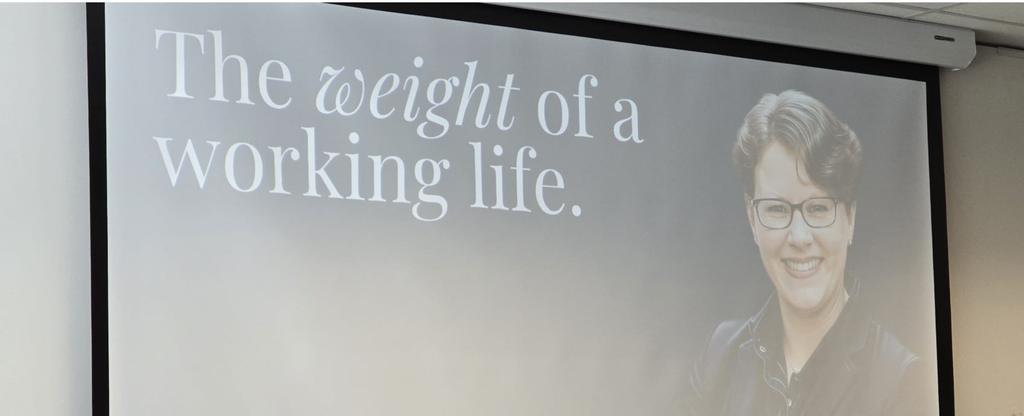
The conference concluded with a featured workshop led by Bronwen Sciortino, an international author, speaker and wellness coach, titled The Weight of a Working Life. Sciortino shared a deeply personal account of how a serious health crisis forced her to reconsider the life she had been living. After almost two decades in a demanding corporate career, she had achieved many of the outward signs of success. Yet she described feeling overwhelmed, disconnected from her values and caught in a pattern of putting other people’s needs ahead of her own. When she received a cancer diagnosis and underwent surgery, her first instinct was to fit the treatment into her existing schedule rather than reconsider the pressures she had placed on herself. The experience eventually brought her to a point where she could no longer continue as before.
Sciortino described the process of rebuilding her life as a gradual one. She discovered that many aspects of her previous life remained valuable, while others needed adjustment or had become harmful. Rather than believing that personal transformation required one dramatic decision, she began to recognise the cumulative effect of small, often unconscious choices. Agreeing to work late, taking responsibility for another person’s problems or repeatedly postponing personal needs might appear reasonable in isolation. Over time, however, such choices can create unsustainable patterns. Her workshop invited participants to reflect on their own habits, priorities, energy and values.
Sciortino encouraged them to distinguish between what genuinely supports their wellbeing and what they continue doing simply because of expectation, routine or fear of disappointing others. Her message was particularly relevant to educators, whose professional responsibilities can extend far beyond classroom hours and whose commitment to students and colleagues can make it difficult to establish boundaries. Wellbeing, she suggested, is not about adopting someone else’s routine or following a universal formula for success. It is about developing a clearer understanding of one’s own needs and making conscious decisions that support a more sustainable life. The workshop offered a fitting conclusion to a day devoted to women’s working lives. While the conference explored structural inequalities and collective responsibility, Sciortino reminded participants that personal wellbeing also matters. Supporting others should not require women to abandon themselves.
7/ A shared responsibility for the future
Across the conference, the speakers approached gender equality from different perspectives: community development, union leadership, workplace research, education, public policy and personal wellbeing. Yet their presentations shared several fundamental principles. Equality requires women to have meaningful opportunities to lead, learn, work and participate in society. It requires workplaces where safety and dignity are protected, and schools where sexism and misogyny are identified and addressed. It requires migrant women to be recognised for their abilities rather than defined by language barriers or unfamiliarity with Australian systems. It also requires women to support one another in practical ways, whether by advocating for a colleague, mentoring a younger professional, challenging an unfair decision or helping someone access an opportunity that might otherwise remain beyond reach.
The conference demonstrated that balancing the scales is not simply about opening doors. It is about ensuring that women can walk through those doors, participate fully and receive the support they need to succeed. For educators, the message carries particular significance. Every day, teachers influence how young people understand respect, fairness, identity and the value of others. The attitudes modelled in classrooms and workplaces can help shape the expectations of future generations. For the wider community, the message is equally important. When women are given the opportunity to develop their abilities, build financial independence and contribute their knowledge, families and communities benefit. The 2026 SSTUWA Women’s Conference was therefore more than a gathering to discuss inequality. It was a call for continued action — through better policies, stronger professional networks, inclusive communities and everyday acts of solidarity.
As the conference theme reminds us, women helping women is not merely an expression of goodwill. It is an essential part of building a fairer society. When women are heard, valued and supported, the benefits extend far beyond the individual. They reach our schools, our workplaces, our families and the generations that follow. The 2026 SSTUWA Women’s Conference took place on Tuesday, 20 October, under the theme “Women Helping Women to Balance the Scales.”



Leave a Reply