Honouring Longlisted and Shortlisted Poets and Award Winners from Across Australia and Around the World
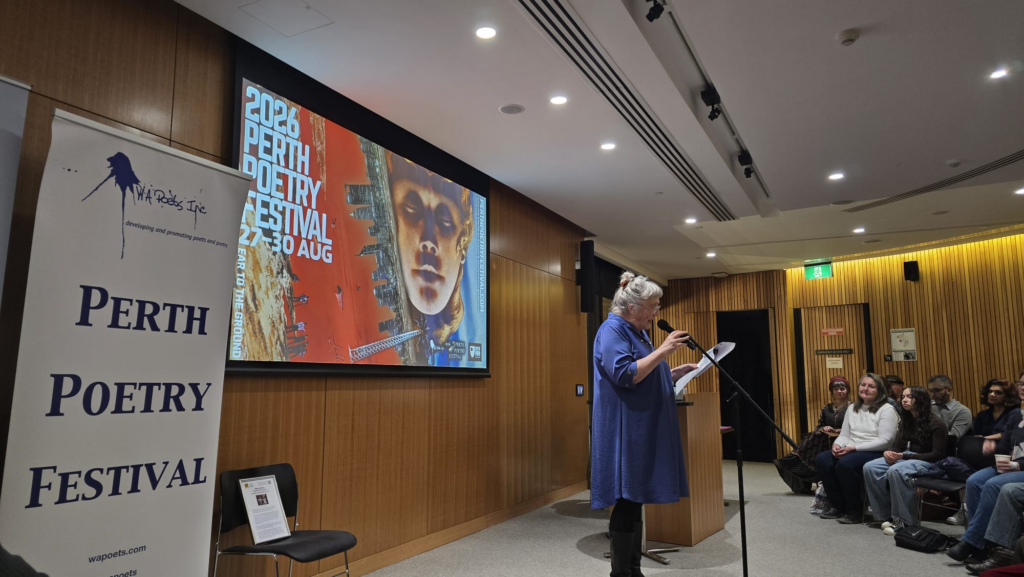
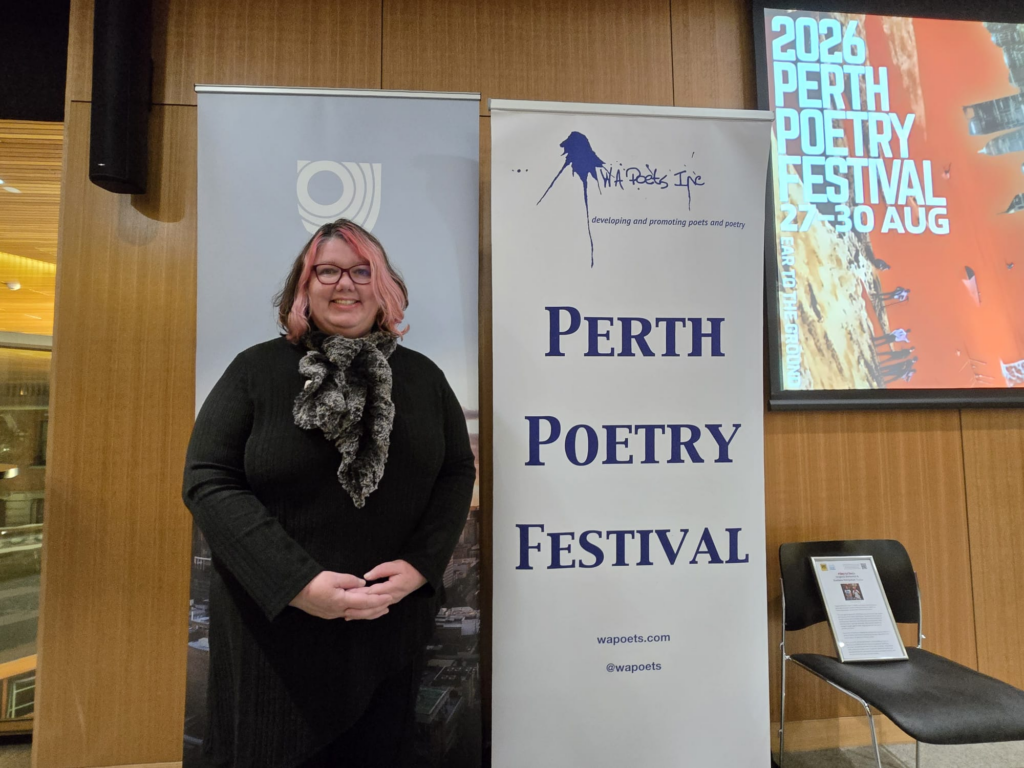
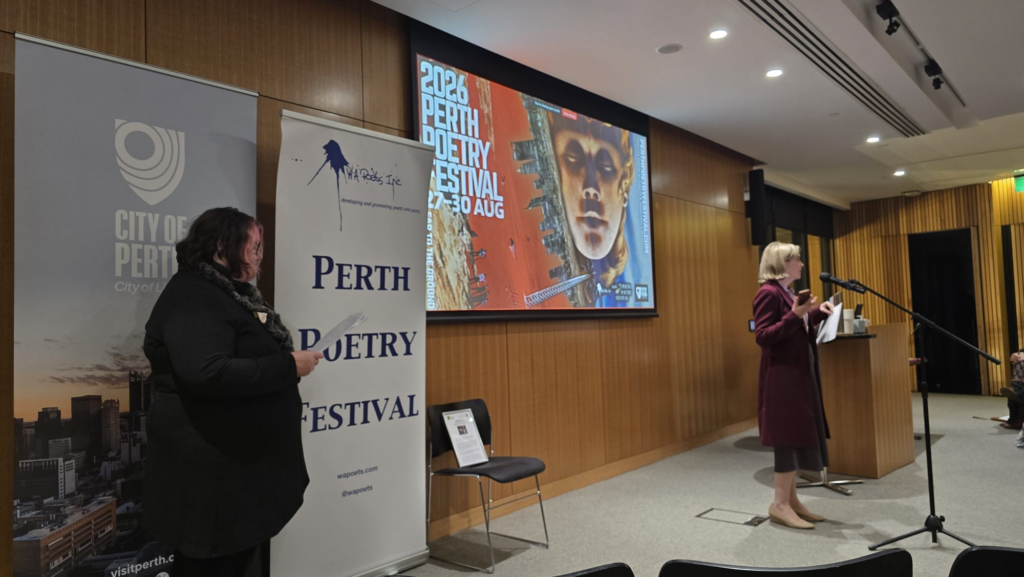
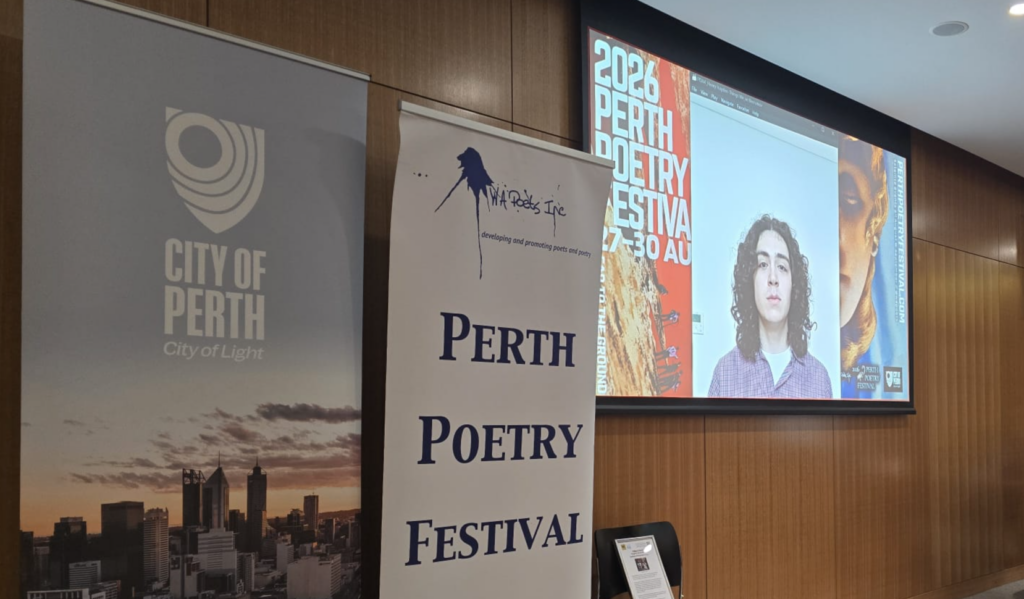
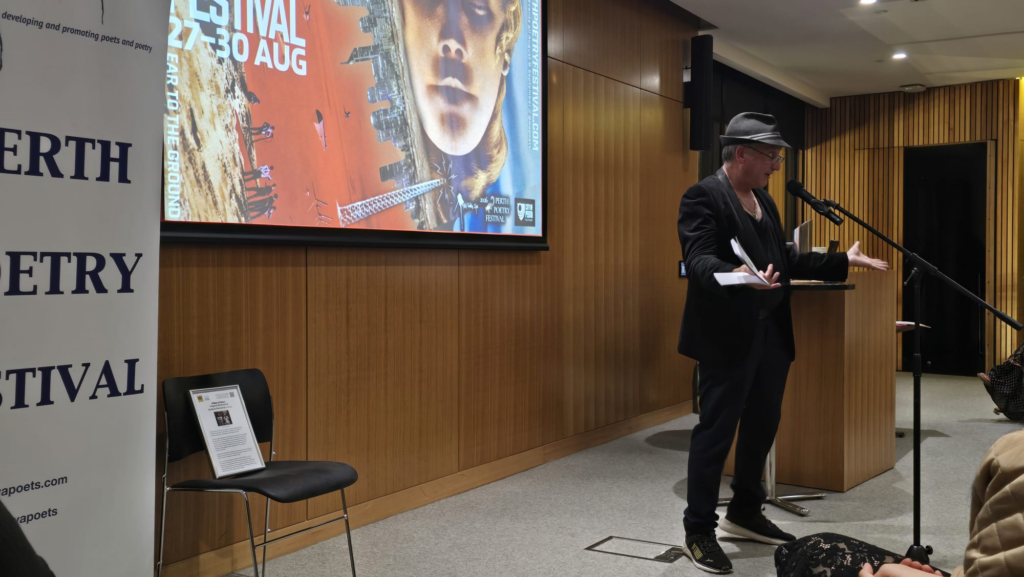
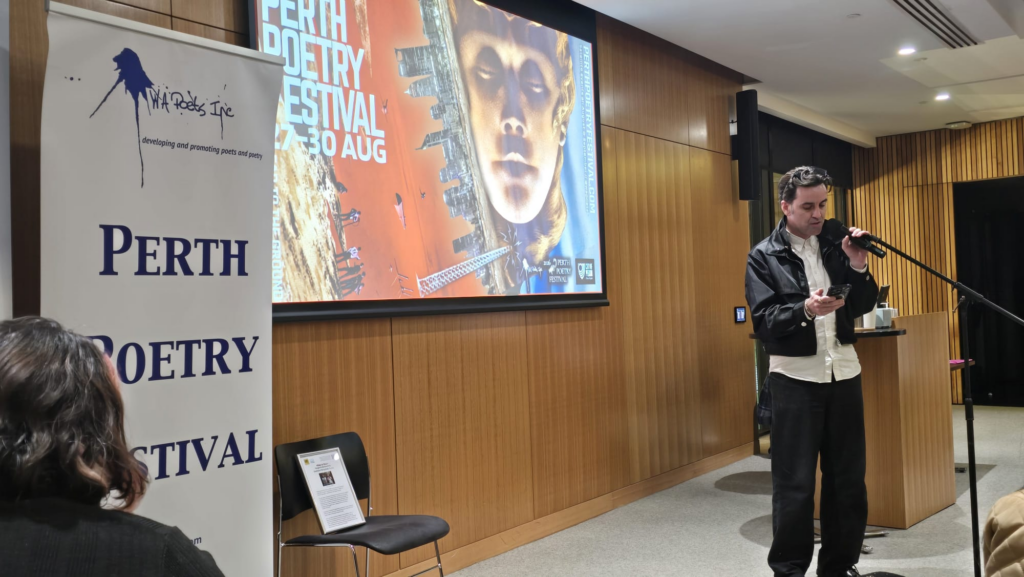
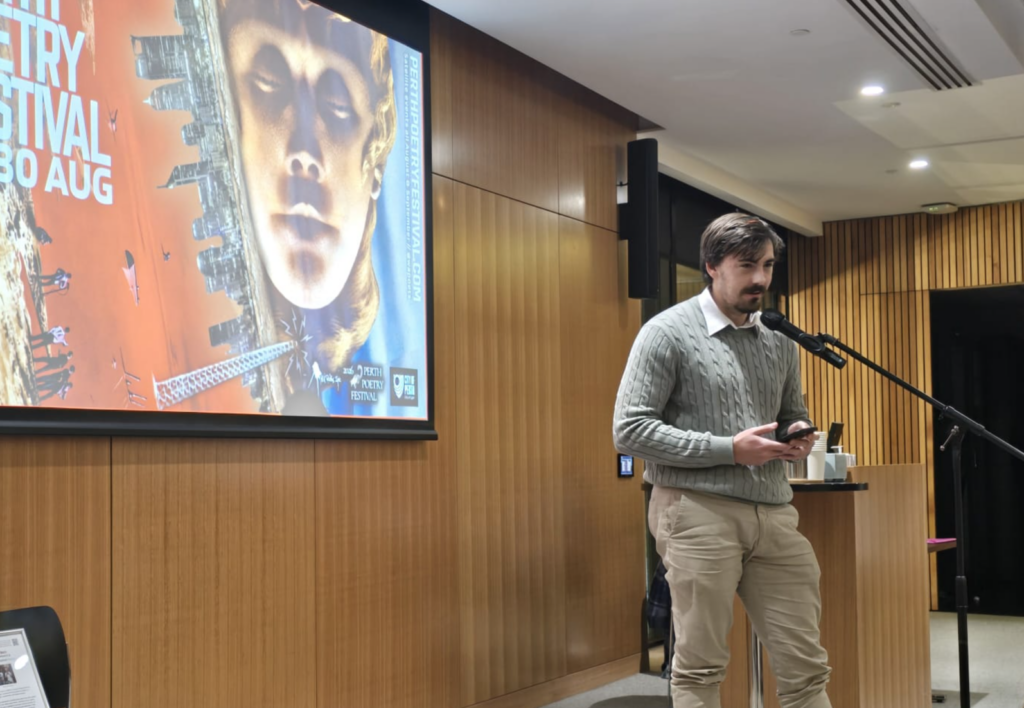
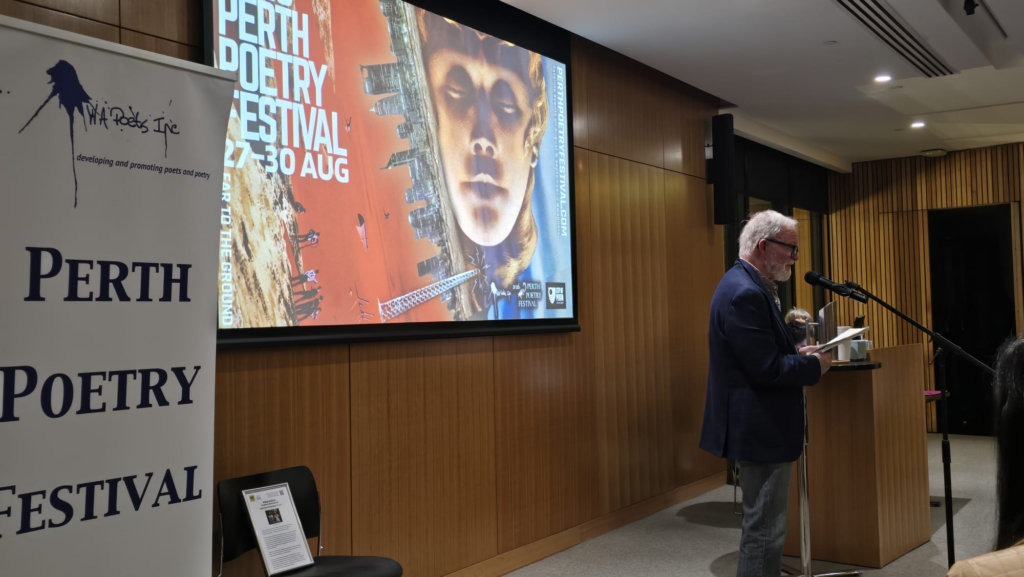
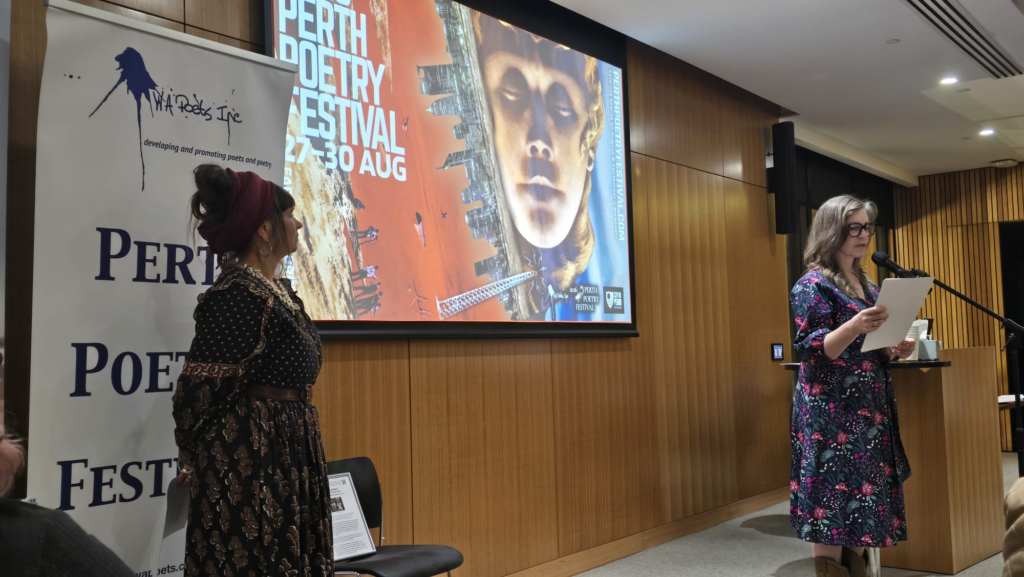
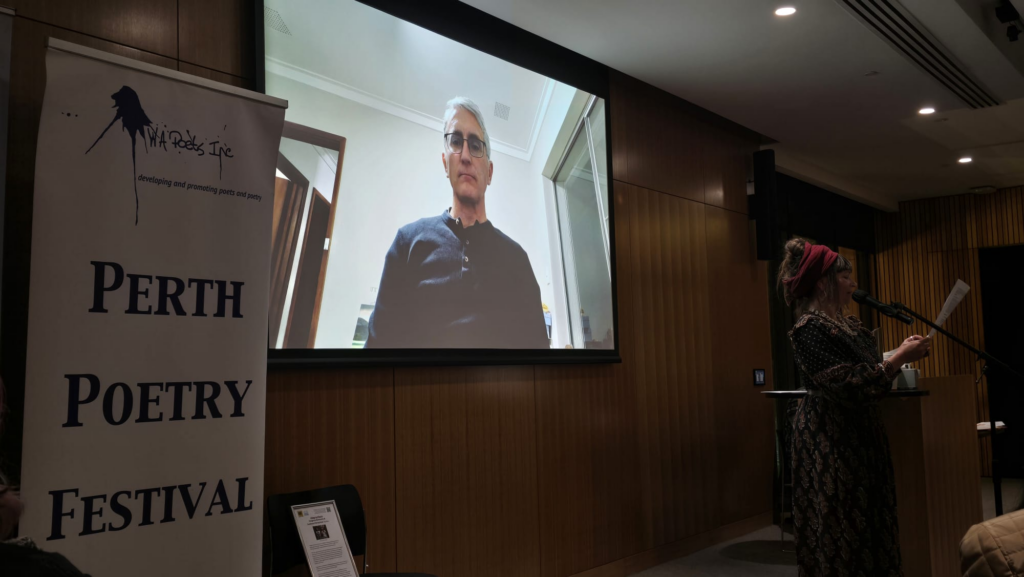
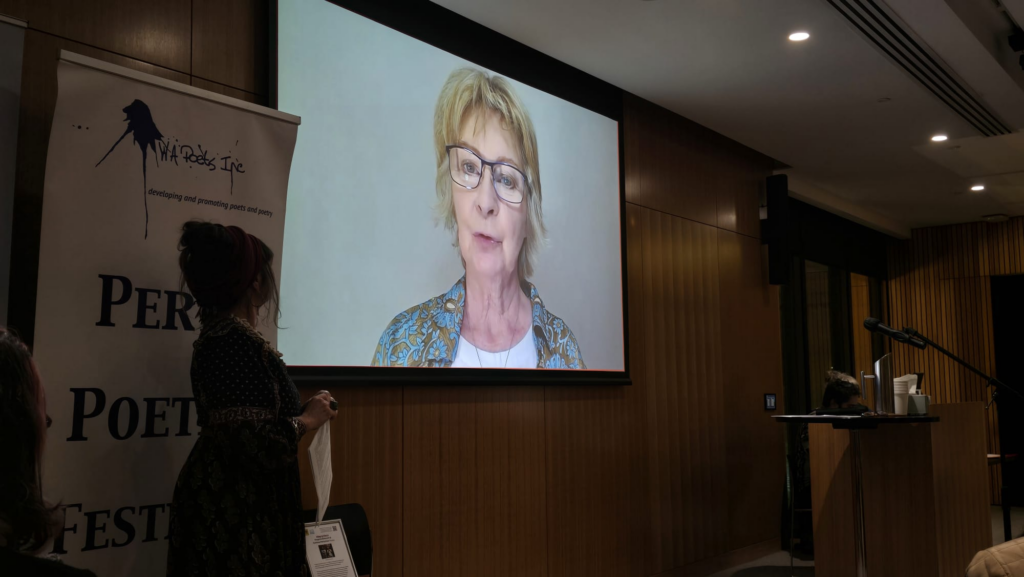
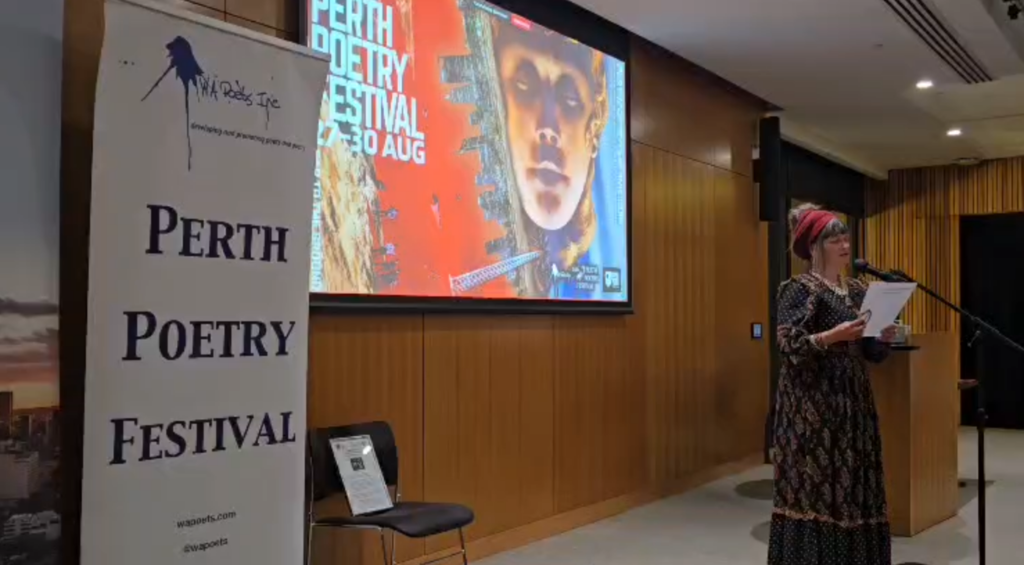
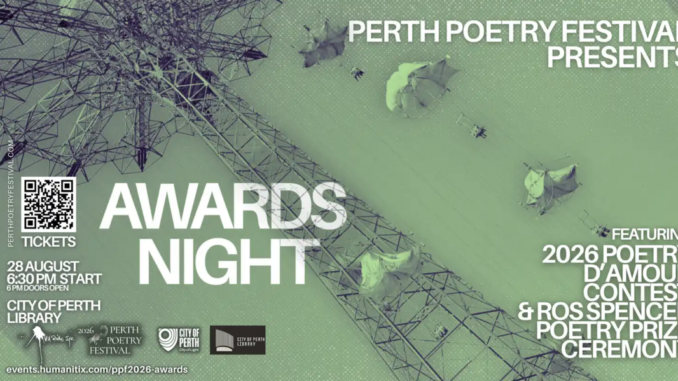
Last night, poetry became a place for love to be remembered, grief to find a voice, freedom to be defended, and strangers to briefly become companions. The WA Poets Presents / Awards Night was an evening of poetry, recognition and connection, bringing together voices from Western Australia and around the world. Bringing together the Poetry d’Amour Prize and the Ros Spencer Poetry Prize, the event celebrated the extraordinary diversity of contemporary Australian poetry while also reminding everyone in the room that poetry is inseparable from courage, memory, humanity and the freedom to speak.
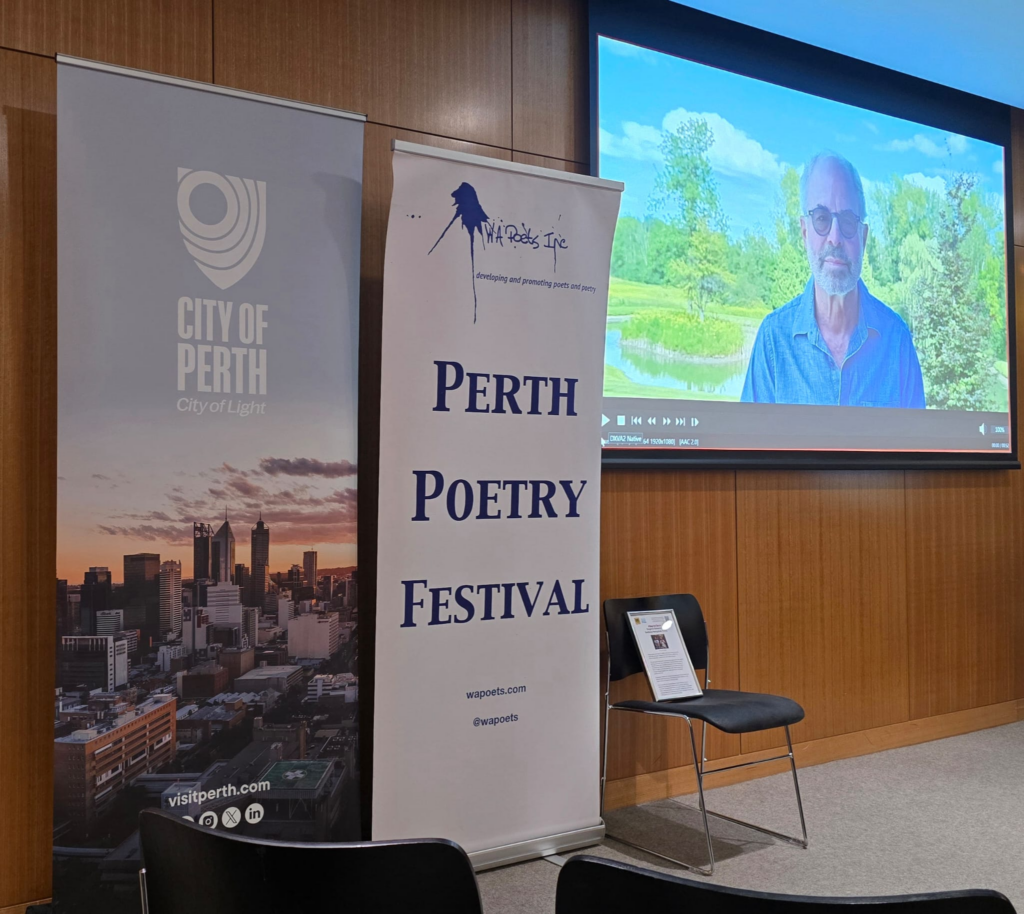
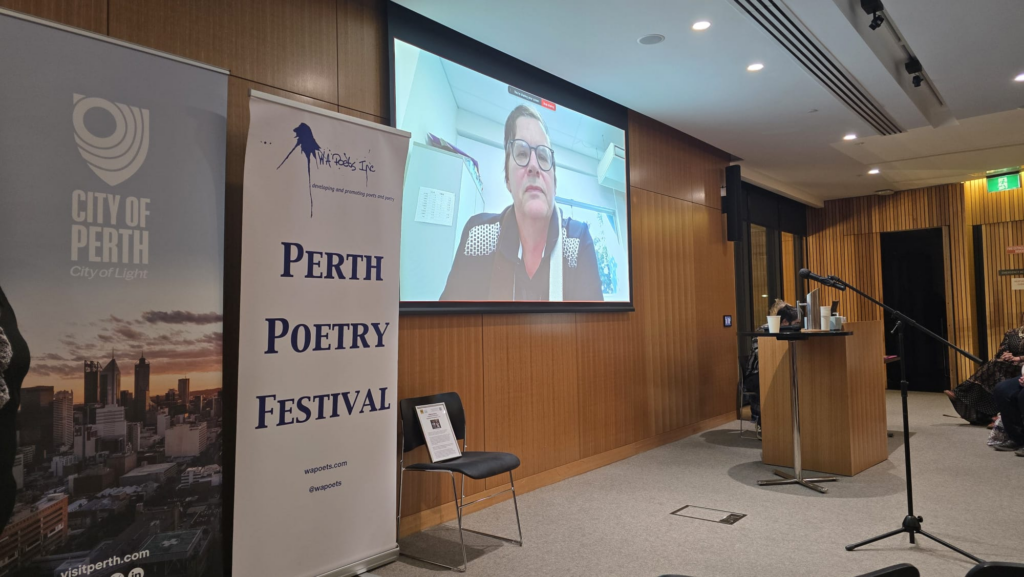
The evening opened with a powerful gesture of solidarity: the Empty Chair, representing Russian theatre director, playwright and poet Yevgenia Berkovich and playwright, screenwriter and theatre director Svetlana Petriychuk, both imprisoned in Russia. Berkovich and Petriychuk were detained in 2023 following their play Finist the Brave Falcon, which explored Russian women who travelled to Syria to marry members of armed groups. Both women denied the charges against them. Berkovich had also written poems critical of Russia’s full-scale invasion of Ukraine. The Empty Chair stood as a reminder that voices may be imprisoned but words cannot so easily be erased. In honouring these women, WA Poets reaffirmed poetry’s commitment to freedom of expression and to writers whose courage carries a cost.
.
Poetry d’Amour: Love in Its Many Forms
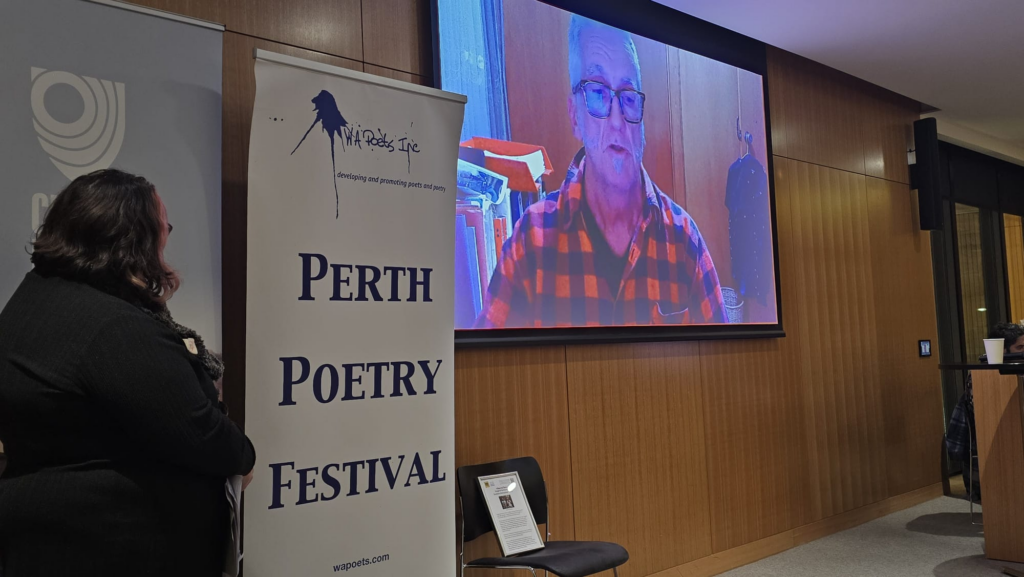
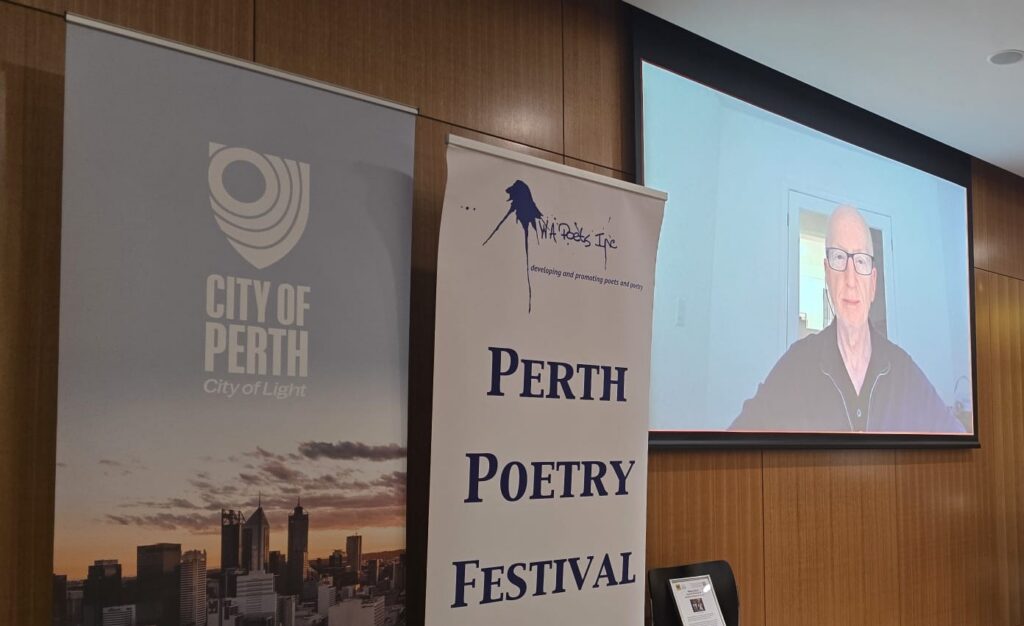
The first awards of the evening belonged to Poetry d’Amour, a competition celebrating love in all its forms: romantic, familial, intimate, sensual, spiritual and everything in between. This year’s competition presented judge Deanne Leber with the formidable task of reading more than 500 poems. Each had its own private world of tenderness, longing, grief, humour, memory and desire. Deanne Leber is a Perth-based poet living on Whadjuk Noongar Country. She is the author of three poetry collections, Book of Days (2006), Constellations (2021) and how to throw stones (2025), and holds a PhD in writing. Her poetry explores the relationship between language, emotion and everyday experience, with recurring interests in love, wellbeing, mental health and the vast questions of existence. Her work is known for its close attention to small moments and details, while also allowing space for larger questions and unexpected connections. Across her writing, Deanne brings a curious and experimental approach to poetry, with an ongoing interest in the possibilities of language and the ideas that remain unresolved. Her experience as a poet and writer made her a thoughtful and perceptive judge for this year’s Poetry d’Amour competition. Deanne approached the task with extraordinary care, returning to poems, rereading them and listening closely to the many ways love can find its voice through language. As she reflected during the evening, love poetry can make a difficult world gentler. It can give grief, loss and separation a place to be held, transforming difficult emotions into insight, connection and understanding. For Deanne, every poem that reached the longlist deserved recognition, while selecting the final winners proved an especially difficult task.
The strength of this year’s entries led to a delightful departure from tradition: rather than the usual three, four poems were awarded Highly Commended recognition. It was a fitting expression to the richness and diversity of the competition. The shortlisted poems explored love through lovers and children, ageing and memory, tenderness and separation, finding poetry in the smallest and most intimate moments of human connection. The awards were presented in reverse order, building anticipation from Commended and Highly Commended, through Second Prize, to the First Prize, a beautiful progression that allowed each poet and poem to be celebrated before the evening reached its final moment of honour.
.
Commended
Bahlam Beek — Robert E. Shapiro
An Orb Spider Embroiders Her Love — B. R. Dionysius
Nimbus — Fiona Burrows
Robert E. Shapiro’s Bahlam Beek transported readers to a dreamlike café in Cairo in the 1970s, where music, memory and love circle back upon themselves.
B. R. Dionysius’s An Orb Spider Embroiders Her Love transformed the delicate construction of a spider’s web into an intricate meditation on love, fragility and loss.
Fiona Burrows’ Nimbus brought the fierce energy of childhood into poetry. The poet explained that the poem was inspired by her young daughter, whom she described as a “force of nature” who teaches her to live with joy.
.
Highly Commended
Our Little Beach — Peter Mitchell
The Last Good Peach at the Bottom of the Bag — Kabal Briar
The Edge of Everywhere — Jaya Penelope Mullumby
Things We’ve Been — Henry Hayden
These poems demonstrated the extraordinary range of what a love poem can contain.
Peter Mitchell’s Our Little Beach reflects on a lifetime of love alongside declining health and Parkinson’s, finding dignity and tenderness in caring for another person.
Kabal Briar’s The Last Good Peach at the Bottom of the Bag turns an apparently ordinary domestic moment into an exquisitely observed portrait of a relationship. A peach becomes an object of affection, negotiation and quiet intimacy.
Henry Hayden’s Things We’ve Been moves through surreal and hallucinatory landscapes, repeatedly returning to the image of two people together in a forest. Its final transformation into a “snow angel in the shape of your body” leaves an unforgettable impression.
.
Second Prize
i loved you in all those wilding places — Dean Gessie
From Canada, Gessie’s poem unfolds through an extraordinary geography of memory, love and place.
The poem travels through Australian landscapes, creatures, landmarks and remembered moments, asking again and again: Do you remember?
The judge described it as a poem that made her think about what happens to beautiful experiences when they are no longer remembered or written down. Memory and landscape become inseparable, while love becomes something carried through place.
.
First Prize: Sleeping In — Damen O’Brien
The major Poetry d’Amour prize went to Damen O’Brien for Sleeping In.
The poem finds profound intimacy in one of life’s smallest luxuries: waking beside someone you love.
Beginning with the ordinary world awakening around the couple: birds, neighbours, lawns, grocery workers, rubbish trucks and the sounds of morning, the poem gradually returns to the bedroom, where two lovers remain safe and protected in the quiet of their shared space.
The judge praised its restraint. There are no explicit descriptions of bodies, yet the intimacy is unmistakable.
The closing image of two people meeting again as strangers in their sheets and beginning again transforms sleeping in together into something almost sacred.
It is love without spectacle: quiet, domestic, tender and deeply human.
.
.
The Ros Spencer Poetry Prize
The evening then turned to the Ros Spencer Poetry Prize, judged by acclaimed WA poet, spoken-word artist, oral storyteller, facilitator and mentor Jaya Penelope Mullumby. A dream cartographer and cultivator of wonder, Jaya brings a deep sensitivity to buried voices, wild spaces and the mysteries of human experience. Her work has been shortlisted for The Heroine’s Women’s Writing Prize and published in Indigo, Blue Dog, Creatrix, Voiceworks, Cuttlefish, Poetry d’Amour and The Breath of The Sea Anthology. Her spoken-word collaboration with musician Gosia Winter, You Knocked Out My Walls, was featured on ABC Radio National’s Poetica. Based in Walyalup/Fremantle, Jaya also runs weekly Women’s Creative Writing Circles and monthly Sacred Story Circles.
For the 2026 Ros Spencer Prize, Jaya faced the formidable task of reading more than 500 entries from across Australia. She looked for poems that elicited a visceral response, opened towards mystery, invited readers generously into their worlds, provoked wonder or offered a necessary disenchantment. The natural world emerged strongly across the entries, with birds appearing as a recurring presence. Jaya described selecting the shortlist as an almost impossible task, while the poems that ultimately stood out were those that demanded repeated readings and continued to reveal new layers. Her thoughtful and discerning judging brought together a compelling collection of poems exploring nature, memory, grief, transformation and the complexity of human experience, showcasing the vitality, imagination and diversity of contemporary Australian poetry.
.
Commended
Syrian Spring — Jenny Magann
Magann’s Syrian Spring begins with sunlight entering through a doorway and expands into a meditation on seasons, distance, political upheaval and our shared world.
The doorway becomes a personal observatory, while the changing seasons connect the intimate with the global.
The poem’s references to Syria remind readers that spring and winter do not exist only as natural cycles. For people living through war and political upheaval, seasons can carry a very different meaning.
The poem ultimately becomes a quiet meditation on humanity’s capacity to remain connected despite distance.
.
Whistle Up the Wrens — Krista Schmeling
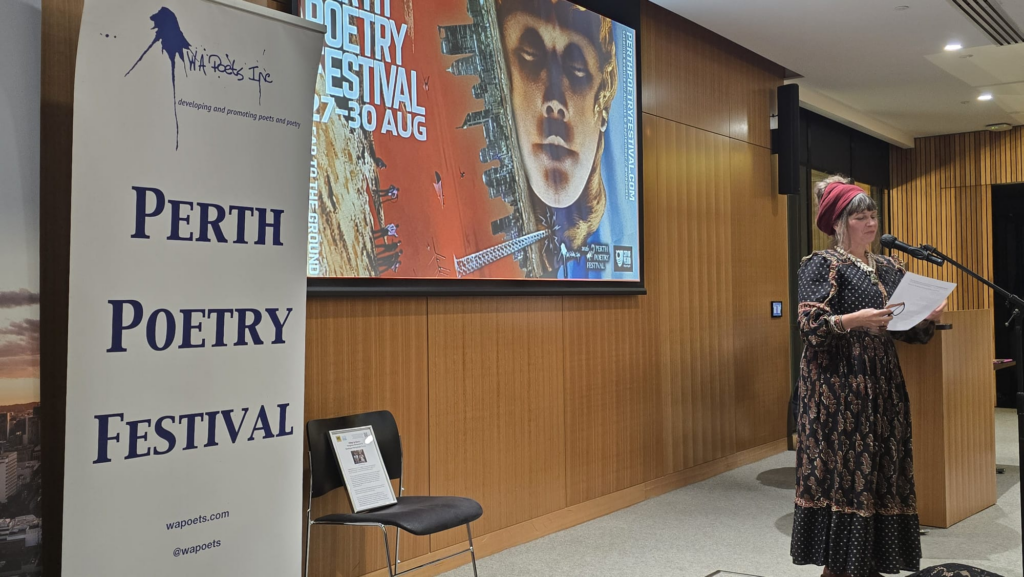
Schmeling, who travelled from Canberra to attend the awards, read her poem herself.
Originally from North America but living in Australia for almost three decades, she described the poem as being rooted in her relationship with the Australian landscape.
Whistle Up the Wrens explores apprenticeship to place: learning to see what may initially appear barren or desolate and discovering beauty through sustained attention.
Rock, water, birds and memory gradually become part of a relationship between landscape and human presence.
.
The Book of Longing — Rhian Healy
Healy’s poem works through repetition and strange, unexpected images.
“The thing about…” becomes a recurring doorway into reflection, creating an accumulating sequence of images involving water, light, mirrors, salt and shadow.
The poem becomes almost like a mirror itself — refusing to explain everything, leaving its mysteries open.
.
In the Quiet Deep of Winter — Kay Cairns
Cairns’ poem moves from the vast Canadian wilderness into the intimate landscape of family grief.
A brother once dreamed of moving to the Canadian wilderness, imagining a life of stillness, wood fires and freedom.
Instead, his dream gradually contracted until he was living his final days in his mother’s house.
The devastating final image is of five rusted bicycles lying broken in the yard — bicycles he had always intended to repair.
In a few quiet lines, an abandoned dream becomes a portrait of a life that never quite reached the place it imagined.
.
Highly Commended
Lost in the Fire — Siobhan Hodge
An Aubade with Warbles — Gaye McPhie
I could be the Broken Hill Motel — Kim Kenyon
Three very different poems, united by the judges’ recognition of their originality, emotional intelligence and ability to create worlds that linger beyond the final line.
.
Second Prize: Imago — Magdalena Ball
Magdalena Ball’s Imago moves between science, landscape, memory and dream.
The word “imago” itself evokes transformation, and the poem embraces that idea through images of insects, mitochondrial DNA, cells, forests, night birds and the human body.
The judge described the poem as offering something approaching consolation to those walking through grief and loss.
Its final insight is simple yet profound:
Nothing is lost. It is transformed.
The poem suggests that grief itself may be a form of transformation — painful, mysterious and ultimately connected to the continuing cycles of life.
.
First Prize: Microchimeric — Fiona Burrows
The evening concluded with the Ros Spencer Poetry Prize First Prize, awarded to Fiona Burrows for Microchimeric. It was a particularly moving achievement because Burrows had already been recognised earlier in the evening for Nimbus. This poem, she explained, was written for her son. Drawing on the biological phenomenon of micro-chimerism, in which cells can pass between mother and child, Burrows creates a powerful metaphor for the almost impossible boundaries between motherhood, identity and the child who becomes permanently part of the mother. The poem moves fearlessly between science, mythology, intimacy and elemental imagery. Mother and child become landscape, organism, history and transformation. In Burrows’ reading, motherhood is not presented simply as gentle or nurturing. It is elemental, disruptive, transformative and fierce. The poem closes with the unforgettable image of a mother blazing with terrible fire. It was a fitting conclusion to an evening that repeatedly returned to the idea that poetry allows us to cross boundaries — between self and other, memory and experience, love and loss, human beings and the natural world.
.
Remembering Ros Spencer
Beyond the prizes, one of the most poignant moments of the evening was the remembrance of Ros Spencer, whose name and legacy live on through the annual poetry prize. A speaker reflected on the years since Ros’s death and the people encountered through beaches, poetry clubs, festivals and literary communities. The stories were personal, warm and wonderfully human.
There was a recollection of meeting a fellow poet almost by chance, only to discover years later the connections that linked their families and lives. There was also a shared love of Pablo Neruda, written down on a piece of paper and exchanged between two poets who discovered that they had chosen the same favourite poet.
Another memory recalled Professor Dennis Haskell, who judged the Poetry Prize in 2016, and the friendships and literary connections formed around Western Australian poetry. A photograph of Ros, taken in New York near where John Lennon and Yoko Ono had lived, was also remembered — a photograph eventually used on the cover of Brushstrokes 7, due for publication in November.
These stories brought something precious to the evening: the recognition that literary communities are built not only through books and prizes, but through friendships, chance encounters, conversations, photographs, shared poems and memories that survive.
.
An Evening for Poetry
What made the evening remarkable was the extraordinary range of voices gathered in one room. Love appeared as romance, motherhood, marriage, friendship and care. Memory appeared through landscapes, childhood, family and lost possibilities. Grief appeared in rusted bicycles, winter landscapes and transformed bodies. Nature appeared everywhere: spiders, birds, peaches, forests, seasons, rivers, insects and light.
And beyond all of it stood the Empty Chair, a reminder that poetry also belongs to those whose voices are threatened or silenced. From a quiet morning in bed to the wilderness of Canada, from a Syrian spring to the cells passing between mother and child, the poems of the evening demonstrated why poetry continues to matter.
Poetry does not necessarily solve the world’s problems but it makes us look again. It asks us to remember. It asks us to feel. And sometimes it gives us a place to listen. Last night, WA Poets gave poetry that place. And poetry answered.
Guiding the night with warmth, elegance and a wonderful sense of occasion was Gillian Clark, a WA-based poet with a deep sensitivity to nature and a love of performance. Bringing her NIDA acting background to the stage, Gillian has been featured in Letters To Our Home, Creatrix and the Poetry d’Amour anthology, and has facilitated and performed with the Storytellers Guild of WA and at the Melville Midwinter Festival. Her assured presence and thoughtful hosting brought the evening together beautifully, leaving the audience with a sense that every poet and every poem had a place in this vibrant celebration of Western Australian poetry.
The programme ended beautifully with a Longlisted Open Mic Reading, giving the evening’s wider poetic community a final moment in the spotlight. Coral Carter, Kaitlin Sun, Ruari Jack Hughes, Phoebe Roberts Brown, James Audcent and Colin Harte each brought their distinctive voices and perspectives to the microphone, reminding us that poetry is not only about prizes, but about participation, connection and the courage to share one’s words.