(by Multicultural Press Team)
In Udon Thani, Vietnamese food has become a bridge between communities, generations and two neighbouring nations. During the cultural programme marking 50 years of diplomatic relations between Vietnam and Thailand, Vietnamese and Thai writers and poets had the opportunity to visit VT Namnueng, meet its founder Hồ Văn Lâm, experience the production facilities and share a meal together.
For many of us, it was an encounter with a remarkable story of heritage, enterprise and love for Vietnam. From a family recipe to a Vietnamese culinary landmark Hồ Văn Lâm is widely recognised as the entrepreneur behind the VT Namnueng brand, which has helped make nem nướng, known locally as namnueng, familiar to generations of Thai people.
His story began with his family. The recipe was carried from Vietnam to Thailand by his mother, whose small food stall helped support the family. Lâm later transformed that family tradition into a major business while preserving the connection to his Vietnamese roots. The story of VT Namnueng has been documented by Vietnamese media as an example of how an overseas Vietnamese entrepreneur has developed a traditional Vietnamese food into a successful business while also using it to introduce Vietnamese culture to Thai society. Today, the name VT Namnueng is strongly associated with Udon Thani and with Vietnamese culinary culture in northeastern Thailand. But what becomes especially visible when visiting the centre is that Lâm’s vision extends beyond food. A factory built around quality Our visit included an opportunity to see where the food is prepared and to learn more about the care taken behind every serving. The scale of the operation is impressive. What began with a family recipe has developed into a carefully managed food production system, with attention to ingredients, hygiene, consistency and presentation.
Lâm has long emphasised quality as one of the foundations of VT Namnueng. Earlier accounts of the business describe his investment in controlled production and clean vegetable cultivation, including greenhouse and hydroponic technology, reflecting his determination to maintain consistent standards as the business expanded.
For visiting writers, the factory offered something particularly meaningful: a chance to see how a traditional Vietnamese flavour can be preserved while adapting successfully to a new country and a new generation of consumers. And, of course, we had the opportunity to taste it. A table that brought writers together.
The meal became one of the warmest moments of the visit. Vietnamese and Thai authors sat together around the same tables, sharing food and conversation. There was no formal distance between cultures in that moment. Food created an immediate language of its own.
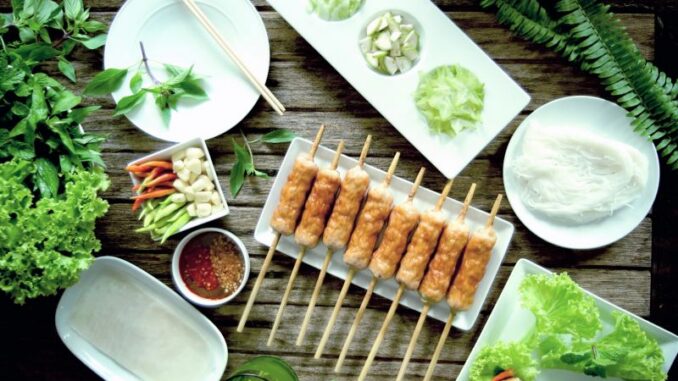
The fresh vegetables, herbs, dipping sauce and grilled nem nướng brought together the flavours of Vietnam and the preferences of Thailand. It was easy to understand why VT Namnueng has become so familiar to Thai diners.
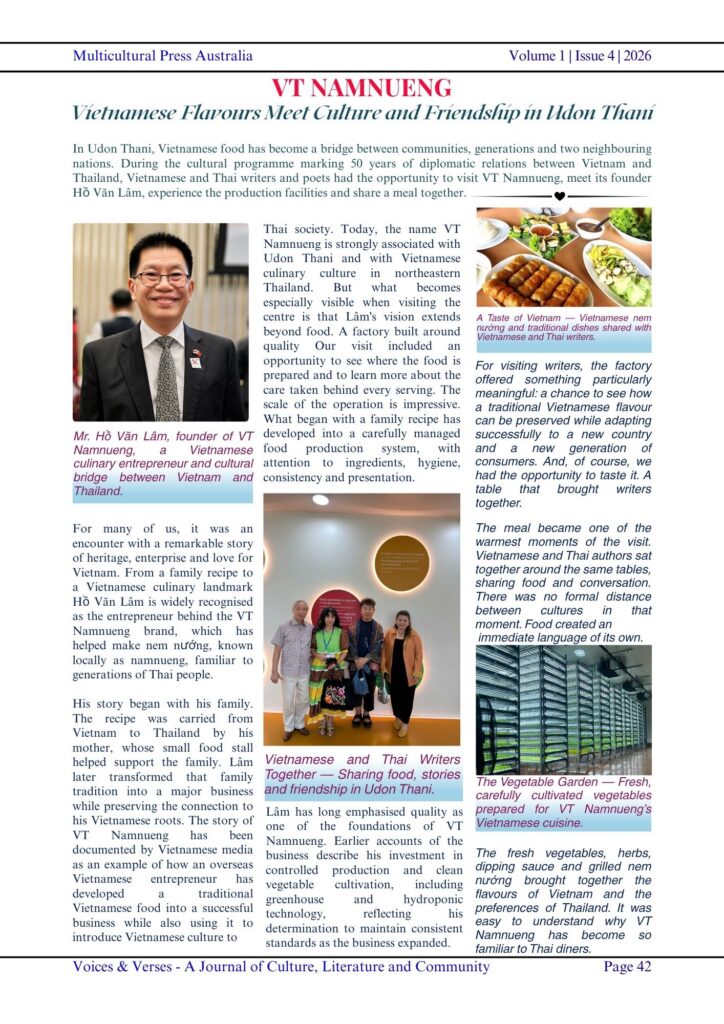
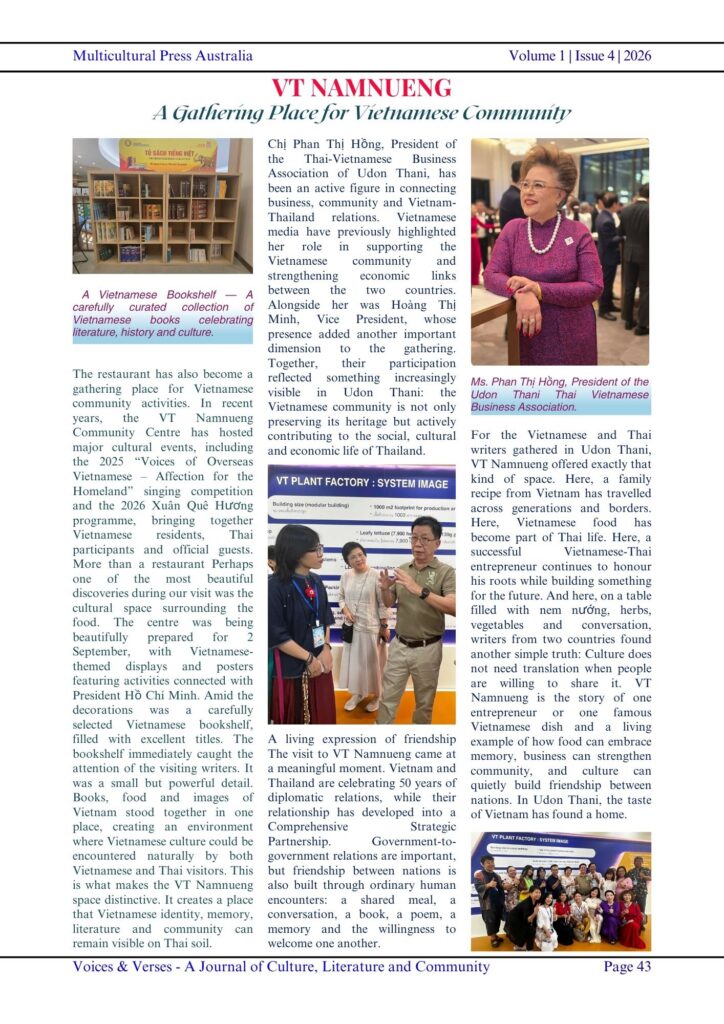
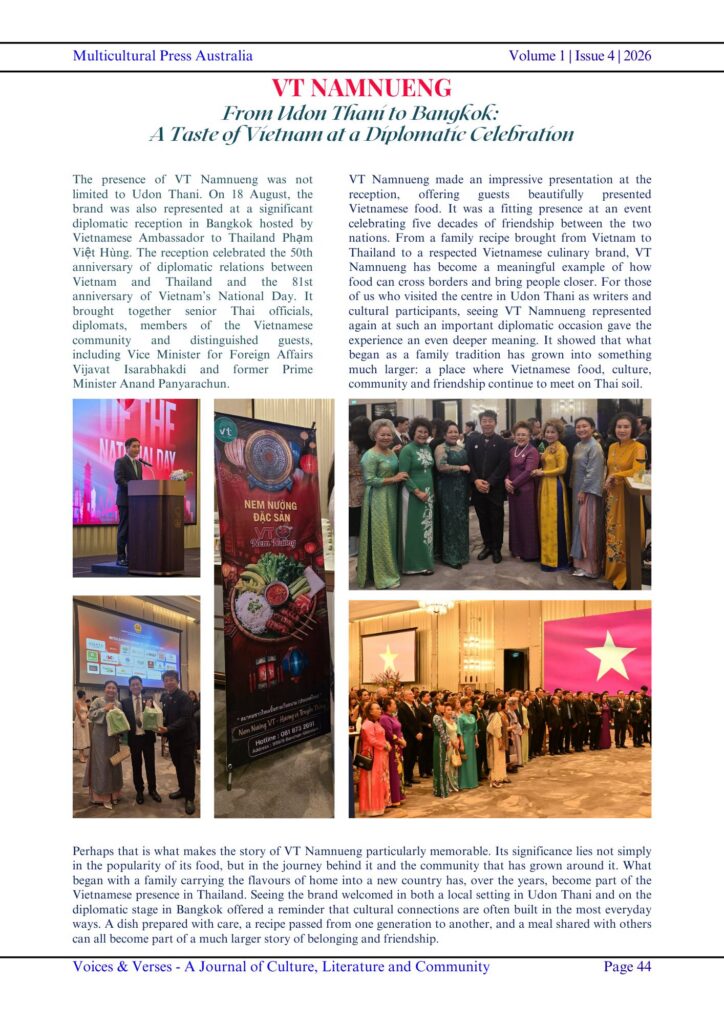
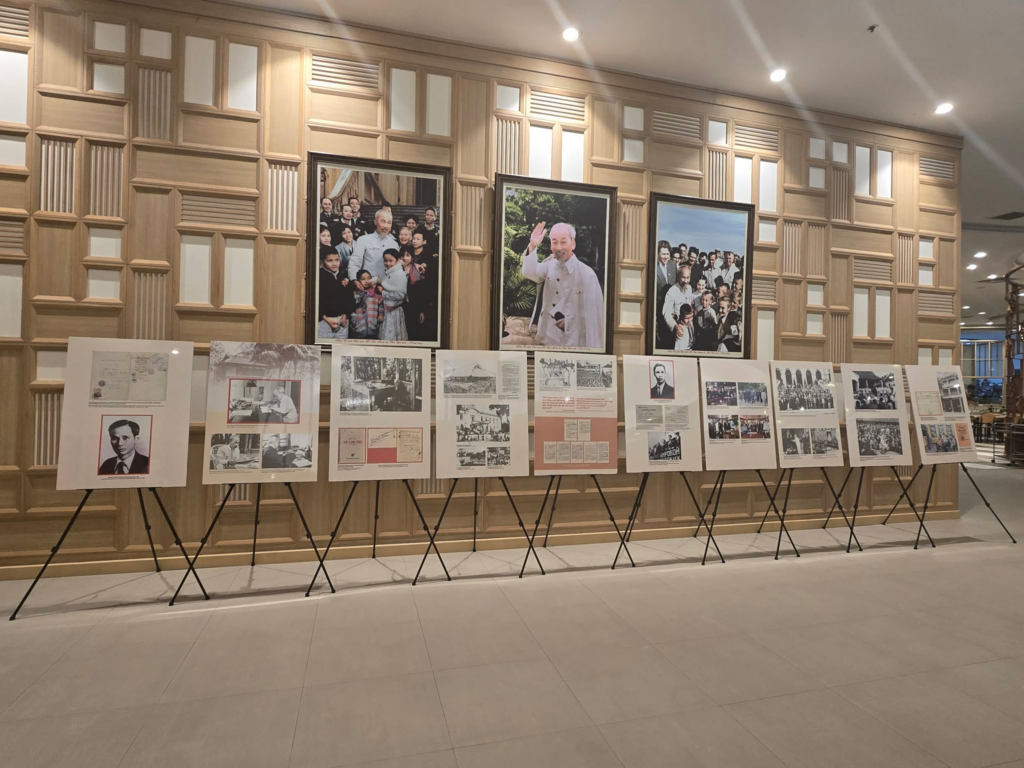
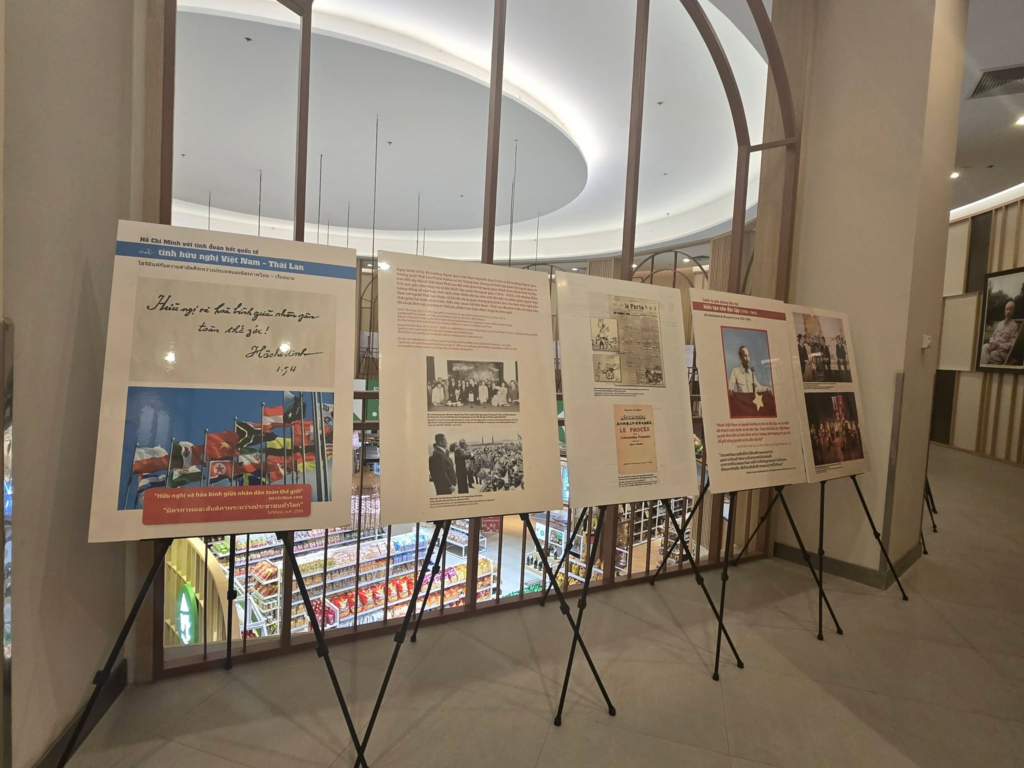
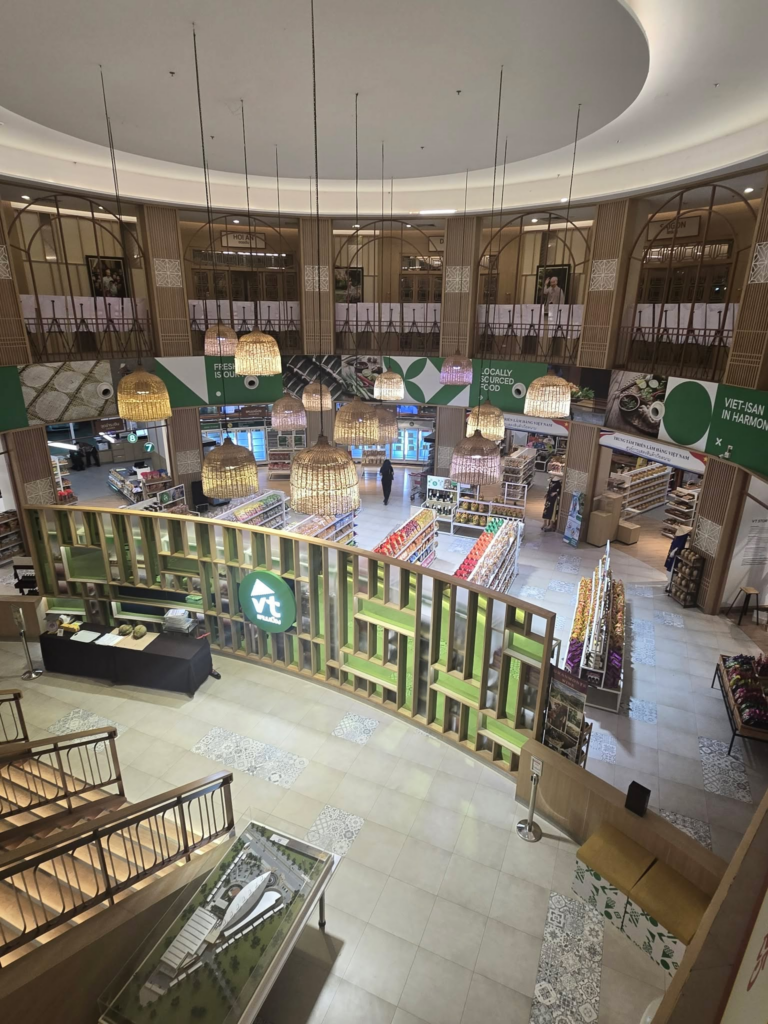
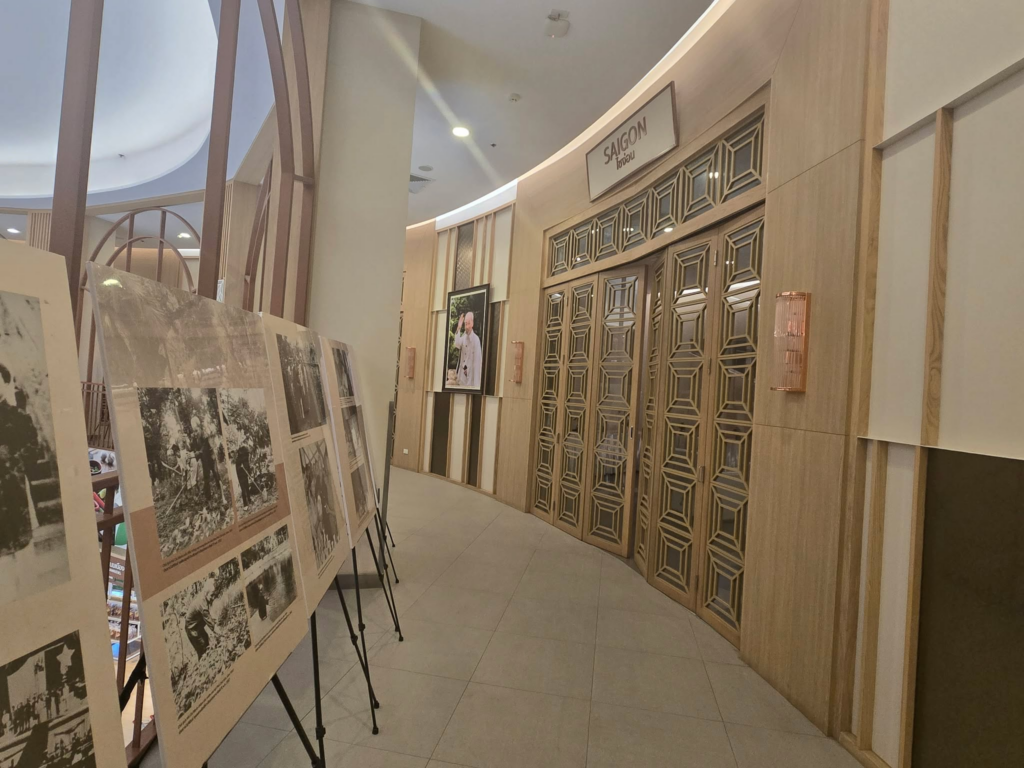
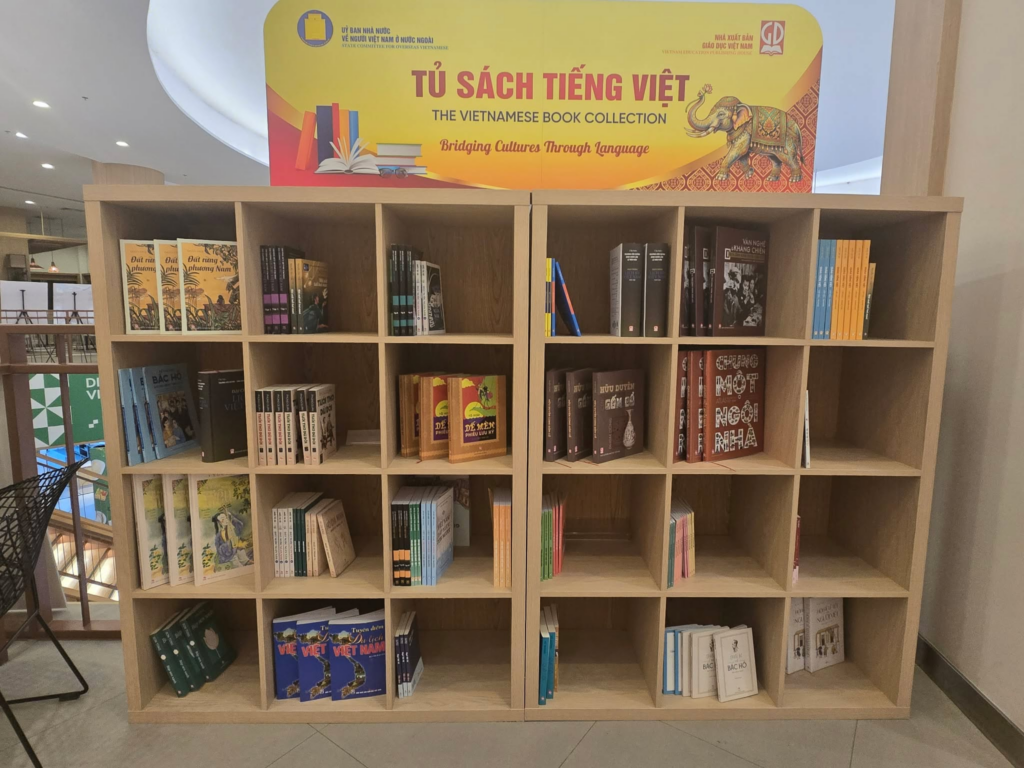
The restaurant has also become a gathering place for Vietnamese community activities. In recent years, the VT Namnueng Community Centre has hosted major cultural events, including the 2025 “Voices of Overseas Vietnamese – Affection for the Homeland” singing competition and the 2026 Xuân Quê Hương programme, bringing together Vietnamese residents, Thai participants and official guests. More than a restaurant Perhaps one of the most beautiful discoveries during our visit was the cultural space surrounding the food. The centre was being beautifully prepared for 2 September, with Vietnamese-themed displays and posters featuring activities connected with President Hồ Chí Minh. Amid the decorations was a carefully selected Vietnamese bookshelf, filled with excellent titles. The bookshelf immediately caught the attention of the visiting writers. It was a small but powerful detail. Books, food and images of Vietnam stood together in one place, creating an environment where Vietnamese culture could be encountered naturally by both Vietnamese and Thai visitors. This is what makes the VT Namnueng space distinctive. It creates a place that Vietnamese identity, memory, literature and community can remain visible on Thai soil.
Chị Phan Thị Hồng, President of the Thai-Vietnamese Business Association of Udon Thani, has been an active figure in connecting business, community and Vietnam-Thailand relations. Vietnamese media have previously highlighted her role in supporting the Vietnamese community and strengthening economic links between the two countries. Alongside her was Hoàng Thị Minh, Vice President, whose presence added another important dimension to the gathering. Together, their participation reflected something increasingly visible in Udon Thani: the Vietnamese community is not only preserving its heritage but actively contributing to the social, cultural and economic life of Thailand.
A living expression of friendship The visit to VT Namnueng came at a meaningful moment. Vietnam and Thailand are celebrating 50 years of diplomatic relations, while their relationship has developed into a Comprehensive Strategic Partnership. Government-to-government relations are important, but friendship between nations is also built through ordinary human encounters: a shared meal, a conversation, a book, a poem, a memory and the willingness to welcome one another.
For the Vietnamese and Thai writers gathered in Udon Thani, VT Namnueng offered exactly that kind of space. Here, a family recipe from Vietnam has travelled across generations and borders. Here, Vietnamese food has become part of Thai life. Here, a successful Vietnamese-Thai entrepreneur continues to honour his roots while building something for the future. And here, on a table filled with nem nướng, herbs, vegetables and conversation, writers from two countries found another simple truth: Culture does not need translation when people are willing to share it. VT Namnueng is the story of one entrepreneur or one famous Vietnamese dish and a living example of how food can embrace memory, business can strengthen community, and culture can quietly build friendship between nations. In Udon Thani, the taste of Vietnam has found a home.
The presence of VT Namnueng was not limited to Udon Thani. On 18 August, the brand was also represented at a significant diplomatic reception in Bangkok hosted by Vietnamese Ambassador to Thailand Phạm Việt Hùng. The reception celebrated the 50th anniversary of diplomatic relations between Vietnam and Thailand and the 81st anniversary of Vietnam’s National Day. It brought together senior Thai officials, diplomats, members of the Vietnamese community and distinguished guests, including Vice Minister for Foreign Affairs Vijavat Isarabhakdi and former Prime Minister Anand Panyarachun.
VT Namnueng made an impressive presentation at the reception, offering guests beautifully presented Vietnamese food. It was a fitting presence at an event celebrating five decades of friendship between the two nations. From a family recipe brought from Vietnam to Thailand to a respected Vietnamese culinary brand, VT Namnueng has become a meaningful example of how food can cross borders and bring people closer. For those of us who visited the centre in Udon Thani as writers and cultural participants, seeing VT Namnueng represented again at such an important diplomatic occasion gave the experience an even deeper meaning. It showed that what began as a family tradition has grown into something much larger: a place where Vietnamese food, culture, community and friendship continue to meet on Thai soil.
Perhaps that is what makes the story of VT Namnueng particularly memorable. Its significance lies not simply in the popularity of its food, but in the journey behind it and the community that has grown around it. What began with a family carrying the flavours of home into a new country has, over the years, become part of the Vietnamese presence in Thailand. Seeing the brand welcomed in both a local setting in Udon Thani and on the diplomatic stage in Bangkok offered a reminder that cultural connections are often built in the most everyday ways. A dish prepared with care, a recipe passed from one generation to another, and a meal shared with others can all become part of a much larger story of belonging and friendship.